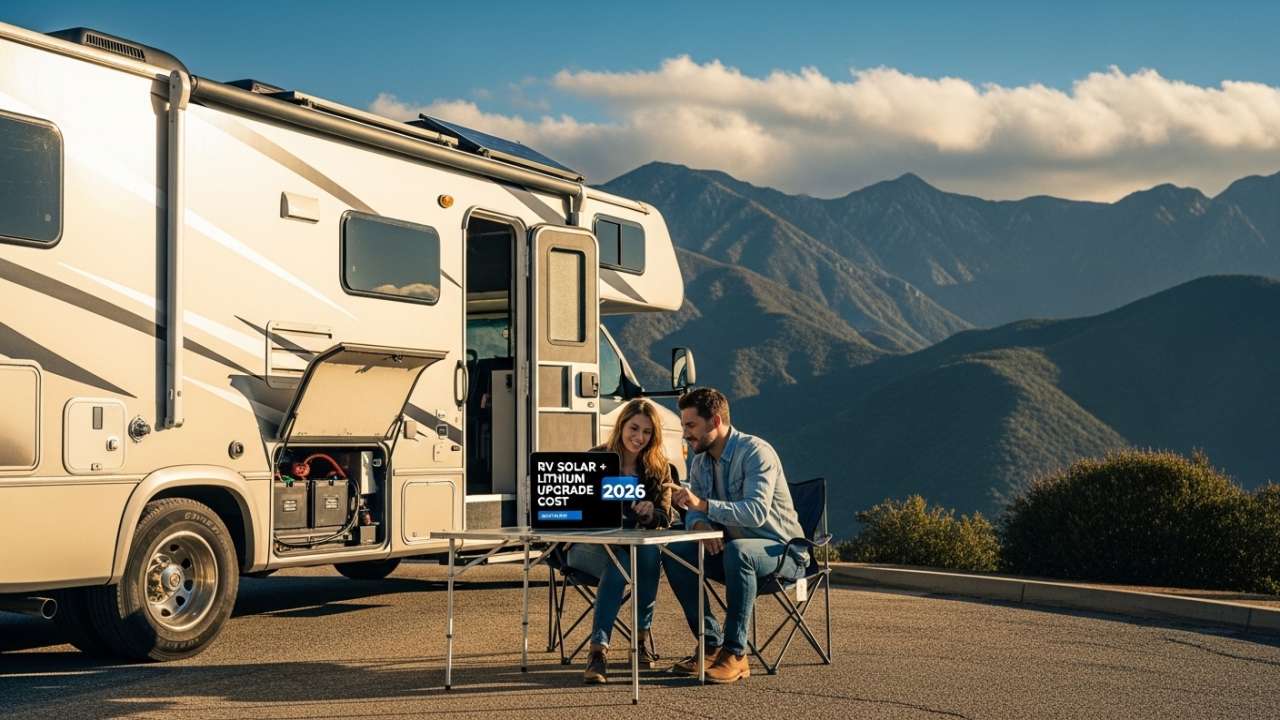
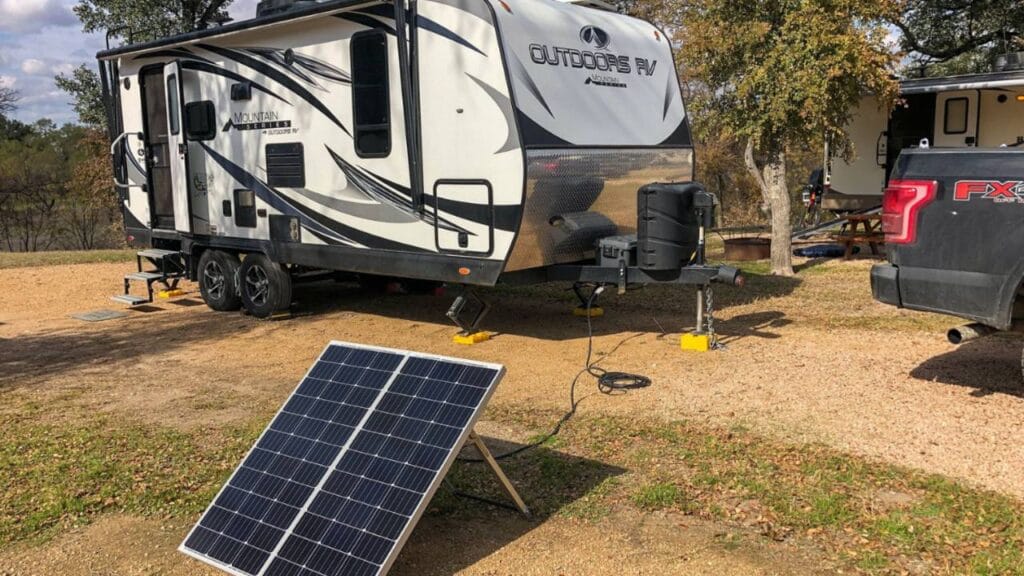
Traveling the vast landscapes of Montana in your RV—from the rugged peaks of Glacier National Park to the open plains of the eastern badlands—offers unparalleled freedom. But to truly embrace the off-grid lifestyle, reliable power is essential. RV solar panels provide that independence, harnessing the abundant sunlight in Big Sky Country to keep your adventures powered without relying on noisy generators or crowded campgrounds. Whether you’re boondocking in remote forests or dry camping near Yellowstone, a well-designed RV solar system can transform your travels.
In this comprehensive guide, we’ll cover everything you need to know about RV solar panels, tailored with insights for Montana users. Drawing from the latest 2026 advancements, expert recommendations, and state-specific considerations like incentives and climate challenges, you’ll get actionable advice to choose, install, and maintain the best system for your needs. Let’s dive in and illuminate your path to energy freedom.
Basics: What Are RV Solar Panels?
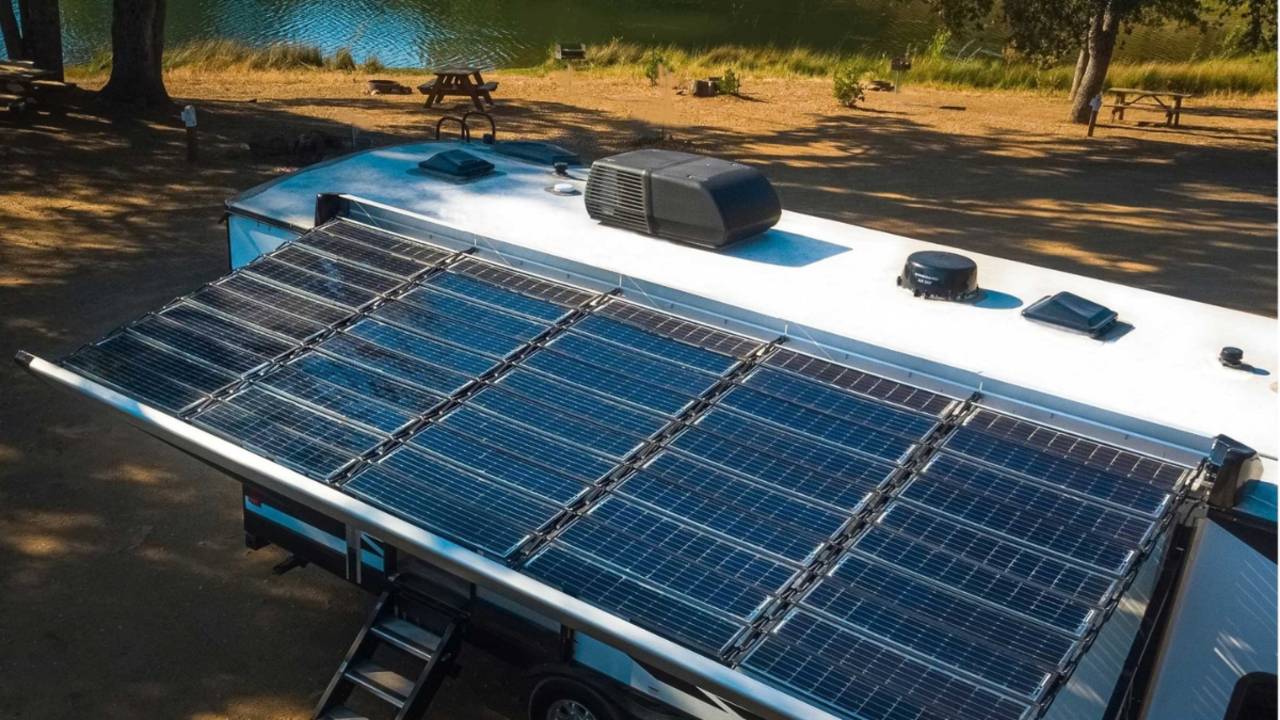
RV solar panels are photovoltaic (PV) modules designed specifically for recreational vehicles, converting sunlight into electricity to power your onboard systems. Mounted on the roof or used portably, they capture solar energy to charge batteries and run appliances, offering a clean, renewable alternative to traditional power sources.
In Montana, where RVs often venture into areas with limited grid access, solar panels shine—literally. The state averages 4-5 peak sun hours (PSH) per day in summer, dropping to 2-3 in winter, making them ideal for extended stays in places like the Bob Marshall Wilderness.
This setup allows you to power DC loads (like lights and fans) directly or AC appliances (such as microwaves) via an inverter, all while reducing your carbon footprint.
Unlike residential solar setups, RV systems are off-grid, emphasizing portability and durability against vibrations, weather, and variable sunlight. Advances in 2026, like Ember RV’s Max Solar Package with up to 1,200 watts, have made these systems more efficient and user-friendly.
Benefits of RV Solar Panels
Investing in RV solar panels unlocks a host of advantages, especially for Montana adventurers who value self-sufficiency:
- Energy Independence: Ditch the grid and generators. Solar eliminates fuel costs and noise, perfect for quiet boondocking spots in Montana’s national forests. No more hunting for hookups or dealing with generator maintenance.
- Cost Savings: Over time, solar pays for itself. With Montana’s solar incentives (more on that later), initial costs drop, and you’ll save on campground fees. A typical system can last 25+ years, offsetting electricity bills equivalent to thousands of dollars.
- Environmental Impact: Harness clean energy in a state known for its pristine wilderness. Solar reduces reliance on fossil fuels, aligning with Montana’s renewable energy push.
- Portability and Flexibility: Options range from roof-mounted panels for constant charging to portable units you can position for optimal sun exposure during winter’s shorter days.
- Reliability: Modern panels perform in partial shade or low light, crucial for Montana’s variable weather. Plus, they require minimal maintenance—just occasional cleaning to remove snow or dust.
Experts like those from Renogy emphasize that solar enhances RV living by enabling longer off-grid stays, powering essentials like refrigerators and CPAP machines without interruption.
What Types of Solar Panels Are Used for RVs?
Not all solar panels are created equal for RV use. Space constraints, roof shapes, and mobility demand specialized types. Here’s a breakdown of the most common options in 2026:
Rigid or Traditional Solar Panels
These framed panels are robust and efficient, ideal for fixed installations.
- Monocrystalline Silicon: Made from a single crystal structure, these offer the highest efficiency (up to 25-26% in 2026 models). They’re compact, performing well in low-light conditions—key for Montana’s cloudy winters. Cost: Around $1.10-$1.25 per watt. Temperature coefficient: -0.35% to -0.38%/°C, meaning minimal output loss in cold snaps.
- Polycrystalline Silicon: Formed from multiple crystals, they’re slightly less efficient (22-24%) but more affordable ($0.90-$1.00/W). Good for budget-conscious RVers, though they underperform in extreme temperatures.
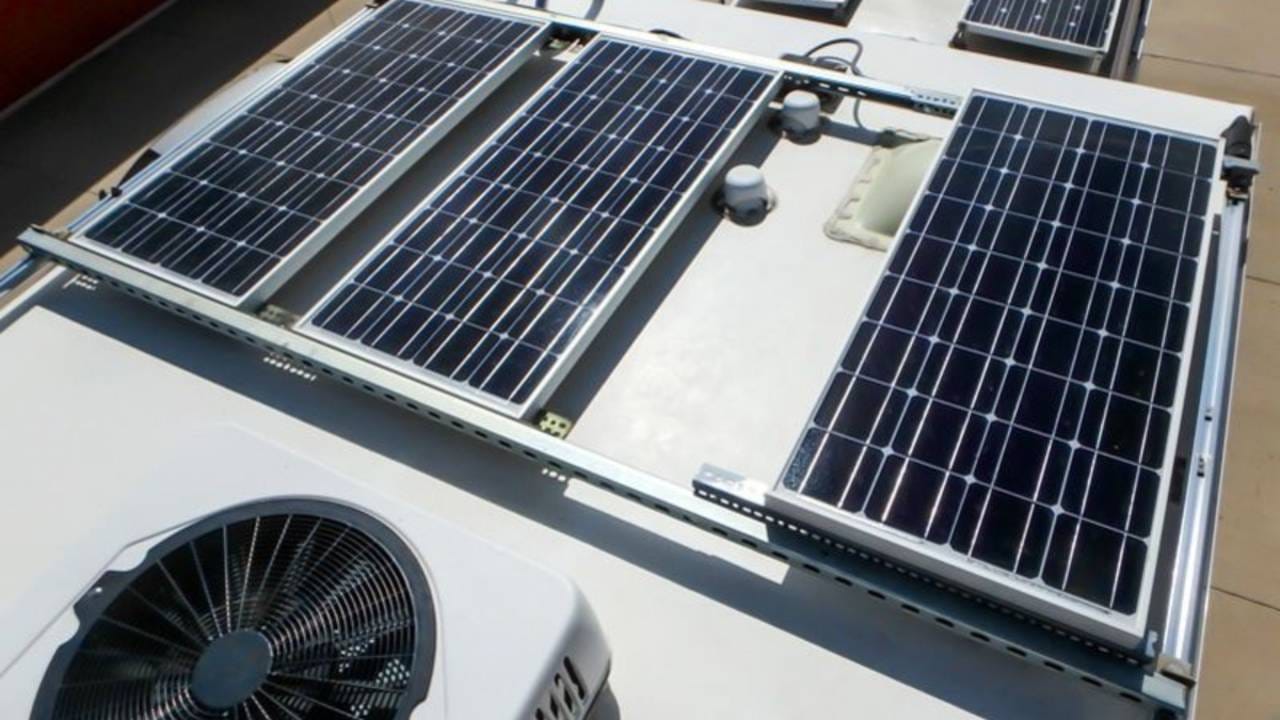
Both can be portable or roof-mounted, with brands like Renogy offering kits starting at 400W.
Flexible Solar Panels
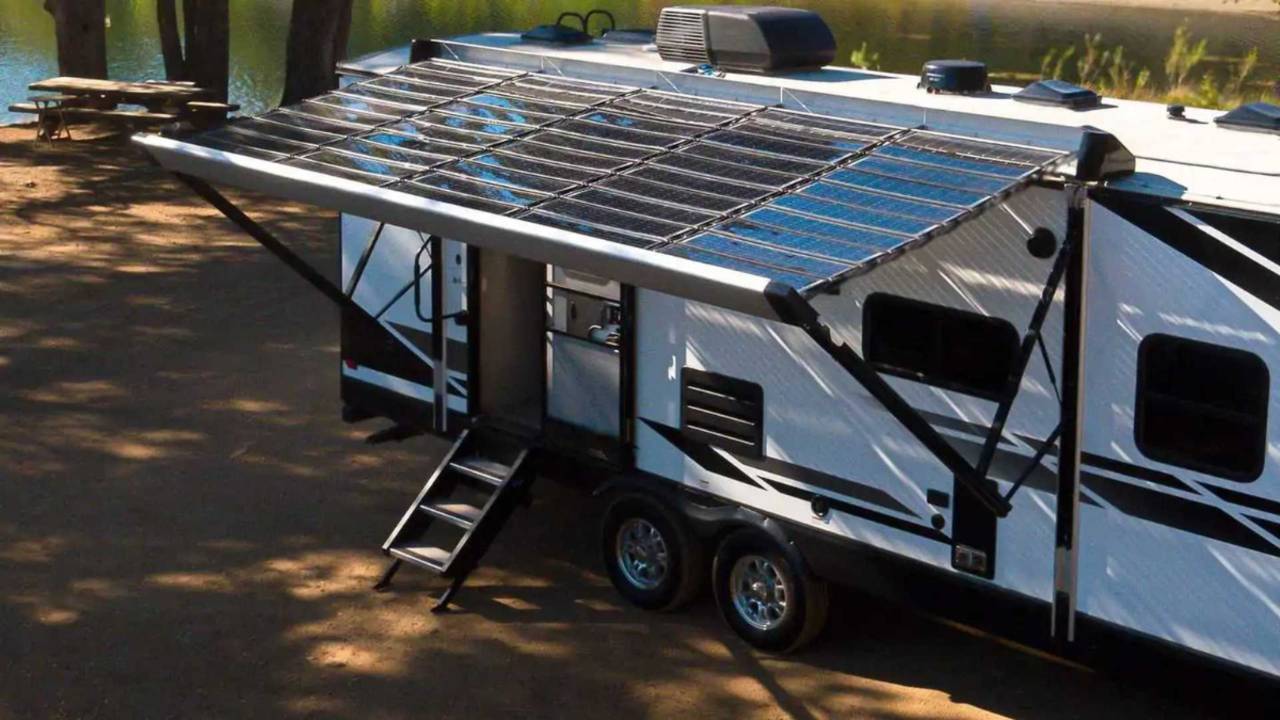
These lightweight, bendable panels conform to curved roofs, avoiding drilling.
- Thin-Film Amorphous Silicon: Affordable ($0.60-$0.70/W) with efficiencies around 12-14%. Their low temperature coefficient (-0.20% to -0.23%/°C) makes them resilient in Montana’s hot summers and cold winters. Often rollable for easy storage.
- Flexible Monocrystalline: Combining mono efficiency (23-25%) with flexibility, these are premium options for seamless roof integration. They’re durable against hail and wind, common in Montana.
For Montana’s diverse terrain, flexible panels are popular for RVs with irregular roofs, as seen in installations adapting to camper vans exploring the state’s backroads.
Portable variants, like Goal Zero’s Boulder series, allow setup on the ground for better angling toward the sun, especially useful during low-angle winter sunlight.
What Is the Best Type of Solar Panel for RVs in Montana?
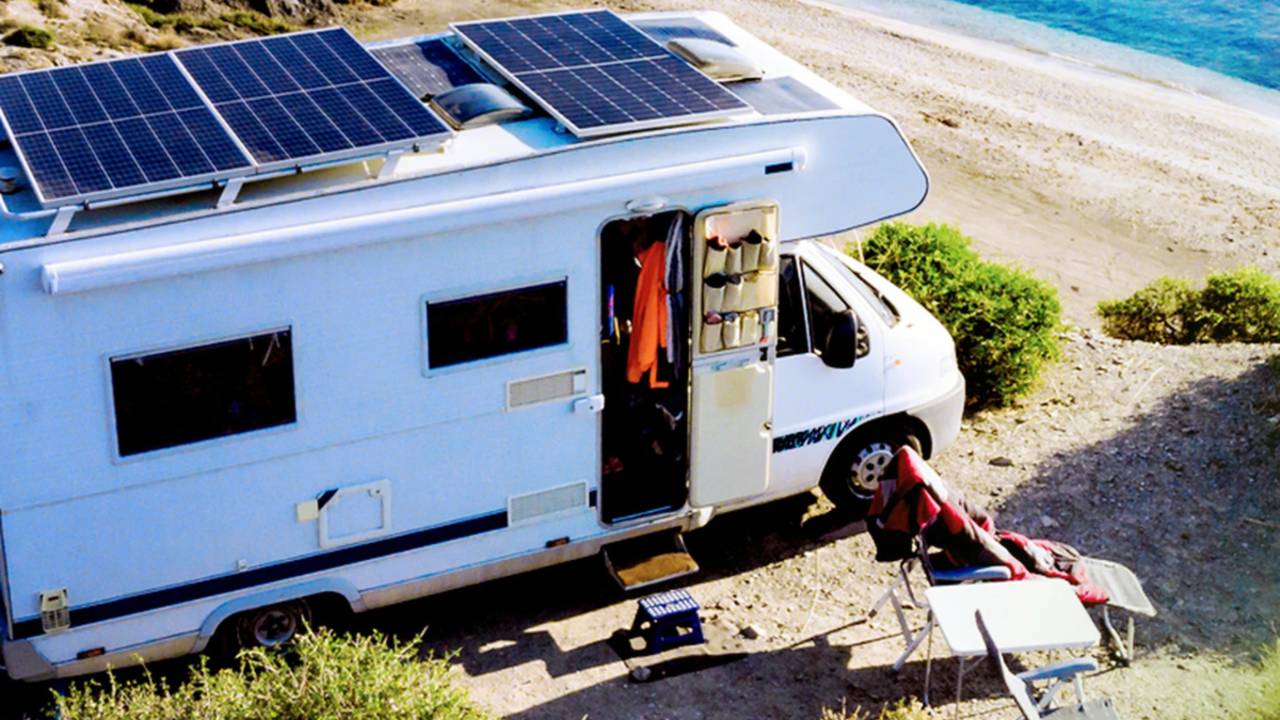
Choosing depends on your budget, space, and travel style. Monocrystalline rigid panels excel for high output in limited space, while flexible amorphous suits curved roofs and hot climates. In Montana, prioritize panels with low temperature coefficients for cold efficiency and snow-shedding designs.
| Type | Conversion Efficiency | Price ($/W) | Temperature Coefficient | Installation Options |
|---|---|---|---|---|
| Monocrystalline Rigid | 25-26% | 1.10-1.25 | -0.35%/°C | Portable/Fixed Rack |
| Polycrystalline Rigid | 22-24% | 0.90-1.00 | -0.39%/°C | Portable/Fixed Rack |
| Amorphous Thin-Film Flexible | 12-14% | 0.60-0.70 | -0.20%/°C | Portable/Flexible/Rollable |
| Flexible Monocrystalline | 23-25% | 1.20-1.40 | -0.35%/°C | Flexible/Fixed |
Experts recommend monocrystalline for Montana due to its superior low-light performance, as noted in Outdoor Gear Lab tests. For snowy conditions, tilt-mounted panels help shed accumulation.
1. Renogy 200W 12V Monocrystalline Solar Panel
Price Range: $200-$250 per panel
Key Specifications:
- Efficiency: 21%
- Temperature coefficient: -0.38%/°C
- Operating temperature: -40°F to 185°F
- Weight: 26.6 lbs
- Dimensions: 58.7 x 26.8 x 1.4 inches
- Warranty: 25-year power output, 5-year materials
Why It Excels in Montana: The Renogy 200W panel features bypass diodes that minimize power loss from partial shading or snow coverage. Its aluminum frame withstands heavy snow loads up to 5400 Pa, and the corrosion-resistant design handles Montana’s freeze-thaw cycles. The monocrystalline cells maintain excellent low-light performance during overcast winter days.
Montana RV Owner Reviews: Users in Missoula report these panels continuing to charge batteries even with light snow cover. The anti-reflective coating helps capture diffused light during cloudy conditions common in western Montana valleys.
2. Victron Energy 175W Monocrystalline Panel
Price Range: $280-$320 per panel
Key Specifications:
- Efficiency: 20.5%
- Temperature coefficient: -0.35%/°C
- Operating temperature: -40°F to 185°F
- Weight: 26.5 lbs
- Dimensions: 58.3 x 26.6 x 1.4 inches
- Warranty: 25-year linear performance
Why It Excels in Montana: Victron panels are engineered with enhanced low-temperature performance. The reduced temperature coefficient means less power loss in Montana’s heat waves. Their European manufacturing includes rigorous testing at -40°F, perfect for Montana’s northern regions near Glacier National Park.
Integration Benefits: Pairs seamlessly with Victron’s MPPT controllers and battery management systems, creating an integrated ecosystem that optimizes performance in variable Montana weather.
3. Go Power! 190W Overlander Solar Panel
Price Range: $350-$400 per panel
Key Specifications:
- Efficiency: 19.8%
- Temperature coefficient: -0.40%/°C
- Operating temperature: -40°F to 194°F
- Weight: 28.2 lbs
- Dimensions: 63.4 x 26.3 x 1.4 inches
- Warranty: 25-year power, 5-year workmanship
Why It Excels in Montana: Specifically designed for RV applications with pre-drilled mounting holes and included Z-brackets. The tempered glass is 25% thicker than standard panels, providing superior hail resistance crucial for Montana’s summer storms. The sealed junction box prevents moisture intrusion during heavy mountain snowfall.
Best For: RV owners who frequently visit Montana’s mountainous regions with extreme weather variability.
4. Rich Solar 200W 12V Monocrystalline PERC Panel
Price Range: $180-$220 per panel
Key Specifications:
- Efficiency: 21.5%
- Temperature coefficient: -0.36%/°C
- Operating temperature: -40°F to 185°F
- Weight: 23.8 lbs
- Dimensions: 58.5 x 26.8 x 1.4 inches
- Warranty: 25-year output, 5-year materials
Why It Excels in Montana: PERC (Passivated Emitter and Rear Cell) technology captures more light wavelengths, particularly beneficial during Montana’s low-angle winter sun. The lightweight design reduces roof stress during heavy snow accumulation. Advanced bypass diodes ensure continued operation even when one section is shaded or snow-covered.
Value Proposition: Offers premium features at a budget-friendly price point, ideal for Montana RVers upgrading from smaller systems.
5. Newpowa 180W Monocrystalline Panel
Price Range: $150-$190 per panel
Key Specifications:
- Efficiency: 19.2%
- Temperature coefficient: -0.42%/°C
- Operating temperature: -40°F to 185°F
- Weight: 25.4 lbs
- Dimensions: 58.7 x 26.8 x 1.4 inches
- Warranty: 25-year power output, 1-year materials
Why It Excels in Montana: Budget-conscious option that doesn’t compromise on cold-weather performance. The higher temperature coefficient actually works in your favor during Montana winters. Corrosion-resistant aluminum frame handles road salt exposure during winter travels.
Best For: Entry-level systems or RVers who primarily travel during summer but want year-round capability.
Complete System Components for Montana RV Solar
MPPT (Maximum Power Point Tracking) Controllers: Essential for Montana installations. MPPT controllers extract 20-30% more power than PWM controllers, particularly crucial during winter’s shorter days. They excel at converting excess voltage (common in cold weather) into additional amperage.
Top MPPT Controllers for Montana:
- Victron SmartSolar MPPT 100/30 ($240-$280)
- Bluetooth monitoring
- Advanced temperature compensation
- Excellent low-temperature performance
- Works down to -22°F
- Renogy Rover 40A MPPT ($150-$180)
- LCD display
- Temperature sensor included
- Sealed design for moisture resistance
- Epever Tracer 40A MPPT ($130-$160)
- Budget-friendly
- Multiple load control modes
- Good cold-weather reliability
Battery Solutions for Montana’s Extreme Temperatures
Lithium Iron Phosphate (LiFePO4) Batteries:
LiFePO4 batteries are superior for Montana use but require heated protection below 32°F for charging.
Top Picks:
- Battle Born 100Ah LiFePO4 ($950-$1,050)
- Built-in heaters activate automatically
- Operates down to -4°F
- 3,000-5,000 cycle lifespan
- Excellent for year-round Montana use
- Renogy 200Ah LiFePO4 with Bluetooth ($700-$800)
- Self-heating function
- Monitors temperature via app
- Good value for larger systems
AGM Batteries for Extreme Cold:
For RVers frequently camping in sub-zero temperatures without shore power, AGM batteries charge reliably down to -4°F.
Top AGM Choices:
- Victron AGM Deep Cycle 200Ah ($450-$550)
- Excellent cold-weather performance
- Low self-discharge rate
- Can handle Montana’s temperature swings
- Renogy Deep Cycle AGM 200Ah ($380-$450)
- Budget-friendly
- Reliable in freezing conditions
- Good cycle life for the price
Inverters for Montana RV Solar Systems
Pure Sine Wave Inverters:
Essential for running sensitive electronics and appliances.
Recommended Models:
- Victron MultiPlus 12/3000 ($1,200-$1,400)
- Integrated charger
- Power assist feature
- Proven reliability in cold climates
- Renogy 2000W Pure Sine Wave ($450-$550)
- Excellent value
- Reliable performance
- Good warranty support
- AIMS Power 3000W ($600-$700)
- High surge capacity
- Remote control included
- Solid cold-weather performance
RV Solar in Montana: Climate and Incentives
Montana’s climate—harsh winters, sunny summers—demands resilient systems. Panels with anti-reflective coatings perform in diffuse light, and batteries rated for sub-zero temps prevent capacity loss.
Incentives make solar more accessible:
- Federal Investment Tax Credit (ITC): 30% credit on system costs through 2032, stepping down afterward.
- Montana Property Tax Exemption: Exempts up to $20,000 (residential) or $100,000 (other) of system value from property taxes for 10 years.
- Alternative Energy Revolving Loan Program: Low-interest loans up to $40,000 for solar installations.
- Rebates and Grants: DEQ offers funding for renewable projects, including RV-integrated systems
These can reduce costs by 40-50%, making a 400W system under $1,000 after incentives.
What to Consider When Choosing RV Solar Panels (With Expert Advice)
Expert Matt Walker from Mobile Solar Consulting advises: “Size for your needs, not excess. In Montana, factor in winter PSH—aim for 20-30% oversizing.”
System Size: Assess Your Energy Needs
Calculate daily consumption (e.g., TV: 150Wh, laptop: 100Wh) and divide by PSH (Montana average: 3.5). Use: System Size (W) = Daily Wh / (PSH × Efficiency Factor ~0.85). For a moderate user, 400-800W suffices.
Expected Costs in 2026
Basic 100W kits: $100-$250. Full 400W systems: $700-$1,500 DIY, $2,000+ installed. Premium kits with batteries/inverters: $2,000-$5,000. EcoFlow notes variations based on professional install.
Mounting Options
- Fixed: Drill and bracket for rigid panels.
- Flexible: Adhesive tapes for curves.
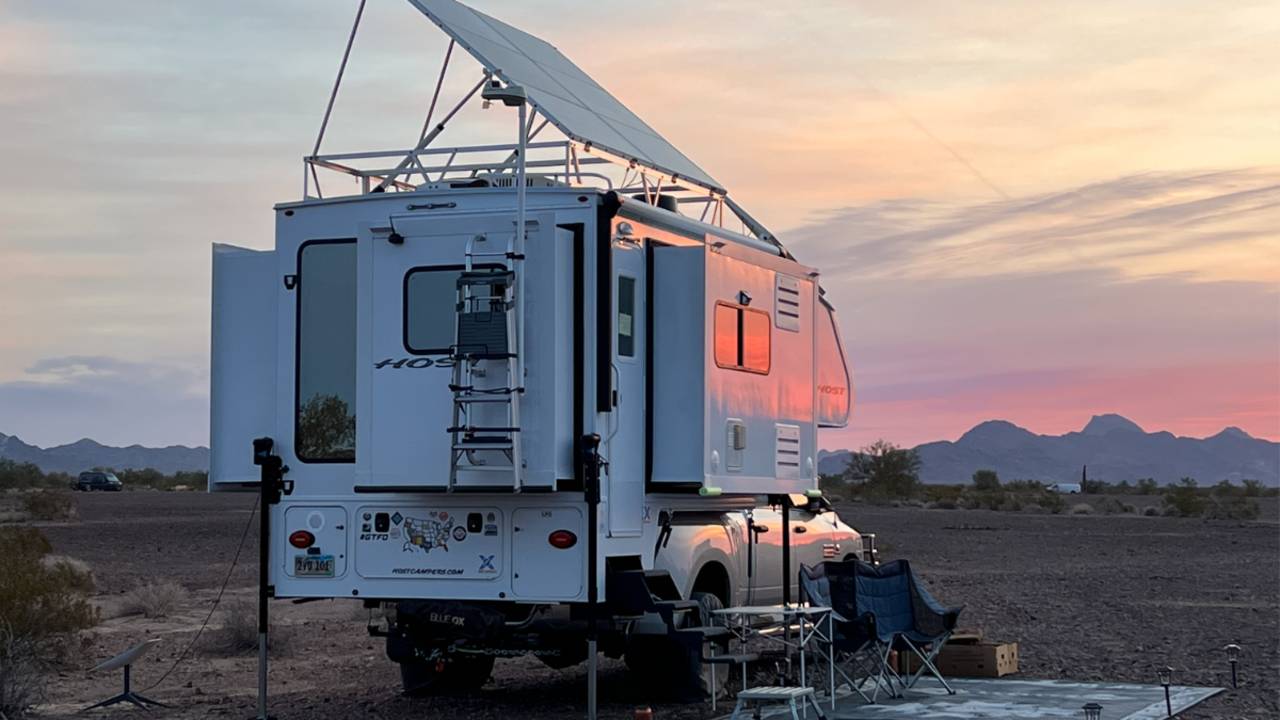
- Tilt: Adjustable for seasonal sun angles, boosting winter output by 20-30%.
Portable for ground use avoids roof clutter.
Battery Size: Focus on Autonomy
Convert Ah to Wh (Ah × V). A 200Ah 12V battery stores 2,400Wh—enough for 1-2 days off-grid. For Montana winters, add 20% capacity.
Choosing a Charge Controller
Match voltage/amperage to panels. MPPT for efficiency in variable light.
Best Type for You
Weigh efficiency vs. cost. For Montana, monocrystalline flexible from Renogy or Goal Zero.
Top Brands Selling RV Solar Panels
- Renogy: Durable kits from $300-$700, excellent for Montana’s weather.
- Goal Zero: Portable powerhouses starting at $200, with high-capacity batteries.
- Rich Solar: Affordable, efficient panels up to 410W.
- EcoFlow: Integrated systems with smart apps for monitoring.
Other notables: Jackery, BigBlue for portable options.
Installation Considerations for Montana RV Solar
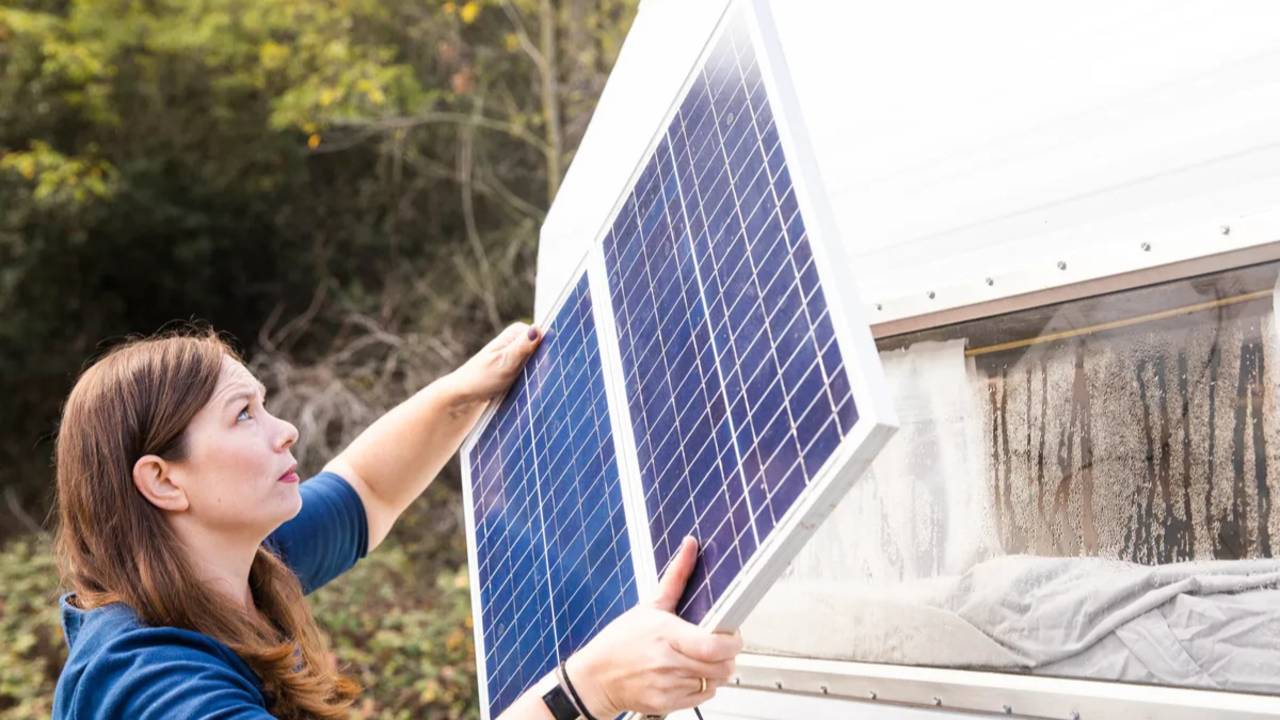
Flat Mount vs Tilted Mount:
Montana’s heavy snowfall requires strategic mounting decisions.
Flat Mount (0-5° tilt):
- Lower profile reduces wind resistance
- Snow accumulates more readily
- Better for summer-focused camping
- Easier installation
Tilted Mount (15-30° tilt):
- Snow slides off more easily
- Better winter angle for low sun
- Captures more light in winter months
- May require specialized brackets
Tilt Angle Recommendations for Montana:
- Latitude-based tilt: Montana’s latitude ranges from 44°N (southern border) to 49°N (Canadian border)
- Optimal year-round angle: 45-48°
- Winter optimization: Add 15° to latitude (60-65°)
- Summer optimization: Subtract 15° from latitude (30-35°)
Wiring and Connection Best Practices
Cold-Weather Wiring Requirements:
- Use appropriately rated wire:
- Minimum 10 AWG for 30A applications
- 8 AWG for 40A+ applications
- THHN or solar-rated wire rated for -40°F
- Seal all connections:
- Use dielectric grease on all connections
- Heat-shrink all wire splices
- Weatherproof junction boxes
- Allow for thermal expansion:
- Leave slight slack in wiring
- Montana’s 120°F temperature swing causes expansion/contraction
- MC4 connectors:
- Industry standard
- Rated for extreme temperatures
- Waterproof when properly connected
Roof Preparation and Sealing
Critical Steps:
- Reinforce mounting points:
- Locate roof joists/ribs
- Use backing plates inside RV
- Distribute weight across multiple points
- Proper sealant selection:
- Use Dicor Self-Leveling Lap Sealant
- Avoid silicone (doesn’t bond to RV materials)
- Reapply annually in Montana’s harsh climate
- Prevent ice damming:
- Install panels with adequate clearance (2-3 inches minimum)
- Allows water drainage
- Prevents ice buildup that can damage roof
Winter Maintenance and Snow Management
Snow Removal Strategies
Safe Snow Removal Methods:
- Soft-bristle broom or brush:
- Push snow off gently
- Avoid scratching panel surface
- Work from bottom up
- Warm water spray:
- Use lukewarm (not hot) water
- Melts snow without thermal shock
- Effective for ice removal
- Panel heaters:
- Low-wattage heating pads
- Prevent snow accumulation
- Cost-effective for full-time winter camping
What NOT to Do:
- Never use metal scrapers or shovels
- Avoid hot water (can crack panels)
- Don’t walk on panels
- Never use salt or chemicals
Preventing Ice Buildup
Anti-Icing Solutions:
- Hydrophobic coatings:
- Apply Rain-X or similar products
- Reduces ice adhesion
- Reapply every 3-6 months
- Increased tilt angle:
- Encourages snow to slide off
- 30°+ angle optimal for self-clearing
- Regular monitoring:
- Check panels after snowfall
- Clear before ice forms
- Monitor production drops
Cold Weather Battery Management
Protecting Batteries in Montana Winters:
- Insulation:
- Wrap battery compartment with insulation
- Maintain minimum 50°F for LiFePO4 charging
- AGM batteries more forgiving
- Battery heating solutions:
- Heated battery boxes
- Heating pads with thermostats
- Some premium batteries include built-in heaters
- Charging considerations:
- LiFePO4 batteries cannot charge below 32°F without heaters
- AGM batteries charge slowly below 32°F
- MPPT controllers with temperature sensors adjust charging
Montana RV Solar Incentives and Rebates
Federal Tax Credits
Investment Tax Credit (ITC):
- 30% federal tax credit for solar installations
- Applies to RV solar systems
- Available through 2032
- Steps down to 26% in 2033, 22% in 2034
How to Claim:
- File IRS Form 5695
- Include equipment and installation costs
- Professional installation recommended for documentation
Montana State Incentives
Alternative Energy Systems Tax Credit: Montana offers a tax credit for renewable energy systems, though RV applications may have limitations.
Property Tax Exemptions:
- Solar installations exempt from property tax increases
- Primarily benefits stationary installations
- Check with county assessor for RV applicability
Utility Company Programs
Northwestern Energy Rebates:
- Check current programs for solar installations
- May apply to RV systems used as primary residence
- Varies by service territory
Best Montana RV Destinations for Solar Camping
Glacier National Park Region
Solar Considerations:
- Excellent sun exposure above tree line
- Heavy snow in winter
- Many-Glacier area offers unobstructed southern exposure
- Plan for 6-7 peak sun hours in summer
Recommended System: 400-600W for summer camping
Yellowstone National Park (Montana Entrances)
Solar Considerations:
- High elevation improves panel efficiency
- Variable weather requires larger battery bank
- Northern entrance near Gardiner offers good year-round access
Recommended System: 600-800W for extended stays
Flathead Lake Region
Solar Considerations:
- Western Montana’s milder climate
- More overcast days than eastern Montana
- Beautiful summer camping
- Moderate snow in winter
Recommended System: 400-600W sufficient
Eastern Montana Plains
Solar Considerations:
- Highest average sunshine in state
- Minimal shading
- Extreme temperature swings
- High winds require secure mounting
Recommended System: 400W can often meet needs due to excellent sun exposure
Missouri River Corridor
Solar Considerations:
- Good sun exposure
- Popular for extended stays
- Limited shade at most camping areas
- Four-season access at many locations
Recommended System: 600W for year-round comfort
Troubleshooting Common Montana Solar Issues
Reduced Winter Production
Symptoms:
- Batteries not fully charging
- System produces 50-70% less than summer
Solutions:
- Verify panels are snow-free
- Check for ice on panel surface
- Confirm MPPT controller functioning properly
- Consider this normal for Montana winters
- Add additional panels if needed
Frozen Charge Controller or Inverter
Symptoms:
- Display blank or frozen
- No charging despite sunlight
- Error codes
Solutions:
- Many controllers rated to -22°F or lower
- Insulate controller compartment
- Install in heated area if possible
- Check manufacturer’s temperature specifications
Ice Damage to Panels or Mounting
Symptoms:
- Cracked glass
- Bent frames
- Loose mounting hardware
Prevention:
- Regular snow removal prevents ice buildup
- Ensure mounting can handle snow load
- Install with proper clearance for expansion
- Annual inspection and maintenance
Battery Won’t Charge in Cold
Symptoms:
- LiFePO4 battery refuses charge below 32°F
- AGM charges very slowly
Solutions:
- Install battery heaters with thermostats
- Insulate battery compartment
- Keep batteries indoors overnight in extreme cold
- Consider switching to heated LiFePO4 batteries
Advanced Tips for Montana RV Solar Optimization
Portable Panel Strategy
Benefits for Montana RVers:
- Position panels away from RV in optimal sun
- Avoid RV shading issues
- Clear snow without climbing on roof
- Adjust angle throughout day
Best Portable Panels:
- Renogy 200W Foldable Suitcase ($400-$500)
- Built-in charge controller
- Kickstand for angling
- Carrying case included
- Rockpals 300W Foldable ($350-$450)
- Lightweight design
- Good low-light performance
- Affordable option
Dual System Approach
Roof-Mounted + Portable:
- Roof panels for baseline production
- Portable panels for winter boost
- Portable panels for optimal angling
- Maximizes flexibility
Solar Tracker Systems
Automatic Tracking: While complex for RVs, small manual tracking systems can boost production by 25-40%.
DIY Manual Tracking:
- Adjust tilt 2-3 times daily
- Face panels south (northern hemisphere)
- Follow sun’s path
- Most beneficial in winter
Cost Analysis and ROI for Montana RV Solar
Complete System Costs
Budget System (200W):
- Panels: $150-$250
- MPPT Controller: $130-$160
- Battery (AGM 100Ah): $200-$250
- Inverter (1000W): $200-$300
- Wiring/mounting: $100-$150
- Total: $780-$1,110
Mid-Range System (400W):
- Panels: $360-$500
- MPPT Controller: $150-$240
- Battery (LiFePO4 200Ah): $700-$950
- Inverter (2000W): $450-$550
- Wiring/mounting: $200-$300
- Total: $1,860-$2,540
Premium System (800W):
- Panels: $720-$1,000
- MPPT Controller: $240-$350
- Batteries (LiFePO4 400Ah): $1,500-$2,000
- Inverter (3000W): $600-$1,200
- Wiring/mounting: $300-$500
- Total: $3,360-$5,050
ROI Calculations
Campground Cost Savings:
- Montana state park camping with hookups: $25-$45/night
- Boondocking with solar: $0-$15/night (if site fee applies)
- Average savings: $20-$35/night
Generator Cost Comparison:
- Generator fuel: $5-$10/day
- Generator maintenance: $200-$400/year
- Solar maintenance: $50-$100/year
- Annual savings: $1,400-$3,000 for frequent campers
Payback Period:
- Budget system: 6-12 months of regular use
- Mid-range system: 1-2 years
- Premium system: 2-3 years
- After payback, pure savings plus increased camping freedom
Real Montana RV Owner Experiences
Case Study 1: Full-Time RVers in Bozeman
System: 800W panels, 400Ah LiFePO4, 3000W inverter
Experience: “We live in our RV year-round near Bozeman. The 800W system keeps us completely off-grid from April through October. Winter requires more generator use, but we still get 60-70% of our power from solar even in January. The key is keeping panels clear of snow and having enough battery capacity for cloudy stretches.”
Lessons Learned:
- Oversized battery bank crucial for winter
- Heated LiFePO4 batteries worth the investment
- Tilted mounting helps snow shed
Case Study 2: Weekend Warriors in Glacier National Park
System: 400W panels, 200Ah AGM, 2000W inverter
Experience: “We camp most summer weekends exploring Glacier. Our 400W system provides all the power we need. We run our fridge, charge devices, and enjoy LED lighting without ever needing hookups. The freedom to boondock in remote areas has transformed our camping experience.”
Lessons Learned:
- 400W sufficient for summer weekend use
- Portable panel adds flexibility
- AGM batteries handle occasional cold nights well
Case Study 3: Winter Ski Trip Enthusiasts
System: 600W panels, 300Ah heated LiFePO4, 2000W inverter
Experience: “We ski at Big Sky, Bridger Bowl, and Discovery Basin all winter. Our solar system, combined with the RV furnace, keeps us comfortable. The panels produce surprisingly well in winter, especially with snow reflection. We clear snow daily and the heated batteries charge reliably even at -10°F.”
Lessons Learned:
- Heated batteries essential for winter camping
- Snow removal routine critical
- Larger system needed for furnace fan operation
Future-Proofing Your Montana RV Solar System
Expandability Considerations
Plan for Growth:
- Oversized charge controller:
- Buy 30-40A controller even for small system
- Allows adding panels later
- Minimal additional cost upfront
- Roof space planning:
- Leave room for additional panels
- Consider future upgrade to 600-800W
- Plan wire routing for expansion
- Battery bank expansion:
- Choose batteries that can parallel
- Leave space in battery compartment
- Plan for future capacity increase
Emerging Technologies
Bifacial Solar Panels:
- Capture light from both sides
- Excellent for Montana’s snow reflection
- 10-30% production boost in snowy conditions
- Currently premium priced but improving
Higher Efficiency Cells:
- 23-25% efficiency panels becoming available
- More power from same roof space
- Better low-light performance
- Worth considering for new installations
Smart Solar Integration:
- Bluetooth/WiFi monitoring
- Automated battery management
- Remote system monitoring
- Predictive charging algorithms
Conclusion
RV solar panels empower Montana travelers with sustainable, reliable power for endless adventures. By understanding types, components, and local factors, you can build a system that fits your lifestyle. Consult experts, leverage incentives, and hit the road grid-free. Whether chasing sunsets over the Rockies or stargazing in the prairies, solar ensures your journey stays bright.