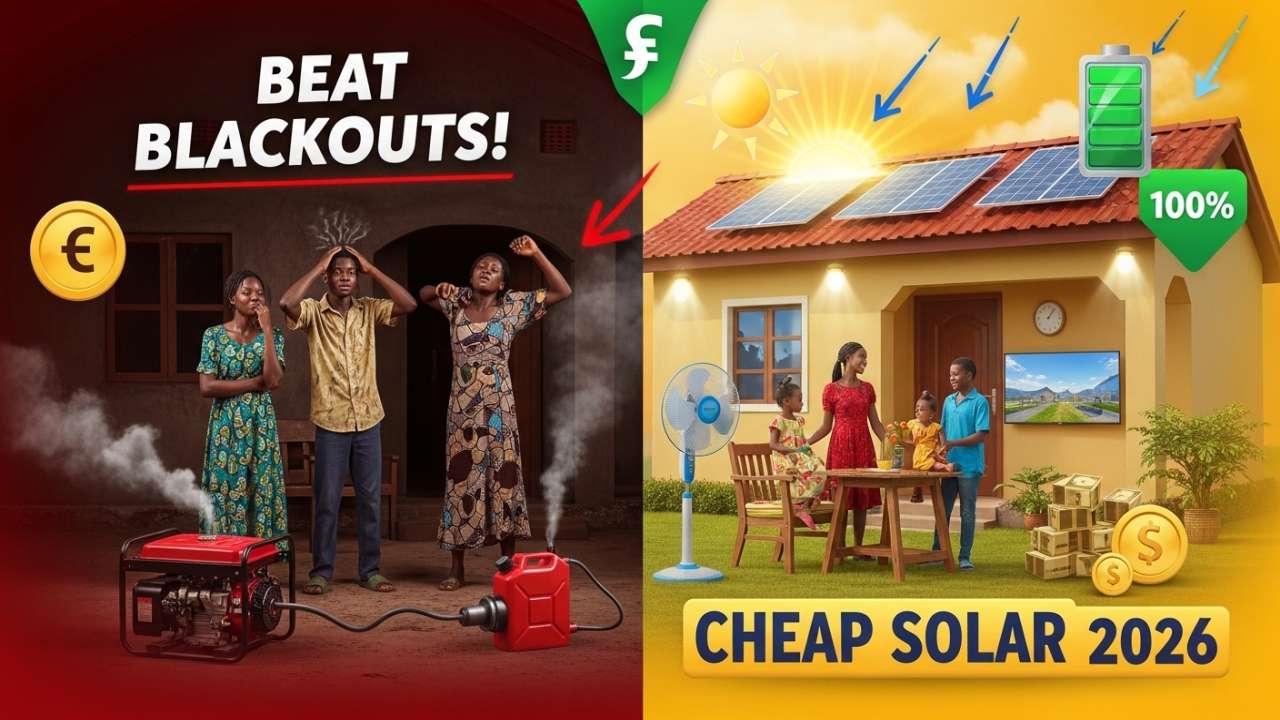
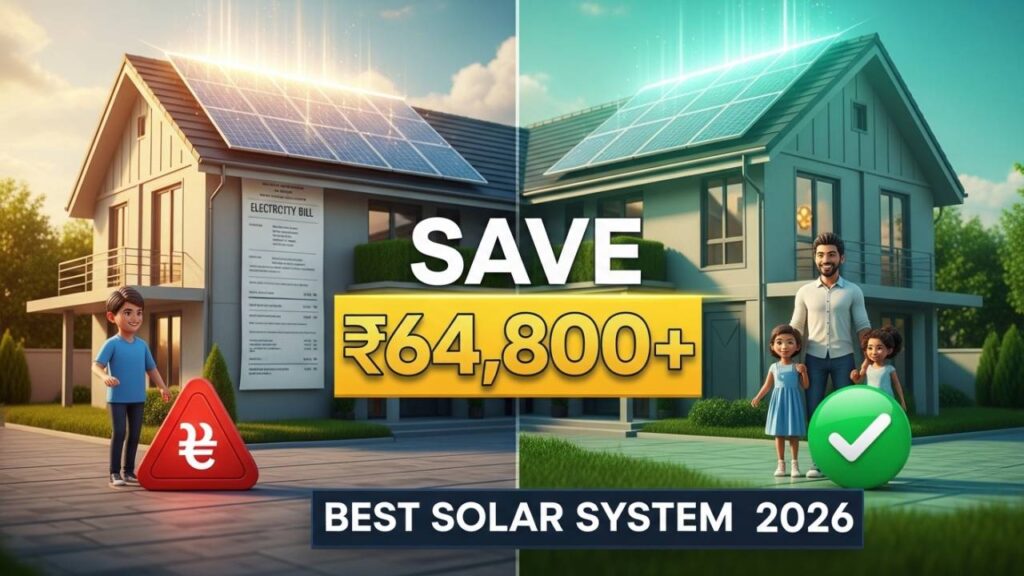
Nigeria’s electricity crisis has made solar energy an increasingly popular solution for homeowners seeking reliable, sustainable, and cost-effective power. With rising electricity tariffs and frequent power outages, installing a solar system has become not just an eco-friendly choice, but an economical necessity for many Nigerian families.
This comprehensive guide explores the best solar systems available for Nigerian homes in 2026, providing you with all the information needed to make an informed decision. Whether you’re a first-time buyer or looking to upgrade your existing system, this article will help you understand your options, calculate costs, and maximize your investment.
Why Solar Energy is Essential in Nigeria
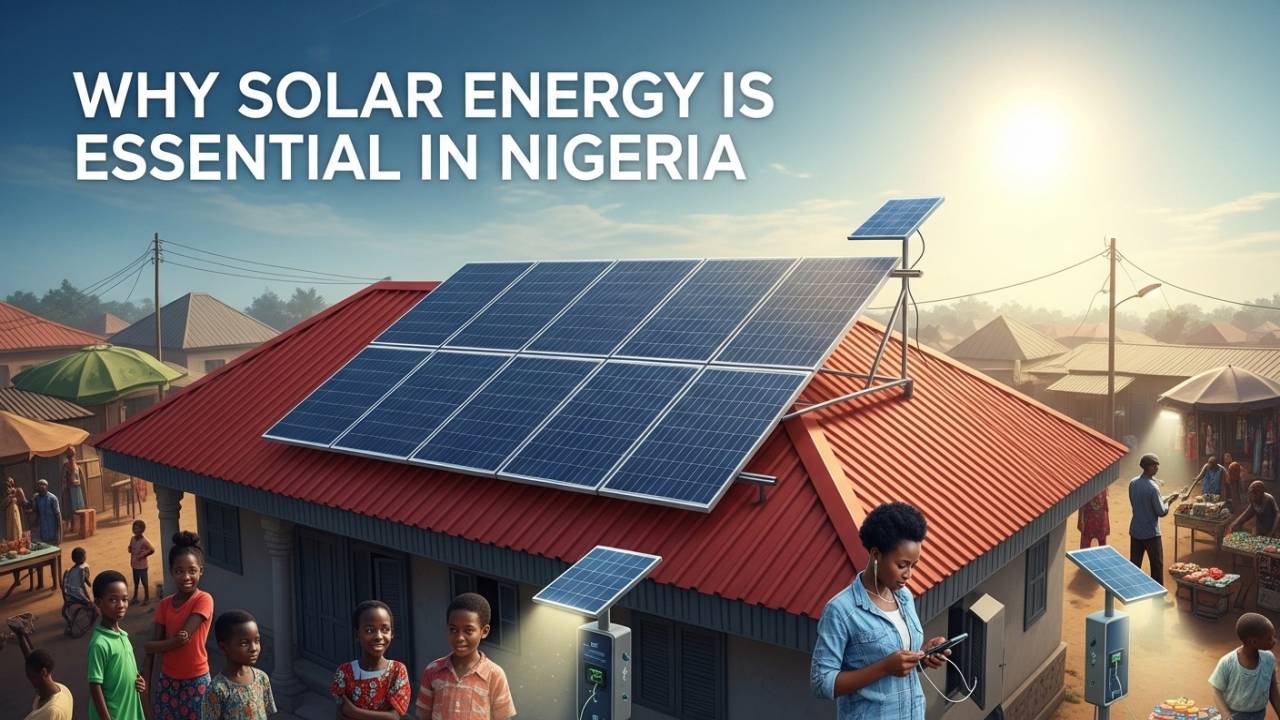
Nigeria has struggled with a consistent electricity supply for decades. The national grid continues to experience frequent blackouts, affecting homes, businesses, and industries. This unreliable power supply has forced millions of Nigerians to seek alternative energy solutions.
Rising Electricity Costs
NERC (Nigerian Electricity Regulatory Commission) has implemented multiple tariff increases in recent years. For average households, electricity bills have become increasingly burdensome, with some families spending over ₦50,000 monthly on power supply.
Benefits of Solar Energy in Nigeria
Cost Savings: Solar systems can reduce or eliminate electricity bills within 5-7 years of installation.
Reliability: Unlike the national grid, solar systems provide consistent power generation, especially in sunny Nigeria which receives an average of 5-6 peak sun hours daily.
Environmental Impact: Solar energy is clean and reduces your carbon footprint significantly.
Long-term Investment: Modern solar panels last 25-30 years, providing decades of reliable power.
Energy Independence: Generate your own electricity and become less dependent on the unreliable national grid.
Types of Solar Systems for Nigerian Homes
On-grid solar systems are connected to the national electricity grid. Excess energy generated is fed back to the grid, and you can draw power from the grid when solar production is low.
Advantages:
- Lower solar system installation cost (no battery needed)
- Receive credits for excess energy fed to the grid
- No storage limitations
Disadvantages:
- Depends on grid availability
- No power during grid outages
- Regular grid connection fees apply
Best for: Urban homeowners with stable grid connections
2. Off-Grid Solar Systems
Off-grid solar systems operate independently without connection to the national grid. They include battery storage for power during nighttime and cloudy days.
Advantages:
- Complete energy independence
- Unaffected by grid outages
- Ideal for areas without grid access
- Full control over energy consumption
Disadvantages:
- Higher upfront costs (battery storage)
- Requires regular maintenance
- Battery replacement needed every 5-10 years
- Limited power capacity
Best for: Rural areas and locations without grid access
3. Hybrid Solar Systems
Hybrid solar systems combine grid connection with battery backup. They intelligently switch between solar, battery, and grid power based on demand and availability.
Advantages:
- Maximum reliability and flexibility
- Lower operating costs than off-grid
- Battery backup during outages
- Can sell excess energy to grid
Disadvantages:
- Highest initial investment
- Complex installation and maintenance
- Requires professional monitoring
Best for: Premium homes and businesses requiring maximum reliability
Best Solar Brands and Systems in Nigeria
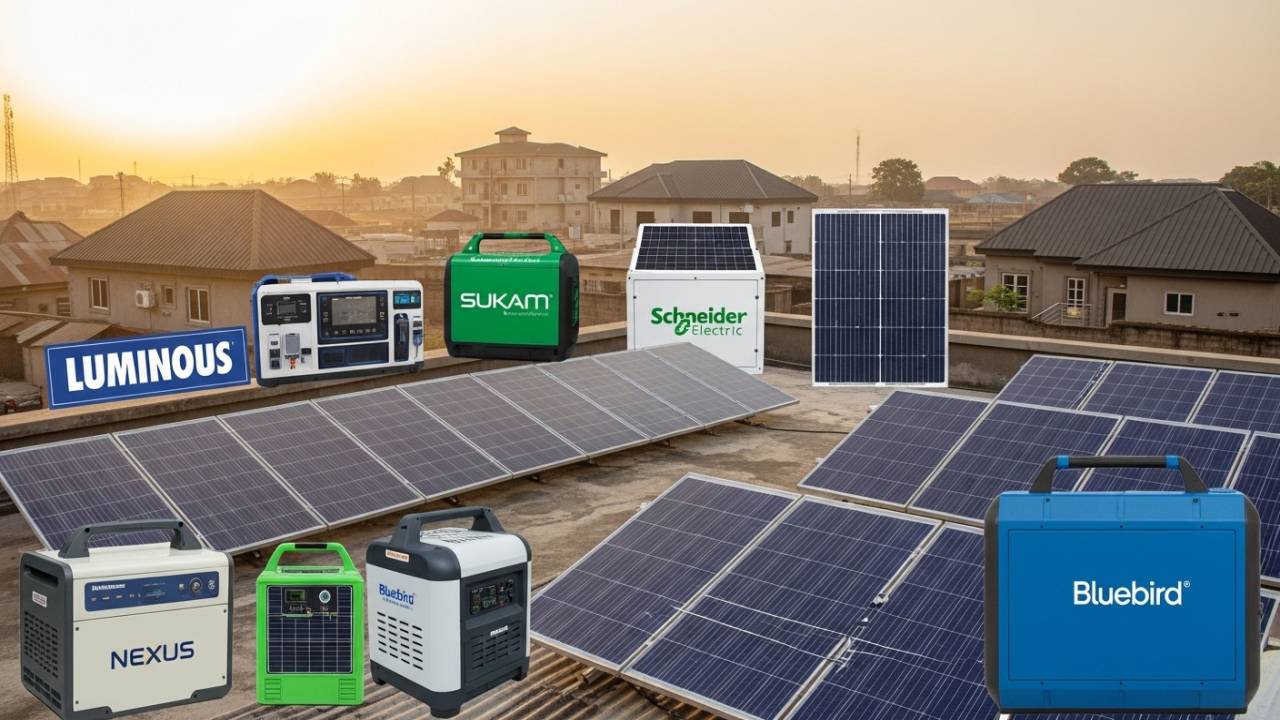
Top Solar Brands Available in Nigeria 2026
1. JinkoSolar – Best Overall Solar Panel Brand
Specifications:
- Efficiency: 20.5-22%
- Panel power: 400-550W
- Warranty: 25 years (panels), 12 years (inverter)
- JinkoSolar price Nigeria: ₦2.5M – ₦8M (3-10kW system)
JinkoSolar panels dominate the Nigerian market with reliable, high-efficiency panels. Their products offer excellent value for money and strong after-sales support.
2. Canadian Solar – Best for Tropical Climate
Specifications:
- Efficiency: 19.5-21%
- Panel power: 380-545W
- Warranty: 25 years (panels), 10 years (inverter)
- Canadian Solar cost Nigeria: ₦2.8M – ₦9M (3-10kW system)
Known for durability in tropical climates, Canadian Solar panels are popular among Nigerian homeowners seeking long-term reliability.
3. Luminous India – Best Budget Option
Specifications:
- Efficiency: 18-20%
- Panel power: 350-500W
- Warranty: 25 years (panels), 5 years (inverter)
- Luminous solar system price Nigeria: ₦2M – ₦6.5M (3-10kW system)
Luminous offers affordable solar energy solutions, particularly popular for hybrid solar systems Nigeria.
4. Victron Energy – Premium Hybrid Systems
Specifications:
- Specialized in hybrid and off-grid solar systems
- Inverter efficiency: 95-98%
- Warranty: 10 years (inverter)
- Victron hybrid system cost: ₦3M – ₦12M (complete 5-15kW)
Premium option for those seeking advanced solar system installation with superior quality and longevity.
5. Growatt – Best Value Brand
Specifications:
- Efficiency: 18-20%
- Panel power: 330-550W
- Warranty: 25 years (panels), 10 years (inverter)
- Growatt solar panel price Nigeria: ₦2.2M – ₦7.5M (3-10kW system)
Excellent budget-friendly option with reliable inverters and good customer service for solar installation in Nigeria.
Cost Breakdown: Solar System Installation in Nigeria
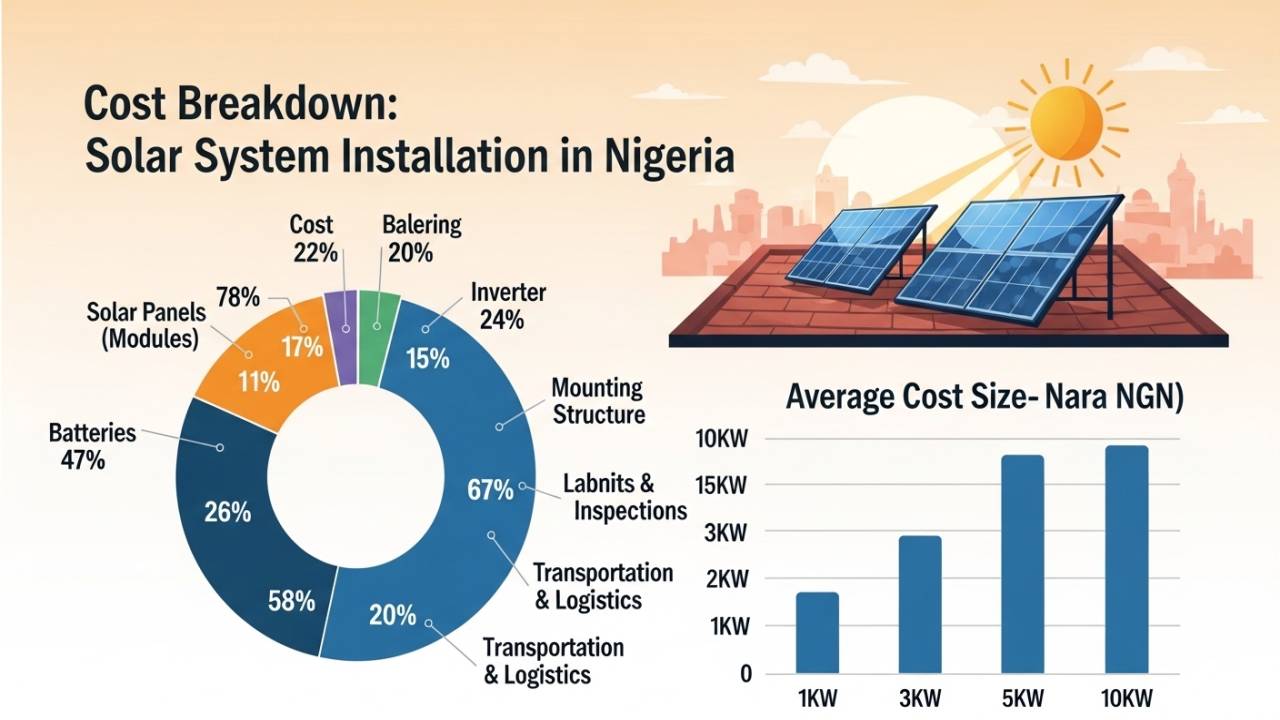
Sample 5kW System Cost Analysis (2026 Prices)
Complete 5kW Hybrid Solar System Price Breakdown:
| Component | Quantity | Unit Price | Total Cost |
|---|---|---|---|
| Solar Panels (400W) | 13 units | ₦180,000 | ₦2,340,000 |
| 5kW Inverter | 1 | ₦800,000 | ₦800,000 |
| Battery Storage (5kWh) | 2 x 5kWh | ₦1,200,000 | ₦2,400,000 |
| Solar Installation & Wiring | – | Labor | ₦400,000 |
| Mounting Structure | – | Materials | ₦300,000 |
| Total 5kW Solar System Cost | – | – | ₦6,240,000 |
Solar System Price Comparison by Type
3kW On-Grid System: ₦1.8M – ₦2.5M
- Most affordable solar system option Nigeria
- Fastest ROI (5-6 years)
- Ideal for urban areas
5kW Hybrid System: ₦4.5M – ₦6.5M
- Mid-range investment
- 6-8 year payback period
- Best overall value for home solar systems Nigeria
10kW Off-Grid System: ₦8M – ₦12M
- Premium option
- 8-10 year payback
- Maximum independence
Return on Investment (ROI) Calculation
Assuming average electricity cost of ₦12 per kWh and daily consumption of 15kWh:
Monthly savings: 15 × 30 × ₦12 = ₦5,400 Annual savings: ₦64,800 Solar system payback period: ₦2,500,000 ÷ ₦64,800 = 38.6 months (approximately 3.2 years)
This means your solar panel installation will pay for itself in just 3-4 years!
Step-by-Step Solar Installation Process
Phase 1: Assessment and Planning (Week 1)
- Site Evaluation
- Assess roof condition and structural integrity
- Calculate available rooftop space
- Determine shading from trees or buildings
- Check electrical load requirements
- System Design
- Calculate daily energy consumption
- Determine optimal system size
- Create electrical layout
- Estimate production and savings
- Quotation
- Receive detailed cost breakdown
- Warranty terms and conditions
- Installation timeline
- Payment options
Phase 2: Procurement (Week 2-3)
- Order solar panels, inverter, batteries (if needed)
- Obtain installation materials and equipment
- Arrange financing if applicable
- Verify all components meet specifications
Phase 3: Installation (Week 4-5)
Day 1-2: Structural Work
- Install mounting structures
- Prepare roof surface
- Ensure proper alignment and spacing
Day 3-4: Panel Installation
- Mount solar panels using approved hardware
- Establish electrical connections between panels
- Install DC wiring and junction boxes
Day 5-6: Inverter and Battery Installation
- Mount inverter in accessible location
- Install battery bank (if applicable)
- Connect DC and AC wiring
- Install safety switches and breakers
Day 7: System Testing
- Check all electrical connections
- Test system performance
- Verify safety mechanisms
- Commission the system
Phase 4: Grid Connection and Documentation (Week 6)
- Apply for net metering (on-grid systems)
- Register with NERC
- Obtain installation certificate
- Receive warranty documentation
Maintenance and Care Tips
Cleaning Solar Panels:
- Use soft brush and distilled water
- Clean early morning or late evening
- Remove dust, dirt, and bird droppings
- Expected efficiency gain: 5-15%
System Monitoring:
- Check inverter display for errors
- Monitor battery voltage (if applicable)
- Verify current output matches weather conditions
Quarterly Maintenance
- Inspect panel connections for corrosion
- Check mounting structure for looseness
- Verify battery terminals are clean
- Review energy production reports
Annual Maintenance
- Professional system inspection
- Electrical testing and verification
- Battery health assessment
- Cleaning of all components
- Software updates for inverter
Common Issues and Solutions
| Issue | Cause | Solution |
|---|---|---|
| Low output | Dirty panels or shading | Clean panels, trim vegetation |
| Inverter errors | Overload or voltage issues | Reduce load, check connections |
| Battery issues | Age or overcharging | Replace battery, check charger |
| No display | Loose connections | Check all wiring connections |
Also Read:- Solar Panel Price in Nigeria 2026: Real Costs (Nobody Tells You)
Government Incentives and Support
Federal Government Initiatives
Renewable Energy Master Plan: The Nigerian government has committed to achieving 30% renewable energy by 2030. Various incentives are available:
- Tax holidays for renewable energy equipment importation
- Import duty exemptions on solar components
- Grant programs for rural electrification
State-Level Support
Several states offer additional incentives:
- Lagos State: Solar energy subsidies and fast-track approvals
- Oyo State: Tax incentives for solar installations
- Kano State: Solar development programs
Financing Options
- Bank Loans: Several Nigerian banks offer solar financing at 8-12% interest
- Lease Programs: Pay monthly instead of upfront costs
- Government Schemes: CBN’s Youth Entrepreneurship Support scheme
- ESCO Models: Energy Service Companies provide systems with energy savings guarantees
Frequently Asked Questions
Q1: How long do solar panels last?
A: Modern solar panels Nigeria typically last 25-30 years with minimal degradation (average 0.5-0.8% annually). They can continue producing electricity beyond their warranty period at reduced efficiency.
Q2: What’s the best orientation for solar panels in Nigeria?
A: In Nigeria’s tropical climate, solar panels should face south (between 150-210 degrees) with a tilt angle of 10-15 degrees to maximize year-round energy production.
Q3: Can I use solar during cloudy weather?
A: Yes, but production reduces by 50-80% on cloudy days. Modern solar energy systems still generate electricity from diffuse sunlight, though at lower rates.
Q4: How often do I need to replace the battery in my solar system?
A: Lead-acid batteries last 3-5 years, while lithium-ion batteries last 10-15 years. Proper maintenance and avoiding deep discharge extends lifespan of your home solar system.
Q5: Is solar installation taxable in Nigeria?
A: While solar panel equipment benefits from import duty exemptions, the installation value may be subject to VAT. Consult with a tax professional for specific guidance.
Q6: What happens if my solar system produces more energy than I need?
A: On-grid solar systems Nigeria feed excess energy back to the grid, earning credits. Hybrid systems store excess in batteries. Off-grid systems have limited storage capacity.
Q7: Can I install solar on a weak roof?
A: Structural reinforcement may be needed. Professional assessment is essential before solar panel installation Nigeria to ensure safety and compliance.
Q8: How much space do I need for a 5kW solar system?
A: Approximately 20-25 square meters of rooftop space, depending on panel efficiency and orientation. This is ideal for most Nigerian homes seeking solar energy solutions.
Conclusion
Solar energy represents a transformative solution for Nigerian homeowners facing chronic electricity challenges and rising costs. With reliable best solar brands available, government support, and proven ROI within 3-5 years, investing in a solar system is a smart financial and environmental decision.