
The Real Talk About Affordable RVs Nobody’s Telling You
Here’s something they don’t tell you at the RV dealership: you don’t need to be a millionaire to own an RV.
But you probably already knew that. What they also don’t tell you is that some of the cheapest RVs on the market are absolute lemons, while others will outlast your marriage and your mortgage combined. The difference? Knowing where to look and what separates a $24,000 budget miracle from a $24,000 nightmare on wheels.
I’ve spent the last decade helping families—real families with real budgets—navigate the RV market. I’ve seen couples pull the trigger on a dusty travel trailer from a sketchy dealership and end up spending more on repairs than they spent on the rig itself. I’ve also seen budget-conscious buyers snag absolute gems that delivered years of unforgettable memories without breaking the bank.
The secret isn’t finding the absolute cheapest RV. It’s finding the RV that gives you the most value for your money. And that’s exactly what this guide breaks down.
Why Budget RVs Are Actually More Popular Now (And It’s Not Just Economics)

Walk into any RV dealership today, and you’ll notice something that would’ve been unthinkable five years ago: the cheapest models are proudly displayed out front, not hidden in the back.
Manufacturers finally figured it out. The RV industry used to operate like luxury car dealers—they pushed expensive flagships and treated affordable models like poor cousins. But something shifted in 2023-2024. Companies like Forest River, Jayco, and Keystone realized there’s an entire market of people who want to escape the daily grind without taking out a second mortgage.
The result? Quality affordable RVs are flooding the market with actual features—not stripped-down versions that feel like punishment for being budget-conscious.
Here’s what’s changed:
- More manufacturers are building specifically for entry-level buyers
- Pricing has stabilized after the post-pandemic chaos
- Build quality on budget models has improved significantly
- Financial institutions now offer better financing for RVs under $30,000
- The “Van Life” movement normalized smaller, cheaper rigs
If you’re reading this thinking “I’ve always wanted to RV but never thought I could afford it”—this is your moment.
Travel Trailers vs. Motorhomes: Where Your Budget Gets You the Most
Before we dive into specific models, let’s talk about the fundamental choice that’ll shape your entire budget.
Travel Trailers: The Budget Winner (Most of the Time)
A travel trailer is basically a mobile bedroom on wheels that your existing car tows. You don’t need a special vehicle to drive it. You just hitch it up and go.
Why they’re cheaper:
- No engine, transmission, or major mechanical systems to maintain
- Tow with your current vehicle (truck, SUV, or large car)
- Lower insurance premiums
- Easier to repair when something breaks
- Can unhitch at a campground and use your car to explore
The catch:
- You need a vehicle with adequate towing capacity
- Backing up takes practice (and patience)
- You’re towing on every trip, which burns more gas
- Limited living space compared to motorhomes of the same price
Entry-level travel trailers start at $15,000-$20,000 for quality brands and go up to $35,000 for nicer models with multiple sleeping areas.
Motorhomes: More Space, Higher Price Tag
Class B (van conversions), Class C (medium motorhomes), and Class A (big rigs) are self-contained with their own engines. You literally drive your bedroom.
Why they cost more:
- Complete vehicle systems (engine, transmission, cooling, electrical)
- Requires driving a larger vehicle (and dealing with highway visibility issues)
- Higher fuel consumption
- More expensive repairs when something breaks
The advantage:
- No towing hassles
- More interior space generally
- Can move around town without setup/breakdown
- Better for full-time living scenarios
- Easier for solo travelers or couples without vehicles
Budget motorhomes start around $35,000 for a used Class C and go up from there. New Class Cs rarely dip below $50,000.
The reality check: If your budget is under $30,000, travel trailers will give you significantly more living space and features.
Your Complete Budget RV Breakdown: Where Every Dollar Goes

This table shows exactly what different price points get you in terms of size, sleeping capacity, and key features:
Budget vs RV Type
| Price Range | RV Type | Best For |
|---|---|---|
| $15k–$20k | Small Travel Trailer | Couples, solo travelers, weekend trips |
| $20k–$25k | Standard Travel Trailer | Families, first-time buyers, mixed use |
| $25k–$30k | Large Travel Trailer / Entry Class C | Larger families, serious campers |
| $30k–$40k | Class C Motorhome / Fifth Wheel | Full-time living, extended trips |
| $40k+ | Better Class C / Class B | Serious travelers, long-term living |
Specifications & Features
| Length & Sleeps | Key Features | Ideal Usage |
|---|---|---|
| 16–20 ft / 2–4 people | Queen bed, kitchen, bathroom, AC/heat | Short trips, couples |
| 20–26 ft / 4–6 people | Larger kitchen, multiple sleeping areas, shower | Family trips |
| 26–32 ft / 6–8 people | Full-size amenities, insulation, slide-outs | Long camping trips |
| 28–35 ft / 6–8 people | More living space, premium finishes | Full-time living |
| 24–30 ft / 4–6 people | Upgraded systems, diesel engine, luxury touches | Long-term travel |
The Best Budget RV Models You Can Actually Buy Right Now
Okay, this is where rubber meets road. Here are the specific models that deliver the best value in 2026:
Best Under $20,000: Jayco Jay Flight SLX 197MBW
The vibe: This is the model that proves you don’t need to spend a fortune to get a genuine, functional RV. It’s earned a loyal following for a reason.
What you get:
- Just 18 feet long and weighs only 2,690 lbs (your car can probably tow it)
- Queen-size bed with a dedicated bedroom
- Functional kitchen with two-burner stove and microwave
- Real shower (not a closet)
- 5,000 BTU air conditioning—enough for most climates
- Sleeps four people comfortably
Real talk: At this price point, you’re in spartan territory. Countertops are laminate, cabinetry is basic, and the bathroom is tight. But everything works. The fridge actually keeps food cold. The stove actually cooks. The shower actually has hot water.
The hidden advantage: This thing is so lightweight that you’re not burning a fortune in fuel. Couple takes this on weekends, combines gas and RV costs, and it pencils out cheaper than hotels.
Price: Starting around $24,309 MSRP (watch for dealer discounts in fall/winter)
Best All-Around Value: Keystone Hideout Single-Axle
The vibe: This is the Goldilocks of budget RVs—not too basic, not too fancy, just right.
What you get:
- Multiple floor plans (9 different configurations)
- Queen-size bed in the master bedroom
- Actual dining area that seats four
- Kitchen with legitimate counter space
- Onboard shower and toilet with hot water
- HVAC system (heat and AC)
- Solar-ready from factory
- Built-in LED lighting throughout
Why it wins: The Hideout nails the “features per dollar” ratio. You get quality hardware (hardwood cabinetry, better appliances) without premium pricing. Real families in Facebook RV groups consistently praise the durability.
The engineer’s detail: Keystone’s HyperDeck flooring is genuinely superior to standard laminate. It resists water damage better, which matters when you’re living in a vehicle that’s essentially a boat with wheels.
Price: Starting around $21,000-$24,000 (varies by floorplan)
Best for Families: Forest River Ibex 19QBW
The vibe: If you’re bringing kids and need to fit actual stuff, this is your model.
What you get:
- 19 feet of smart internal design
- Convertible lounge dinette (converts to additional sleeping)
- Dedicated walk-in bedroom with queen bed
- Bunk beds for kids
- Proper-sized bathroom (not a closet)
- Kitchen with full-size appliances
- 13,500 BTU air conditioning
- Plenty of storage compartments
Why families love it: The floorplan actually accounts for the reality of traveling with kids—you need places for stuff, sleeping configurations that work, and a kitchen that doesn’t feel like a shoebox.
The practical note: This model runs slightly heavier than others at this price point, so verify your vehicle’s towing capacity before committing.
Price: $22,000-$25,000 range
Best Lightweight Option: Coleman 13S/13T
The vibe: “I want to tow without upgrading my vehicle” meets “I still want basic comforts.”
What you get:
- Tiny footprint (just 13 feet)
- Weighs under 1,700 lbs
- Most cars and crossovers can handle it
- Queen bed
- Kitchenette with stove and fridge
- Cassette toilet (basic but functional)
- Lightweight doesn’t mean cheap—solid construction
The reality: You’re sacrificing space for portability. The bathroom is essentially a closet. The kitchen is counter-space-limited. But if you’re parking this at a beach or mountain cabin and using it as a bedroom base, it’s perfect.
The game-changer: Many car owners discover they can go RVing because this RV is light enough for their current vehicle. That’s a genuine value proposition.
Price: $17,000-$19,000
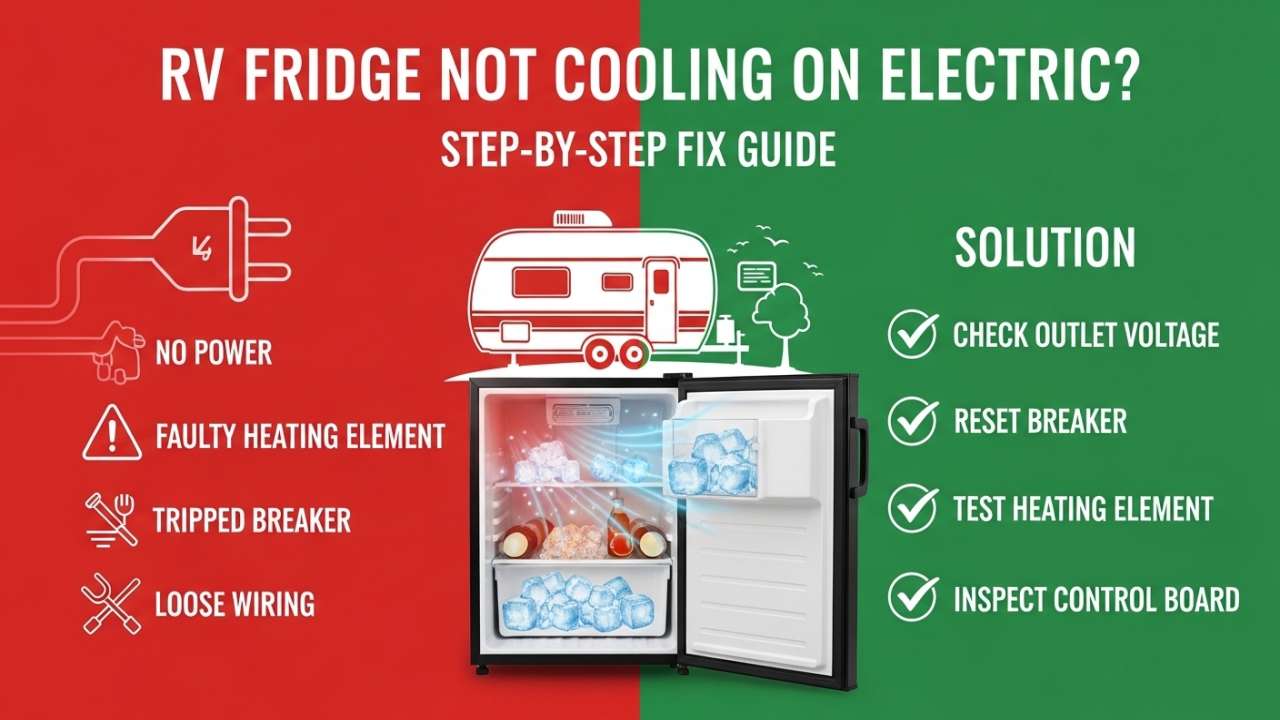
Also Read:- RV Refrigerator Not Cooling on Electric: The Complete Troubleshooting Guide That Actually Works
Best for Couples on a Budget: Thor Motor Coach Quantum SE22
The vibe: You want motorized freedom without a luxury sticker. This Class C is where “affordable motorhome” actually becomes reality.
What you get:
- 22 feet of self-contained living space
- No towing required
- Rear bedroom (actual privacy)
- Cab-over bunk (bonus sleeping)
- Walk-around queen bed
- Full kitchen with stove, oven, and microwave
- Separate shower
- Propane heater and air conditioning
- 2-year/24,000-mile warranty (matters for peace of mind)
Why couples choose this: The bedroom separation from living space is huge for long-term RVing. You can actually close a door and have privacy. For couples who get on each other’s nerves after 48 hours in close quarters, this is huge.
The honest part: It’s heavier on fuel (you’re towing a truck engine). But the freedom to park and have your vehicle still available for exploring is worth it for many couples.
Dealer secret: These are priced at $100K+ on manufacturer websites but routinely sell for $75,000-$85,000 from dealers clearing inventory.
Price: $75,000-$85,000 (negotiated dealer price, not MSRP)
Best Fifth Wheel Value: Cougar Sport Platinum 2400RE
The vibe: If you already own a pickup truck, this fifth wheel gives you maximum living space per dollar.
What you get:
- 24 feet of actual living space
- Sleeping for 4-5 people
- Full-size queen bed
- Separate dining and living areas
- Residential-style kitchen
- Spacious bathroom with shower
- Slide-out for extra room
- Better towing than travel trailers (more stable)
Why pickup owners should consider it: Your truck’s payload capacity gets you tremendous room here. If you own a newer 1/2-ton or 3/4-ton truck, this is an efficient use of what you already own.
The financial reality: Fifth wheels cost more than travel trailers BUT distribute weight better and have superior towing characteristics. If you’re a serious RVer, the safety and comfort upgrade is worth it.
Price: $26,000-$32,000 (significantly cheaper than comparable motorhomes)
RV Brands That Deliver Real Value (Not Just Cheap Pricing)
Here’s the thing about “cheap” RVs: some are cheap because they’re poorly made. Others are affordable because they’re smart about materials and manufacturing.
Brand Overview
| Brand | Specialty | Where to Buy |
|---|---|---|
| Jayco | Travel trailers, motorhomes | RV dealers nationwide |
| Keystone | Travel trailers | RV dealers, Amazon RVs |
| Forest River | Everything (most variety) | Wide dealer network |
| Starcraft | Budget-friendly trailers | Specialized dealers |
| Coleman | Entry-level trailers | National RV retailers |
| Gulf Stream | Class C motorhomes | Class C specialists |
| Coachmen | Motorhomes, trailers | Major RV dealers |
| Highland Ridge | Travel trailers | Regional dealers |
Pricing & Reputation
| Brand | Budget Sweet Spot | Quality Reputation |
|---|---|---|
| Jayco | $20,000–$28,000 | Excellent; part of Thor Industries |
| Keystone | $18,000–$30,000 | Very good; known for durability |
| Forest River | $15,000–$35,000 | Good; largest manufacturer |
| Starcraft | $16,000–$24,000 | Good; often praised in budget forums |
| Coleman | $15,000–$22,000 | Decent; no-frills but functional |
| Gulf Stream | $35,000–$60,000 | Good; simple, durable designs |
| Coachmen | $22,000–$40,000 | Very good; sturdier interiors |
| Highland Ridge | $19,000–$28,000 | Excellent; punch above weight class |
The insider note: Forest River owns an enormous percentage of the budget RV market (they own Jayco and multiple other brands). That’s not bad—it means economies of scale benefit you. But their quality can vary. Always inspect before buying.
The Hidden Costs Nobody Talks About (And How to Budget for Them)
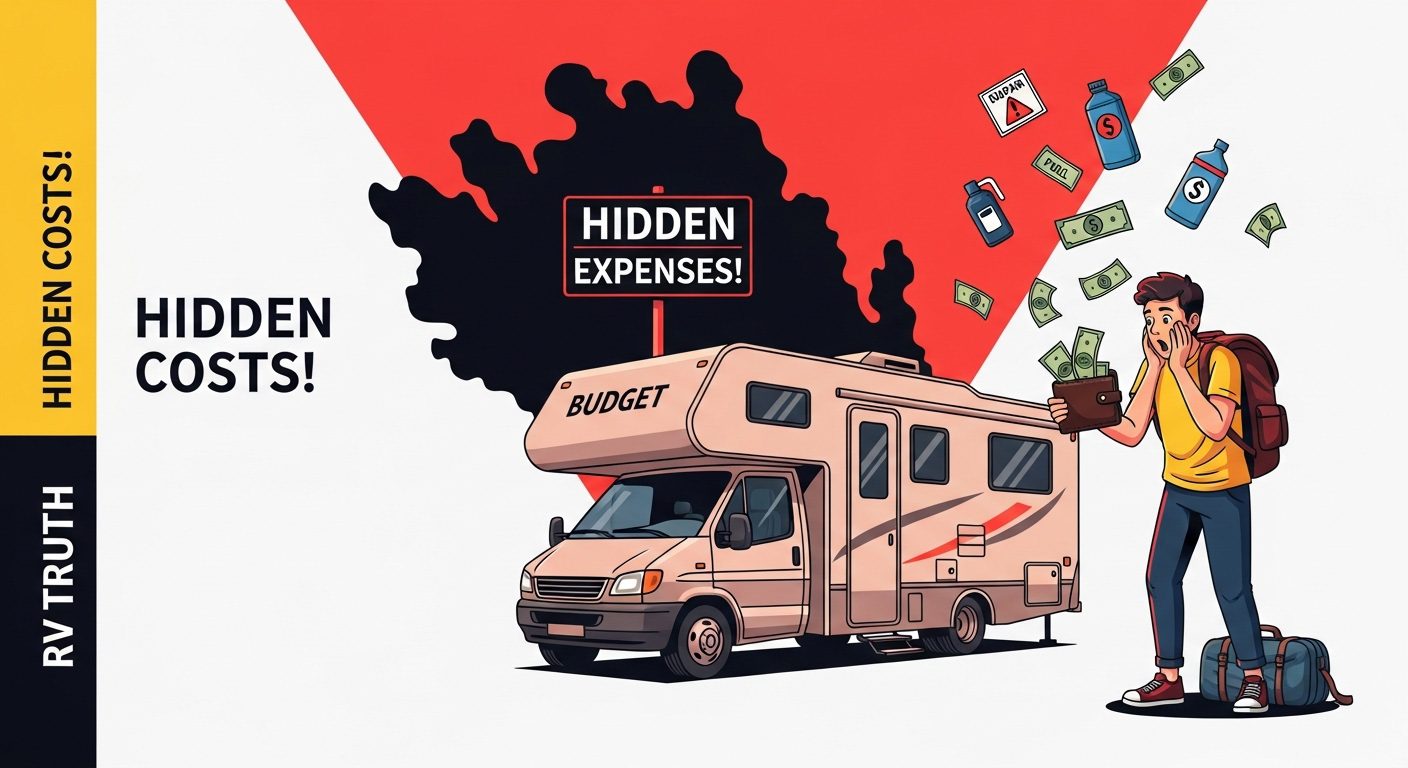
This is where budget RV buyers often trip up. You buy the rig, feel great about the price, then get absolutely hammered by costs you didn’t expect.
Year One Cost Breakdown (Beyond the RV Purchase)
Registration & Insurance: $400–$800/year
- RV insurance is cheaper than you’d think (around $600-$1,000 annually)
- Registration varies by state but expect $200-400
Campground Fees: $0–$8,000/year
- Depends on whether you boondock (free) or prefer hookups ($25-$60 per night)
- Budget travelers: $2,000-$3,000/year
- Regular travelers: $4,000-$8,000/year
Maintenance & Repairs (First Year): $500–$2,000
- Budget RVs might have deferred maintenance if used
- Seal replacements, water pump fixes, electrical gremlins
- Having an inspection done before purchase saves money later
Fuel (If Motorhome): $3,000–$6,000/year
- Depends on mpg (expect 5-8 mpg for Class C) and mileage driven
Propane & Water: $300–$800/year
- If you boondock and refill regularly
Miscellaneous (Repairs, Supplies): $500–$1,500
- Things break. Budget accordingly.
Total Annual Running Cost (Conservative): $5,000–$10,000 depending on travel habits
How to Actually Find the Best Deals (Pro Negotiation Tactics)
Dealerships count on buyers not knowing their power. Here’s how to flip that:
Timing Strategy: When Prices Hit Rock Bottom
November–December (Best Time):
- Dealers need to clear 2025 inventory before 2026 models arrive
- Year-end sales quotas push discounts
- You can save $2,000-$5,000 just by shopping in December
- Dealerships are desperate for deals
September–October (Second Best):
- Pre-holiday discounts
- Fall RV shows often have special pricing
- Still good inventory selection
July–August (Worst Time):
- Peak season means peak prices
- Dealers have motivated buyers (families taking vacations)
- Limited negotiating power
Also Read:- RV Water Heater Replacement Cost 2026: The Real Budget-Buster Breakdown (With Actual Numbers)
The Research Power Move
Before stepping on a dealership lot, you should know:
- MSRP vs. Actual Prices:
- Check RVUSA.com and RVTrader.com to see what others paid
- MSRP is fiction. Dealers rarely charge it.
- You should aim for 10-20% below MSRP
- The Comparison Advantage:
- Get quotes from 3-5 dealers
- Play them against each other (“Dealer X quoted me $23,000 out the door”)
- Dealers will match or beat prices to win your business
- Hidden Dealer Tricks:
- They’ll quote a low price, then add $2,000 in “prep” and “delivery”
- Always ask for “out the door” price (everything included)
- Get dealer quotes in writing before negotiating
The Negotiation Script (Actual Words to Use)
“I’m prepared to buy today if the numbers work. Based on RVUSA listings, comparable models are selling for $X. What’s your best number out the door including all fees?”
This accomplishes:
- Creates urgency (buying today)
- Shows you’ve done homework (RVUSA reference)
- Eliminates games (out the door price)
- Forces their best offer immediately
Used vs. New: The Math That Might Surprise You
Everyone assumes new is safer. The reality is more nuanced.
New RV Pros:
- Factory warranty (usually 1-3 years)
- Latest features and construction methods
- Negotiable pricing (see above)
- Full dealer support
- Zero wear and tear
New RV Cons:
- 20-30% depreciation in first 2 years
- You’re buying any manufacturing defects
- More expensive insurance (full coverage required for loans)
- Financing costs add $4,000-$10,000 in interest
Used RV Pros:
- Massive depreciation already happened (you buy at the bottom)
- 50% cheaper than new for same model (2-3 years old)
- Can inspect maintenance history
- See real-world performance data from owners
- Immediate resale value relatively stable
Used RV Cons:
- No manufacturer warranty (must buy extended or accept risk)
- Potential deferred maintenance
- Unknown history (could be water damage, abuse, repairs)
- Harder to finance (not all lenders touch used RVs)
- Mechanical gremlins are your problem
The financial reality:
If you buy a new $24,000 RV, it’s worth $16,000-$18,000 in 2-3 years. That’s a $6,000-$8,000 loss just from depreciation.
If you buy the same RV used at $16,000-$18,000 and keep it 5 years, your depreciation loss is minimal because you bought at the floor.
The practical advice: For budget buyers, a 2-3 year old model from a reputable brand, with documented maintenance history, is often the smarter financial play. Just get a pre-purchase inspection ($150-$300) to catch problems.
Build Quality: What Separates $20k Lemons from $20k Gems
When two RVs cost the same but one lasts 10 years and the other has problems in year two, what’s the difference?
What Separates Good from Bad
Exterior:
- Good: One-piece fiberglass roof, aluminum framing, sealed slide-outs
- Bad: Separate roof panels, wood framing, visible sealant gaps
Interior:
- Good: Hardwood cabinetry, vinyl plank flooring, sealed grout lines
- Bad: Thin laminate cabinets, single laminate flooring, taped seams
Systems:
- Good: Tankless water heaters, quality HVAC, marine-grade toilets
- Bad: Basic water heaters, wall-mounted ACs, cheap RV toilets
The One Thing That Matters Most: Proper sealing and construction. Water infiltration is the silent killer of RVs. A $20,000 RV with perfect seals will outlast a $40,000 RV with sloppy construction.
The Pre-Purchase Inspection Checklist
If buying used, have an RV inspector check:
- Water damage: Look for soft spots on walls, ceiling discoloration, smell of mold
- Roof seals: Check around vents, AC unit, and slide-out seams
- Windows: Test operation, check for water stains around frames
- Appliances: Test fridge, stove, furnace, air conditioning
- Plumbing: Check for leaks, test water pressure, inspect tank seals
- Electrical: Test all 120V outlets, check battery condition
- Propane system: Smell test (propane has a rotten egg smell if leaking)
- Chassis/Engine: Full inspection if motorized
Cost: $150-$300 per inspection. Worth every penny.
The Truth About Common Problems (And How to Avoid Them)
Budget RVs aren’t doomed to failure, but they’re more prone to certain issues. Knowing what to expect helps you avoid the worst.
Most Common Budget RV Problems
Water Leaks (The #1 Killer)
- Affects roughly 30% of older budget RVs
- Prevention: Regular roof inspections, reseal seams every 5 years
- Cost to fix: $500-$2,000 depending on damage
Propane Appliance Issues
- Furnaces that won’t light, water heater that’s temperamental
- Prevention: Have systems serviced annually
- Cost to fix: $300-$1,000
Slide-Out Jams
- Mechanical slides fail, especially in budget models
- Prevention: Lubricate regularly, avoid overloading
- Cost to fix: $800-$2,000
Electrical Gremlins
- 12V systems fail, outlets stop working
- Prevention: Check battery health, avoid overloading circuits
- Cost to fix: $200-$1,000
Plumbing Failures
- Pipes freeze (in winter), tanks crack, pumps fail
- Prevention: Winterize properly if cold weather camping
- Cost to fix: $300-$1,500
Real perspective: These aren’t unique to budget RVs. They happen with expensive ones too. The difference is budget RVs sometimes have lower-quality parts that fail sooner.
Financing an Affordable RV: Your Actual Options
Paying cash is nice but not realistic for most people. Here’s how actual financing works:
Traditional RV Loans
Loan terms: 5-20 years (longer = lower payment, higher total interest)
Interest rates: 5.5%-12% depending on credit score and loan term
Down payment: 0-20% (some lenders offer 0-down for strong credit)
Monthly cost example:
- $24,000 RV, $0 down, 7-year loan at 7% interest
- Monthly payment: ~$400
- Total interest paid: ~$9,600
- Total cost: ~$33,600
Where to get loans:
- Banks (best rates for good credit)
- Credit unions (often 1-2% cheaper than banks)
- RV dealerships (convenient but higher rates)
- Online lenders (flexible credit standards)
Alternatives
Personal loan: If you have excellent credit and can get a rate under 8%, sometimes better than RV loans
Home equity line of credit (HELOC): If you own a home, often cheaper than RV loans (4-6% rates)
Trade-in: If you own a vehicle you don’t need, trading it in brings down the financed amount
Cash from vehicle sale: Sell your old car/truck, buy the RV
Also Read:- 7 Types of RV Awnings [2026 Guide] – Which One Saves You Thousands?
Frequently Asked Questions About Budget RVs
Q: Will a budget RV fall apart after 5 years?
A: Not necessarily. It depends on construction quality and maintenance. A well-maintained Jayco or Keystone from 10 years ago is still running strong in campgrounds nationwide. A neglected budget brand from 5 years ago might be unreliable. The difference is usually care, not cost at purchase.
Q: Can I actually live full-time in a cheap RV?
A: Yes, but it requires adjustment. Budget RVs have less insulation and smaller systems, so year-round full-timing is tougher. Better for 9-month snowbirding than year-round living. For full-time, budget toward $35,000+ where systems are more robust.
Q: What’s the cheapest RV that doesn’t suck?
A: The Jayco Jay Flight SLX at ~$24,000 is widely considered the price-to-quality sweet spot. Lighter, cheaper Colemans ($17,000) work fine if you’re weekend camping. Anything under $15,000 requires serious inspection.
Q: Should I buy from a big dealership or private seller?
A: Dealership = warranty/recourse but higher price. Private seller = lower price but no protection. For budget RVs, dealership (where you can negotiate harder) often makes sense. You want that warranty safety net.
Q: How much does RV insurance actually cost?
A: Typically $600-$1,200/year for a $20,000 RV. It’s cheaper than car insurance because RVs sit parked most of the time. Full coverage (required for financing) costs more than liability-only. Get quotes from RV-specific insurers (Safe Harbor, Progressive RV specialist, etc.).
Q: What if I discover the RV has water damage after I buy it?
A: This is why that $300 pre-purchase inspection is essential. If you buy without inspection and find damage, you’re stuck with it. If you have an inspection done, you use it as negotiating leverage or walk away. That inspection is insurance against a $5,000+ problem.
Q: Can I rent an RV first to test the lifestyle?
A: Absolutely. RVshare, Outdoorsy, and Harvest Hosts let you rent specific models cheaply. Spend $400-$600 renting a Jayco for a week before buying one. You’ll know immediately if RV life is for you. Worth every penny.