You’ve been dreaming about it for months—hitting the open road in your own RV, waking up to new views every morning, total freedom on your schedule. But here’s the thing: the excitement of finally buying an RV can blind you to mistakes that cost tens of thousands of dollars and turn your dream into a nightmare.
I’ve watched hundreds of first-time RV buyers make the same preventable errors. Some end up with rigs they can’t safely tow. Others buy massive motorhomes they never use. A few discover crippling maintenance issues weeks into ownership. The worst part? Most of these disasters are completely avoidable.
This guide breaks down the 10 biggest mistakes first-time RV buyers make—and exactly how to dodge each one. Whether you’re shopping for your first travel trailer, fifth wheel, or Class C motorhome, these lessons will save you money, stress, and buyer’s remorse.
Mistake 1: Buying on Impulse Without Knowing Your Lifestyle
The trap: You see a beautiful RV on the dealer lot—it has the perfect color scheme, those fancy slideouts look incredible, and the salesman says, “This one’s perfect for families.” You’re excited. You sign the papers. Six months later? It’s gathering dust in storage.
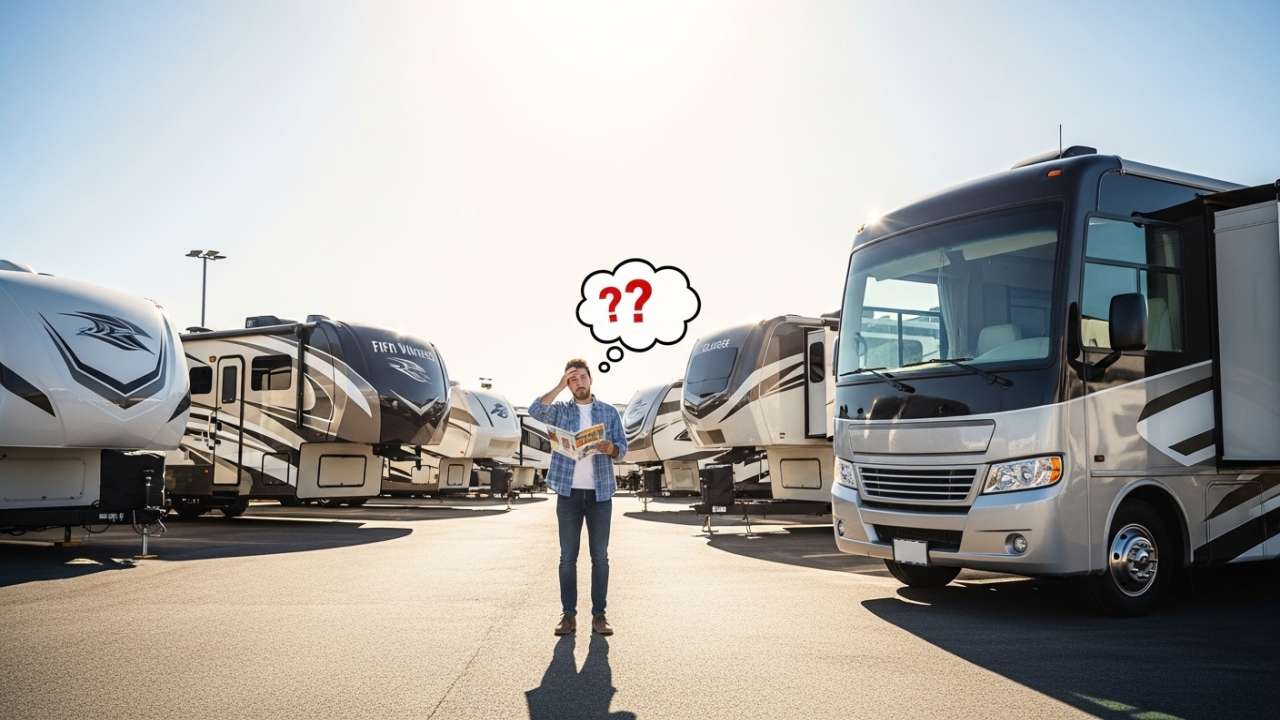
The most common regret I hear from new owners isn’t about the price. It’s that they bought the wrong type of RV for how they actually travel.
Real example: A retired couple bought a massive 40-foot Class A motorhome thinking they’d cross the country. Turns out they only wanted weekend trips to nearby state parks. The fuel costs alone were crushing them. Now it sits unused.
How to avoid it:
Before you step on any dealer lot, ask yourself honestly:
- Do I want weekend getaways (200–400 miles away) or extended cross-country trips?
- Will I camp at developed RV parks (full hookups) or boondock/dry camp in remote areas?
- How much driving per day am I comfortable with?
- Will this be full-time living or occasional use?
- Who’s traveling with me, and how much sleeping space do we need?
Write these answers down. Refer back to them when shopping. Different answers point to different RV types:
- Travel Trailer → Weekend trips, car-towers, flex and storage needed
- Fifth Wheel → Longer trips, serious towing power available, comfort priority
- Class C Motorhome → Easy maneuvering, families, campground comfort
- Class B Campervan → Solo/couple adventures, boondocking, fuel efficiency
Rent an RV for a test weekend first. This single step eliminates 80% of buyer regret.
Also Read:- RV Loan Requirements: Approval Process Explained (2026)
Mistake 2: Ignoring Your Vehicle’s Towing Capacity (Critical Safety)
The trap: The dealer’s salesman says your truck “can totally handle” a particular trailer. You believe him. You buy it. Six months in, your transmission is slipping, the back end is sagging, and an RV mechanic tells you the damage is permanent.
This mistake destroys trucks. Worse, it’s dangerous. Overloading your tow vehicle causes trailer sway, brake failure, and loss of control at highway speeds.
Your truck’s maximum towing capacity is a hard number, not a suggestion. Exceeding it isn’t just uncomfortable—it voids warranties and causes real damage.
How to avoid it:
- Find your truck’s actual tow capacity:
- Check your vehicle’s owner manual
- Look at the driver’s side door jamb sticker
- Search online by VIN
- Call your truck’s manufacturer
- Understand RV weight terminology:
- GVWR (Gross Vehicle Weight Rating) = The RV’s maximum total weight (structure + water + gear)
- Dry Weight = Empty RV (misleading because nobody travels empty)
- Real-World Weight = GVWR plus typical cargo
- Apply the safety buffer rule:
- If the dealer says your truck can tow 10,000 lbs, aim for RVs under 8,000 lbs
- Go up one truck size if you’re borderline
- Never trust the salesman’s estimate—verify it yourself
Many first-time buyers upgrade their truck after buying a too-heavy trailer. Smart buyers check tow capacity before picking an RV.
Mistake 3: Only Looking at the Purchase Price (Ignoring Hidden Costs)
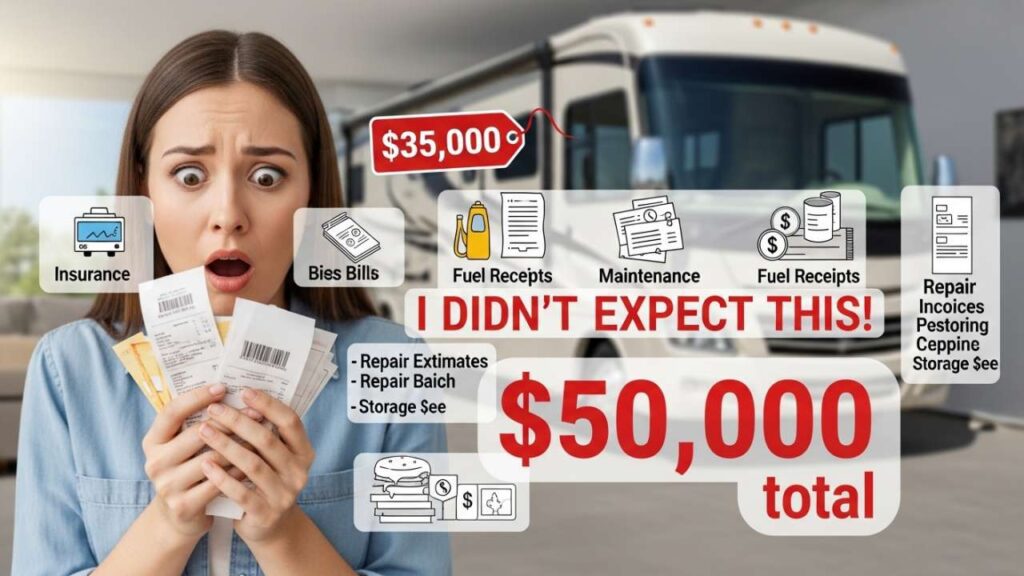
The trap: You focus on the sticker price. “$35,000 seems reasonable,” you think. But by year two, you’ve spent an additional $8,000–$12,000 on insurance, maintenance, repairs, fuel, and storage. That “$35,000 RV” actually cost $47,000+.

Most first-time buyers shock themselves with the true cost of RV ownership.
How to avoid it:
Create a real, detailed annual budget before you buy:
| Cost Category | Annual Estimate | Notes |
|---|---|---|
| Insurance | $600–$1,500 | RV insurance differs from car insurance; covers vehicle, not contents |
| Fuel | $3,000–$7,000 | Depends on MPG, miles traveled, diesel/gas |
| Campground Fees | $1,500–$4,000 | $30–$70/night × 30–50 nights/year |
| Maintenance/Oil Changes | $400–$800 | Regular seasonal checkups |
| Roof Seal Maintenance | $200–$500 | Prevents costly water damage ($5,000+) |
| Repairs (Unexpected) | $1,000–$3,000 | AC, water heater, plumbing, slide-out issues |
| Storage (If Needed) | $50–$150/month | Off-site storage if home lot unavailable |
| Registration/DMV | $200–$500 | Varies by state |
| RV Roadside Assistance | $100–$300 | Separate from car roadside service |
| Total First-Year Budget | $7,450–$18,600+ | Not including the purchase price |
Once you see the real number, decisions become clearer. That expensive new motorhome might cost $500/month just to operate—before loan payments.
Mistake 4: Picking the Wrong Dealer (Setting Yourself Up for Poor Service)
The trap: You buy from a dealer with aggressive sales tactics and a mediocre service department. Two years later, a small roof leak turns into a $5,000 water damage repair because the service team was incompetent. Warranty claims get denied over technicalities.
Your dealer matters more than most people realize. You’ll go back for warranty work, repairs, and parts for as long as you own the RV.
How to avoid it:
- Check dealer reviews deeply:
- Google, Yelp, RVLife app → focus on service reviews, not just sales
- Read Facebook group posts from owners of your intended brand
- Look for repeated complaints (recurring problems are red flags)
- Visit the dealer in person:
- Walk the lot carefully. Are pre-owned RVs in service locked and hidden from customers? If not, the dealer is careless.
- Spend 30 minutes in the service area. Do the mechanics seem competent and busy (good sign) or lazy?
- Ask the salesman hard questions. Do they answer honestly or rush you?
- Ask about warranty coverage:
- What’s the manufacturer’s warranty length? (1–5 years typical)
- Will the dealer honor warranty claims, or will they fight you?
- Is an extended warranty available? (Worth it for motorhomes/major systems)
- Get it in writing:
- All promises about price, warranty, and included services go on the contract
- Verbal promises don’t matter in disputes
Mistake 5: Skipping or Rushing the Pre-Delivery Inspection (PDI)
The trap: The RV is beautiful, you’re excited, the dealer says “there’s a line of buyers behind you.” You skip the thorough walk-through. Three weeks later, you discover a roof leak, a faulty toilet, and loose cabinet doors. The dealer refuses to fix it post-sale.
A PDI is your last chance to catch defects before you pay.
How to avoid it:
Never, ever rush this step. Schedule a dedicated 2–3 hour PDI before you take the RV home.
What to check:
| System | What to Look For |
|---|---|
| Roof & Exterior | Seams are sealed, no cracks, solar panels/AC secure, awning works smoothly |
| Water Systems | Run all faucets, check for leaks under sinks, test shower pressure |
| Appliances | Refrigerator cooling, stove burners ignite, microwave heats, oven temperature stable |
| Plumbing | Toilet flushes, gray/black tanks drain, water heater produces hot water |
| Electrical | All interior lights work, 120V outlets powered, 12V system functional, furnace kicks on |
| Slide-Outs | Extend and retract smoothly, no grinding sounds, no leaks around seams |
| Brakes & Tires | Tread depth ≥4/32″, no bulges, brake responsiveness feels normal |
| Paperwork | All manuals included, warranty documents clear, vehicle title/registration ready |
Bring a checklist (search “RV PDI checklist” for detailed versions). Take photos/video of any issues. Get the dealer to sign off on a list of items they’ll fix before you take possession.
Mistake 6: Not Taking a Test Trip Before Committing Long-Term
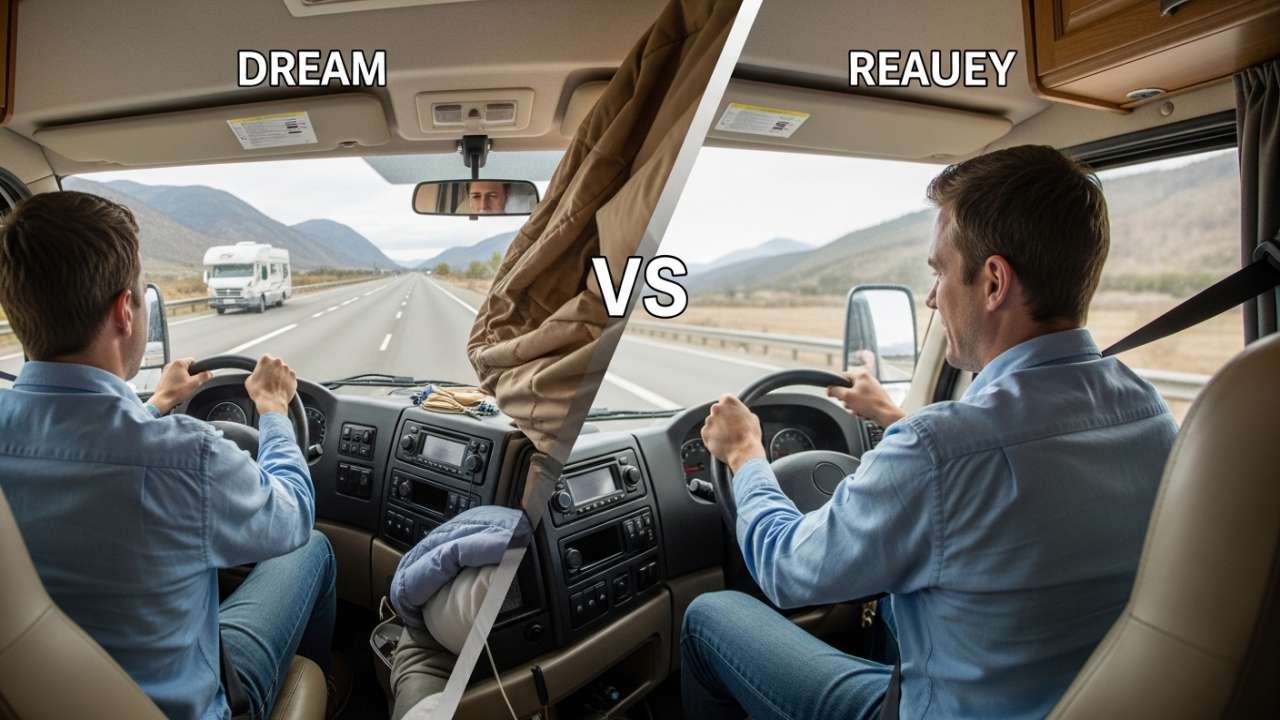
The trap: You buy an RV and plan a 2-week cross-country trip for your first adventure. By day 3, you’re discovering problems: the driving position gives you back pain, the kitchen is too cramped, the AC barely cools, and you can’t figure out how to use half the systems. Now you’re stuck on the road.
How to avoid it:
Take a short weekend trip (100 miles, 1–2 nights) before planning anything longer.
What you’ll learn:
- Does the driving position work for long hours?
- Can you comfortably cook a meal in the kitchen?
- Does the AC keep up in warm weather?
- How do the water, propane, and electrical systems work?
- Can you back up and park it easily?
- Do you enjoy the sleep setup, or is the bed uncomfortable?
- What didn’t the dealer explain that you need to figure out?
This trial run costs ~$200–$300 and saves you from thousands in regret. You’ll return with confidence and a realistic checklist of what needs adjusting.
Mistake 7: Overpacking & Weight Distribution (Then Realizing You’re Over Capacity)
The trap: You load the RV with “everything you might need”—extra furniture, full pantry, multiple bikes, garden tools. The RV feels sluggish, the steering is heavy, and a highway merge feels dangerous. You’re 1,000 lbs over the GVWR without realizing it.
Overpacking isn’t just uncomfortable—it damages the suspension, accelerates tire wear, and puts you in dangerous driving situations.
How to avoid it:
- Know your GVWR (from the manufacturer label inside the RV)
- Weigh the empty RV at a truck scale (~$15)
- Calculate your capacity: GVWR – Empty Weight = How much cargo you can add (passengers + gear + water + propane)
- Start light on your first trip. Bring only essentials
- Use a weight distribution hitch (for trailers) to properly balance the load
- Check tire pressure before every trip. Underinflated tires wear fast and reduce safety
Pro tip: Avoid overstocking the refrigerator and propane tanks. The weight adds up fast. Fill up as you travel.
Mistake 8: Getting Blindsided by Financing & Interest (Signing Before Shopping Rates)
The trap: The dealer offers financing “at 7.5% for 15 years.” You’re excited, you sign. Later, you learn that credit unions offer 4.8% and banks offer 5.2% for the same terms. You just overpaid $15,000 in interest.
Many first-time buyers accept the first financing offer because they don’t know better.
How to avoid it:
- Get pre-approved before stepping on the lot:
- Contact your bank, credit union, and 2–3 RV-specific lenders
- Get written pre-approval letters with rate, term, and max amount
- Use the best offer as your negotiating power
- Compare the total cost, not just the rate:
- 7.5% over 15 years costs way more than 5% over 10 years
- Run the numbers on a loan calculator before committing
- Avoid dealer financing if you have good credit:
- Dealers mark up rates for commission
- Your bank/CU will almost always beat them
- Read the fine print:
- Are there prepayment penalties?
- Does the rate lock in, or is it adjustable?
- What happens if you pay off early?
Mistake 9: Buying a Used RV Without Professional Inspection
The trap: You find a used RV listed by a private seller. It looks clean, drives okay. The price is right, so you buy it. Three weeks later: roof leak = $4,000 repair. The transmission has issues. The water systems are corroded.
Used RVs need inspection more carefully than used cars. Plumbing, roofing, and slide-outs are expensive to fix.
How to avoid it:
- Always get a professional RV inspection (~$300–$500, worth every penny):
- Hire a certified RV inspector (search “RV inspection” in your area)
- They’ll check roof seals, plumbing, electrical, appliances, and structural integrity
- Get a written report with photos
- Check the RV’s history:
- Ask if it’s been in any accidents or damage
- Look at maintenance records
- Search for recalls on that RV model/year
- Test all systems yourself:
- Fill the tanks, run everything, check for leaks
- Test the brakes, steering, and transmission
- Verify the axles and suspension are in good shape
- Walk away from deals that feel rushed or unclear:
- Private sellers who won’t let you inspect thoroughly = red flag
- If they’re vague about problems, assume the worst
Mistake 10: Not Researching Your Specific RV Brand/Model (Then Discovering Chronic Issues)
The trap: You fall in love with a brand that looks great on the lot. After you buy it, you join an online RV group and discover that model has a known issue affecting hundreds of owners: faulty water heater, slide-out leaks, or electrical gremlins. Warranty claims are being denied. You’re stuck.
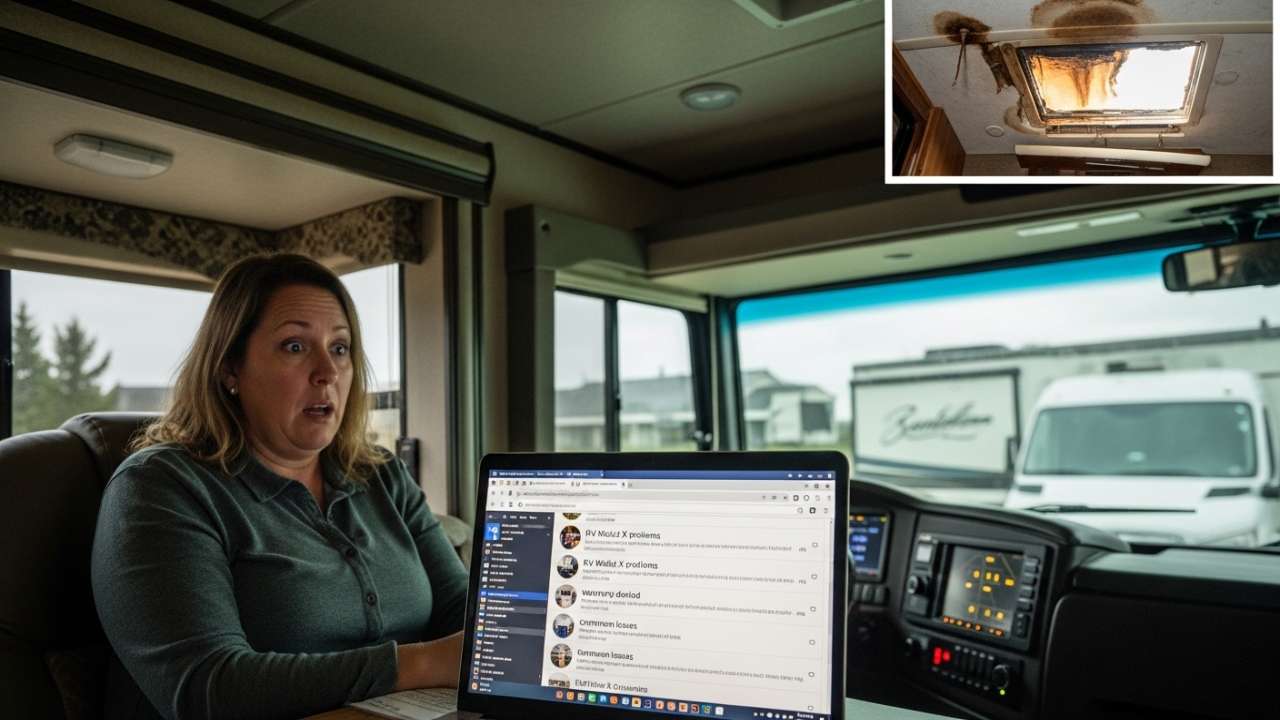
Community feedback is invaluable. What problems do current owners complain about?
How to avoid it:
- Join Facebook groups for your intended RV brand/model before buying:
- Search “[Brand] owners” or “[Model] community”
- Read complaints, common repairs, and warranty experiences
- Look for patterns (if 50 owners mention the same problem, it’s real)
- Search online reviews:
- RVLife app, Trustpilot, Google reviews, Reddit
- Focus on 3–5 star reviews (1–2 stars are outliers, 5-star reviews are often fake)
- Ask the dealer directly:
- “What are the most common warranty claims on this model?”
- If they dodge the question, that’s a red flag
- Check manufacturer recalls:
- Visit the brand’s website for recall notices
- Ask the dealer if any recalls apply to your unit
The Setup Mistake: Forgetting About Insurance & Storage
Before you finalize your purchase, handle these logistics:
RV Insurance:
- Standard auto insurance doesn’t cover RVs. Get a dedicated RV policy.
- Policies cover the vehicle and basic liability, but NOT the contents inside.
- Get separate coverage for valuable items (bikes, electronics, etc.)
- Tip: RV roadside assistance is separate from your car’s. Add it.
Storage:
- Do you have space at home, or will you need off-site storage ($50–$150/month)?
- Will your homeowner’s insurance cover an RV in your driveway?
- Some neighborhoods restrict it. Check local laws before buying.
10 Mistakes: Quick Reference Table
| Mistake | Cost of Error | How to Avoid |
|---|---|---|
| Impulse buying wrong type | $10,000–$40,000 | Rent first, define your lifestyle |
| Ignoring tow capacity | $3,000–$10,000 (truck damage) | Check specs, apply safety buffer |
| Missing hidden costs | $5,000–$12,000/year | Budget all annual expenses |
| Bad dealer choice | $5,000+ (poor service) | Check reviews, visit in person |
| Skipping PDI | $2,000–$8,000 (unfixed defects) | Spend 3 hours on thorough inspection |
| No test trip | $1,000–$5,000 (regret) | Take weekend trip first |
| Overpacking | $2,000+ (suspension damage) | Know GVWR, weigh before trips |
| Poor financing | $5,000–$15,000 (excess interest) | Shop rates at 3+ lenders first |
| Used RV no inspection | $3,000–$10,000 (hidden damage) | Pay $300–$500 for pro inspection |
| Ignoring brand issues | $2,000–$8,000 (warranty fights) | Join Facebook groups, read reviews |
FAQ:
Q: Should I buy new or used? New RVs come with full warranties but depreciate fast (20–30% year one). Used RVs are cheaper upfront but may have hidden problems. If budget allows, a 3–5 year old model is a sweet spot (depreciation absorbed, warranty still available).
Q: How much should I spend on my first RV? Start conservatively. Many first-time buyers overestimate usage. Spend 50–60% of what you can afford. Leave room for storage, insurance, and repairs without financial stress.
Q: Can I tow a trailer with my car/SUV? Check your owner’s manual first. Many SUVs can tow, but not all. Even if the capacity exists, consider whether you’re comfortable towing (braking, wind, backing up). A bumper hitch travel trailer is easier than a fifth wheel.
Q: What RV type is best for beginners? Travel trailers are most forgiving (you can always park and step out), but require towing confidence. Class B/C motorhomes are easier to drive but less storage. Rent both types before deciding.
Q: How often do RVs need maintenance?
- Oil changes: every 3,000–5,000 miles or annually
- Roof inspection: quarterly
- Appliance checks: seasonally
- Tire inspections: before every trip
- Budget $1,000–$2,000/year for scheduled maintenance.
Q: Can I live full-time in an RV as a first-time buyer? I’d recommend against it. Start with weekend trips. Full-time living requires systems knowledge, patience, and problem-solving that takes time to develop. Too many people regret committing full-time before they’re ready.
Q: What’s the best time to buy an RV? Late fall/early winter (September–November) when dealer lots are packed and dealers are motivated to clear inventory. You’ll get better prices and negotiating power.