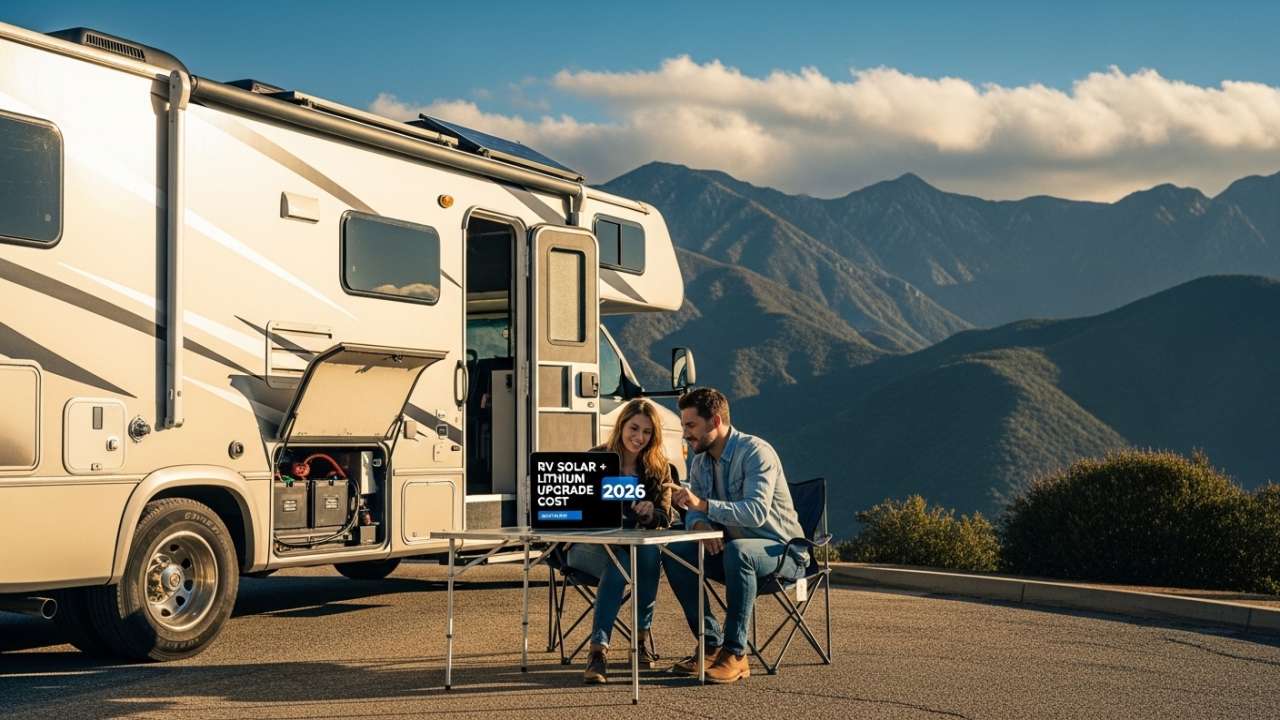
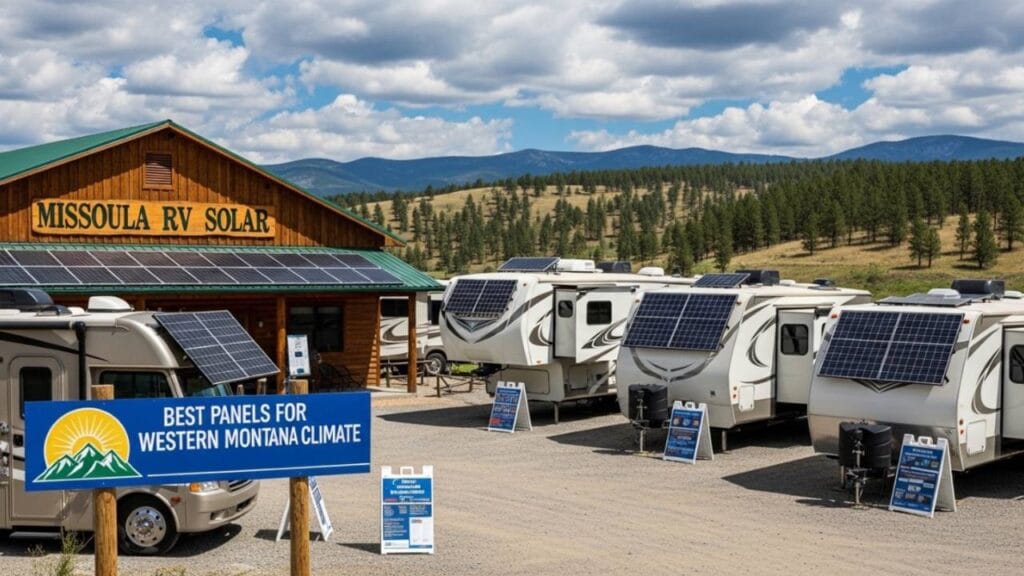
If you’re living the RV life in Missoula, you already know this town gets it. Nestled in the heart of five converging valleys and home to the University of Montana, Missoula has that perfect blend of college-town energy and serious outdoor culture. This isn’t just a place you pass through—it’s a launching pad for adventures to Glacier National Park (about 150 miles north), Lolo National Forest, and some of the best dispersed camping in the West.
But here’s the thing about RV solar, Missoula residents need to understand: western Montana’s climate is its own beast. We’re not talking about the endless sunshine of eastern Montana or the dry clarity of Billings. Missoula sits in a wetter microclimate, catching moisture from Pacific systems that squeeze through the mountain passes. You’ll still get over 200 sunny days a year—which is fantastic for solar—but you’re also dealing with forest shading, mountain weather that can change in an hour, and those gorgeous but power-blocking ponderosa pines that define the landscape around Rock Creek and Lolo Pass.
That’s why choosing the right RV solar setup in Missoula isn’t just about slapping any panel on your roof and calling it good. You need equipment that can capture every photon during those brilliant Montana summer days, systems efficient enough to keep you powered during overcast stretches, and panels that can handle everything from wildfire smoke to surprise June snowstorms.
This guide breaks down the best solar panels for the Missoula climate, where to get them installed locally, and which camping spots around western Montana make the most of your solar investment. Whether you’re a University of Montana grad student living in a converted Sprinter or a retired couple exploring the Bob Marshall Wilderness in a fifth wheel, we’ve got you covered.
Understanding Western Montana’s Solar Reality
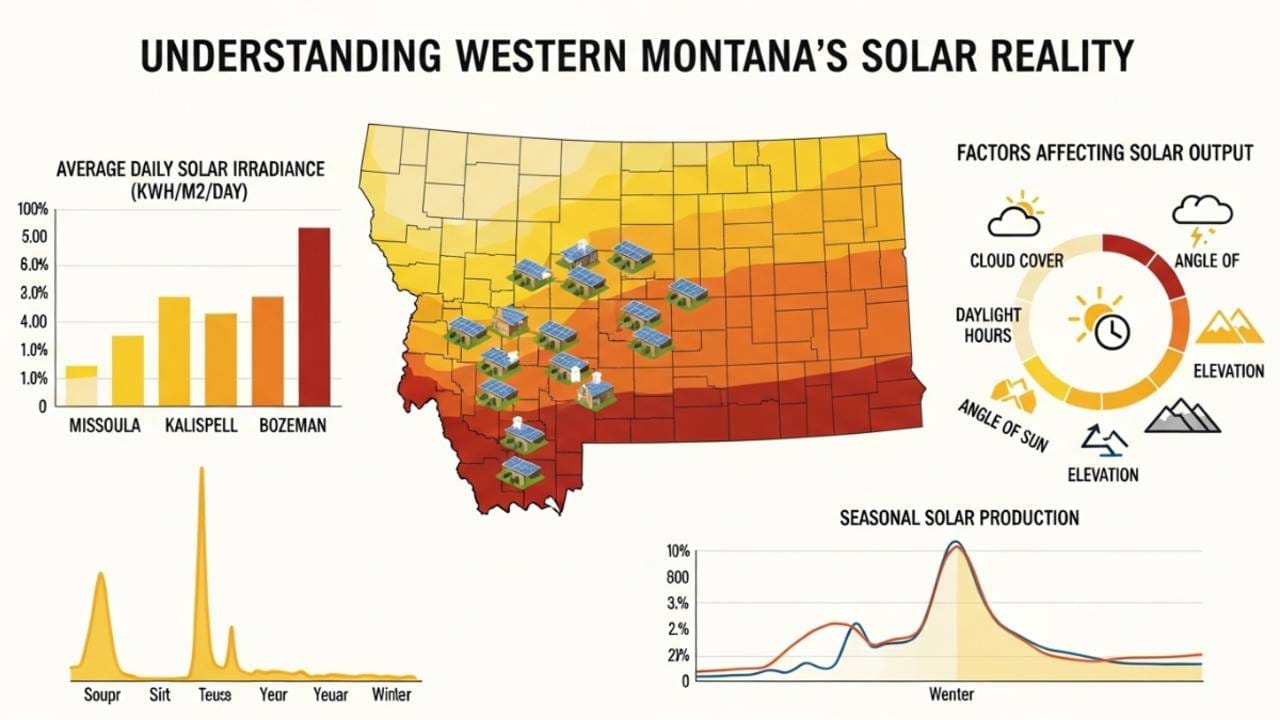
Let’s get real about what you’re working with. Missoula averages about 200-230 sunny days annually, with July and August being your solar goldmine months. Summer days are long—we’re talking 16+ hours of daylight at the solstice—which means even with some cloud cover, you’re harvesting serious power.
The challenges? Winter is darker and shorter (obviously), but the bigger issue for RV solar Missoula folks face is the shading. If you’re boondocking in the dense forests around Seeley Lake or tucked into a riverside spot on Rock Creek, those towering conifers can cut your solar production by 50% or more. Mountain weather also means you might wake up to brilliant sunshine, watch clouds roll in by noon, and see clearing again by evening.
The good news? Montana’s high elevation and crisp air mean that when the sun is out, it’s intense. Your panels will perform better here than at sea level with the same amount of sunlight. And even on partly cloudy days, modern panels with good low-light performance can still generate usable power. Also Read:- Best RV Solar Panels for Montana: Cold Weather Guide 2026
The 5 Best Solar Panels for Missoula RVs
1. Renogy 200W 12V Monocrystalline Solar Panel
The Renogy 200W has become the default choice for RV solar Missoula installations, and for good reason. This monocrystalline panel delivers reliable performance in the mixed conditions western Montana throws at you. It’s built with corrosion-resistant aluminum frame that handles humidity better than cheaper alternatives—important when you’re camping near the Blackfoot River or dealing with Missoula’s wetter spring weather. The panel’s efficiency rating hovers around 21%, which means it’ll squeeze out power even during those hazy wildfire smoke days that occasionally plague western Montana summers. It’s also compatible with Renogy’s solar charge controllers, making it easy to expand your system. At around $200-250 per panel, it hits that sweet spot between performance and budget, which appeals to both weekend warriors and full-timers.
2. Newpowa 200W Monocrystalline Panel
If you’re watching your budget but still want solid performance for RV solar Missoula conditions, Newpowa delivers serious value. These panels typically run $150-180, making them accessible for University of Montana students and young adventurers building out their first van conversion. Don’t let the lower price fool you—Newpowa panels feature the same monocrystalline cell technology as pricier options, with efficiency around 18-20%. The anodized aluminum frame resists Montana weather well, and the tempered glass can handle everything from hailstones to pine cones dropping from above at forest campsites. They’re slightly less efficient in low-light conditions compared to premium panels, but during Missoula’s abundant summer sunshine, they’ll keep your batteries topped off without complaint. The 25-year performance warranty shows the manufacturer stands behind their product.
3. Goal Zero Boulder 200 Briefcase
Goal Zero built their reputation in places like Missoula, where outdoor enthusiasts need portable, reliable power. The Boulder 200 Briefcase is perfect for RVers who want flexibility—it sets up in minutes at your campsite, adjusts to optimal sun angles throughout the day, and folds flat for storage when you’re driving forest service roads to hidden spots near Lolo Pass. The built-in kickstand and carrying handle make it ideal for repositioning to catch sun while your RV stays shaded under trees. At 40 pounds and $600-700, it’s heavier and pricier than fixed panels, but the portability factor is huge when you’re camping in heavily forested areas. The rugged construction handles the punishment of regularly setting up and breaking down camp. It also integrates seamlessly with Goal Zero’s power stations, creating a complete ecosystem many Missoula van-lifers swear by.
4. Rich Solar 200W 12V Monocrystalline Panel
Rich Solar panels have gained a serious following among full-time RVers, and they’re increasingly popular for RV solar Missoula installations. These panels feature 9 busbar cell technology, which improves efficiency and reduces power loss—noticeable during shoulder seasons when you’re trying to charge batteries on shorter fall or spring days. The IP67-rated junction box is fully waterproof, essential for western Montana’s surprise rainstorms and morning dew. Rich Solar’s panels also perform exceptionally well in high-temperature conditions, which matters more than you’d think—even in Montana, roof-mounted panels can get blazing hot on July afternoons, and many panels lose efficiency as they heat up. At $180-220, these sit right in the mid-range sweet spot. The all-black aesthetic also looks sharp on modern RV roofs.
5. ALLPOWERS 100W Flexible Solar Panel
Sometimes rigid panels won’t work—maybe you’ve got a vintage Airstream with a curved roof, a pop-up camper, or a DIY adventure van with a roof rack situation. The ALLPOWERS Flexible panel (go with two 100W for 200W total capacity) solves these problems. These panels weigh just 4-5 pounds, bend up to 30 degrees, and can be adhered directly to curved surfaces. For Missoula’s van life crowd, especially University of Montana students converting vehicles on tight budgets, these are game-changers. The flexibility also means they’re more resistant to cracking from stress or impacts. The tradeoff? They’re typically less efficient (around 17-18%) and don’t last as long as rigid panels—expect 5-10 years instead of 25. They also don’t ventilate as well when mounted flush, which reduces efficiency in hot weather. But for specific applications and portable setups, they’re unbeatable. Expect to pay $150-200 per 100W panel. Also Read:- RV Solar Panels in Montana Winter: Performance & Maintenance Tips 2026
Missoula Installation: Local Shops That Know RV Solar
Big Sky RV Center
Located right off Highway 93 in Missoula, Big Sky RV Center has become the go-to spot for comprehensive RV solar Missoula installations. Their technicians understand the specific challenges of western Montana camping—they’ll talk through your typical destinations, whether you’re spending weeks in Glacier or weekending at Seeley Lake, and design systems accordingly. They work with all major brands including Renogy, Victron, and Battle Born batteries. Expect to pay $2,000-4,000 for a complete 400-600W system including panels, charge controller, wiring, and installation. They’re not the cheapest, but their work comes with solid warranties and they understand things like proper wire gauging for cold Montana winters and optimal panel angles for this latitude.
Camping World – Missoula
Just south of town on Reserve Street, Camping World offers standardized RV solar packages that work well for most weekend and casual users. Their “Solar Start” package (around $1,200-1,500 installed) includes a 200W panel, PWM charge controller, and basic wiring. It’s a solid entry point if you’re mainly doing campground stays with occasional boondocking. The advantage here is convenience and consistency—they follow corporate installation standards, which means you can get warranty work done at any Camping World nationwide. Their technicians may not have the deep local knowledge of weather patterns and camping spots that smaller shops offer, but they’re efficient and reliable for straightforward installations.
Missoula Mobile RV Repair
For those who prefer having technicians come to you, Missoula Mobile RV Repair will install RV solar Missoula systems at your location—whether that’s your driveway, storage unit, or even at certain campgrounds. This is clutch if you’ve got a larger rig that’s a pain to maneuver around town, or if you’re actively camping and want upgrades done in the field. They specialize in custom installations and system troubleshooting. Pricing runs slightly higher ($200-300 more than shop installations) due to the mobile service premium, but the convenience factor is real. They’re particularly good with older RVs that need creative solutions for running wiring and mounting panels on non-standard roofs.
Solar Supply Co-op (DIY Resources)
While not an installation shop, the Solar Supply Co-op near the University of Montana campus has become an essential resource for DIY RV solar Missoula enthusiasts. They sell panels, controllers, batteries, and all the components you need, plus they offer free workshops on solar installation basics. The staff includes University of Montana engineering students and local off-grid living experts who genuinely enjoy helping people design systems. If you’re comfortable with basic electrical work and want to save money by installing yourself, this is your spot. They’ll review your plans, recommend components, and help troubleshoot issues. Many van-lifers and budget-conscious campers have built excellent systems this way, often for 40-50% less than professional installation costs.
Best Solar Camping Spots Around Missoula
Lolo National Forest (Dispersed Camping)
The Lolo spans an enormous area west and south of Missoula, offering endless dispersed camping opportunities. Popular spots along Lolo Creek Road and Mormon Creek provide excellent solar exposure in meadow areas, though you’ll need to carefully choose sites to avoid complete forest shading. Power needs here are typically modest—you’re off-grid, so figure 200-400Wh daily for basics like LED lights, phone charging, water pump, and maybe a 12V fridge. A 200-400W solar setup handles this easily during summer, though you’ll want 400W+ if camping during shoulder seasons. The terrain is gorgeous, sites are free (14-day limit), and you’re minutes from Lolo Hot Springs when you need to clean up.
Seeley Lake Area
Seeley Lake offers both developed campgrounds and dispersed sites along forest service roads. The lake’s open areas provide better solar exposure than dense forest spots. If you’re staying at a developed site like Seeley Lake Campground or River Point, you’ll have good southern exposure and can run higher power loads—maybe 600-800Wh daily if you’re using a microwave, laptops, and entertainment systems. The dispersed spots on the west side of the lake are more shaded but incredibly peaceful. Plan for 400-600W of panels if you’re spending extended time here. The lake attracts plenty of other RV solar Missoula enthusiasts, making it a great place to compare setups and trade tips.
Flathead Lake (East Shore)
Montana’s largest lake offers spectacular camping with excellent solar potential, especially on the drier east shore. Sites around Big Arm and Elmo provide open exposure and stunning water views. You’re about 90 minutes from Missoula, making this a perfect weekend destination. Power needs vary widely—if you’re just camping, 300-500Wh is plenty. But if you’re working remotely (cell service is decent) and running laptops, Starlink internet, and other gear, you might pull 800-1,200Wh daily. A 400-600W system keeps you comfortable. Summer temperatures get warm, making the efficient panels like Rich Solar a smart choice since they handle heat better. The views alone justify the trip, and your panels will love the unobstructed southern exposure.
Rock Creek
This legendary fly-fishing destination about 30 minutes east of Missoula offers excellent camping along the creek corridor. Most sites have partial shading from cottonwoods and pines, so plan your panel capacity accordingly. Rock Creek pulls in a lot of weekend warriors from Missoula and the University of Montana crowd, creating a social scene at popular spots. Power needs run low to moderate—figure 300-600Wh daily unless you’re running heavy equipment. A 200-400W system handles typical usage, though 400W gives you better performance under the partial shade conditions. Some dispersed sites further up the drainage offer better sun exposure if you’ve got a smaller rig and can navigate rougher roads. The fishing is phenomenal if you need another reason to go.
Glacier National Park
Glacier is the crown jewel, about 150 miles north of Missoula. Going-to-the-Sun Road and the park’s campgrounds restrict generator use, making RV solar Missoula setups essential for comfortable stays. Developed campgrounds like St. Mary and Many Glacier have mixed sun exposure—St. Mary gets excellent sun, while some West Side campgrounds are more shaded. Budget 400-800Wh daily depending on your rig and habits. The park’s high elevation means your panels perform efficiently, and summer days are incredibly long this far north, giving you 16+ hours of charging opportunity during peak season. A 400-600W system is ideal, giving you plenty of capacity for multi-day stays. Note that Glacier’s popularity means competitive camping—having a self-sufficient solar setup gives you flexibility to stay longer and explore without needing to run into town for shore power.
Missoula RV Solar Community
One of the best parts about RV solar Missoula life is the community. The “Western Montana RV & Van Life” Facebook group has over 3,000 members sharing installation tips, favorite camping spots, and solar performance updates. People regularly post about what’s working (and what’s not) in local conditions, making it an invaluable resource before you invest in equipment.
The University of Montana’s Outdoor Recreation Program occasionally hosts workshops on mobile solar setups, especially popular with students building out vans for summer road trips and field research. They’ve connected countless young adventurers with experienced full-timers who offer mentorship and hands-on help.
Missoula also has informal meetups at places like Big Dipper Ice Cream and Bayern Brewing where RV owners swap stories and advice. The town’s progressive vibe and outdoor orientation means nobody thinks you’re weird for living in a van or spending months boondocking—if anything, you’re living the dream that half the town wishes they had the guts to pursue.
Several local businesses have embraced the RV community too. Pattee Canyon Recreation Area welcomes RVers for day-use parking where you can test solar setups, and some folks use it as a staging area for trips to surrounding forests. Also Read:- Billings RV Solar Installation: Top 5 Local Shops + Complete DIY Guide (2026)
Understanding Missoula’s Solar Climate
Western Montana vs Eastern Montana
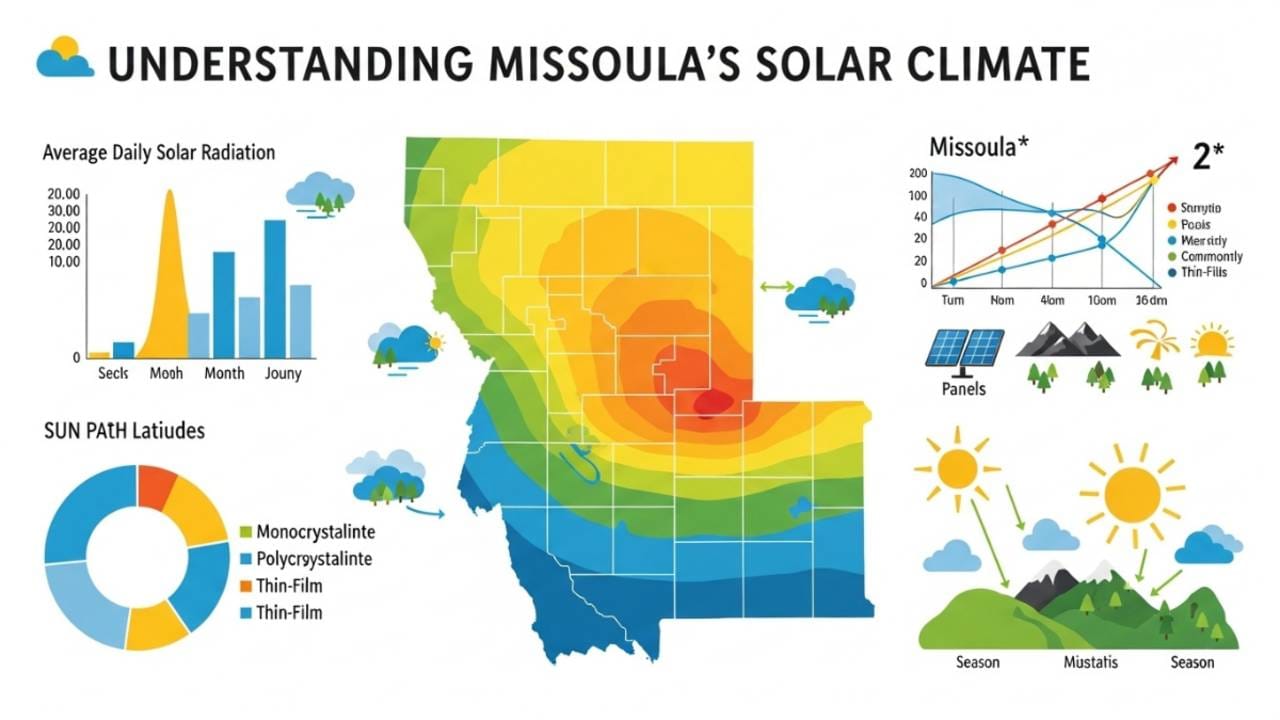
Key Difference: Missoula sits west of the Continental Divide, catching Pacific moisture that doesn’t reach eastern Montana.
| Factor | Missoula (West) | Billings (East) | Impact on Solar |
|---|---|---|---|
| Annual Sunny Days | 200-230 | 200-210 | Similar |
| Annual Precipitation | 14 inches | 15 inches | Similar |
| Humidity | 30-60% | 20-40% | Slightly less efficient (minimal) |
| Cloud Cover | Moderate | Lower | East has edge |
| Forest Density | High (shade issues) | Low (open plains) | Requires strategy |
| Peak Sun Hours | 4.5-5.5 | 5.0-6.0 | East slightly better |
Bottom Line: Missoula’s solar production is excellent despite being wetter than eastern Montana. The key is strategic panel placement to avoid forest shade.
Monthly Solar Production Data
For 400W System (2× 200W panels) in Missoula:
| Month | Peak Sun Hours | Expected Daily Output | Weather Notes |
|---|---|---|---|
| January | 2.5-3.0 | 1,000-1,200 Wh | Shortest days, frequent snow |
| February | 3.5-4.0 | 1,400-1,600 Wh | Improving, snow still common |
| March | 4.5-5.0 | 1,800-2,000 Wh | Spring transition |
| April | 5.5-6.0 | 2,200-2,400 Wh | Excellent, occasional rain |
| May | 6.0-6.5 | 2,400-2,600 Wh | Peak season begins |
| June | 6.5-7.0 | 2,600-2,800 Wh | Longest days, best production |
| July | 6.5-7.0 | 2,600-2,800 Wh | Peak (watch for wildfire smoke) |
| August | 6.0-6.5 | 2,400-2,600 Wh | Still excellent |
| September | 5.0-5.5 | 2,000-2,200 Wh | Strong shoulder season |
| October | 4.0-4.5 | 1,600-1,800 Wh | Declining daylight |
| November | 3.0-3.5 | 1,200-1,400 Wh | Winter approaching |
| December | 2.5-3.0 | 1,000-1,200 Wh | Shortest days |
Annual Average: 1,900 Wh/day from 400W system
Challenge #1: Forest Shade
The Reality: Popular Western Montana camping spots (Lolo National Forest, Rock Creek, Seeley Lake) have dense tree coverage:
- Ponderosa pine
- Douglas fir
- Lodgepole pine
- Cottonwood (near rivers)
Shade Impact:
- 25% shade = 25-40% production loss (not linear due to how cells work)
- 50% shade = 50-70% production loss
- 75% shade = 75-90% production loss
Solutions:
Portable Panels
- Park RV in shade (stay cool)
- Set panels 50-100 feet away in clearing
- Goal Zero Boulder 200 Briefcase ideal ($600-700)
Site Selection
- Scout before committing to spot
- Look for south-facing clearings
- Meadows vs dense forest
Oversized System
- Install 600W if expecting 400W effective output
- Compensates for shade losses
- Still produces well in open areas
Tilting/Adjustable Mounts
- Catch low-angle sun between trees
- Follow sun across sky
- Maximize shoulder hours (morning/evening)
Challenge #2: Wildfire Smoke
Montana’s Summer Reality (July-September):
Heavy wildfire smoke can blanket Western Montana for days or weeks:
Smoke Density vs Production:
- Light haze (AQI 50-100): 5-10% reduction
- Moderate smoke (AQI 100-150): 15-25% reduction
- Heavy smoke (AQI 150-200): 30-50% reduction
- Hazardous smoke (AQI 200+): 50-70% reduction
2023 Example: August wildfire smoke over Missoula lasted 12 days. 400W systems produced average 1,200-1,500 Wh/day vs normal 2,400-2,600 Wh (50% reduction).
Strategies:
Oversize System
- Plan for smoke events
- 600W system still produces 1,800-2,100 Wh in heavy smoke (enough for basics)
Battery Capacity
- Larger battery bank (300-400Ah) provides 2-3 day autonomy
- Ride out worst smoke days on battery reserves
Generator Backup
- Small 2,000W propane generator
- Run 2-3 hours during worst days
- Supplement solar
Clean Panels Immediately
- Ash settles on panels
- Wipe down with water + soft cloth
- Restores production when smoke clears
Good News:
- Smoke is temporary (days to 2-3 weeks max)
- Panels not permanently damaged
- Full production returns once smoke clears
- Most summers have minimal smoke impact
Challenge #3: Snow Accumulation
Winter Reality: Missoula averages 40-50 inches of snow annually (November-March).
Snow on Panels = Zero Production
- Even 1/2 inch completely blocks output
- Must be cleared for any charging
- Tilted panels shed better than flat
Solutions:
Tilt Mounts
- 15-30 degree angle
- Snow slides off more easily
- Better winter sun angle anyway
Manual Clearing
- Soft brush/broom
- Don’t scrape (scratches panels)
- Stand on ground, extend pole (don’t walk on panels)
Warm Water
- Lukewarm (NOT hot) water melts ice
- Hot water = thermal shock (can crack glass)
Black Panels
- Monocrystalline panels are black
- Absorb heat better
- Self-clear faster in sun
Frequently Asked Questions
How much solar do I really need for Missoula boondocking?
Most weekend and casual boondockers do fine with 200-400W of panels and 200Ah of battery capacity. If you’re running AC units, microwaves, or working remotely, bump that to 400-600W of panels and 400Ah+ of batteries. Calculate your actual daily power consumption—LED lights and phones use surprisingly little, while heaters, fans, and entertainment systems consume more. Missoula’s summer solar is excellent, but add 30-50% capacity beyond your calculated minimum to account for cloudy days and shoulder seasons.
Can I install RV solar panels myself in Montana?
Absolutely. Montana has no licensing requirements for DIY RV solar installations since you’re working on your own vehicle’s 12V/24V system. Many Missoula locals install their own panels using kits from places like the Solar Supply Co-op. Basic electrical knowledge helps, but it’s not rocket science—if you can wire a light fixture, you can handle solar. Watch YouTube tutorials, get advice from the local RV community, and take your time. The money you save can fund extra camping trips or better components.
Does wildfire smoke affect solar panel performance?
Yes, unfortunately. Heavy smoke can reduce solar production by 20-50% depending on density. Western Montana occasionally deals with wildfire smoke during late summer, though Missoula’s valley location sometimes protects it from the worst. The good news is panels still produce power during smoky conditions—just less efficiently. Plan for this by oversizing your system slightly if you’re camping during peak fire season. Once the smoke clears and you clean any ash residue off panels, they return to normal performance.
What’s better for western Montana: monocrystalline or polycrystalline panels?
Monocrystalline wins for RV solar Missoula applications. They’re more efficient (important when roof space is limited), perform better in low-light conditions (crucial for forest camping and overcast days), and handle temperature variations better. Polycrystalline panels are slightly cheaper but the efficiency trade-off isn’t worth it when you’re dealing with partial shade and variable Montana weather. Every major installer in Missoula recommends monocrystalline for RV applications.
Can I run my RV AC unit on solar in Missoula?
Technically yes, but it’s challenging and expensive. A typical RV AC draws 1,200-1,800W while running, which means you’d need 1,500-2,000W+ of solar panels (to account for inefficiencies), massive battery banks (800Ah+ lithium), and powerful inverters. Most Missoula RVers skip AC for boondocking—Montana evenings cool down beautifully, and even warm days are manageable with 12V fans and shade. If you need AC, campgrounds with shore power are plentiful. Save your solar budget for the stuff that matters most: fridges, lights, water pumps, and electronics.
Final Recommendations
After researching RV solar Missoula options and talking with local installers and users, here’s the bottom line: invest in quality panels that’ll perform in western Montana’s mixed conditions, size your system for your actual usage (not dreams of what you might someday run), and connect with the local community for ongoing support and advice.
For most Missoula RVers, a 400W panel setup with 200-400Ah of lithium batteries hits the sweet spot. It’ll keep you comfortable boondocking anywhere from Rock Creek to Glacier, handles the occasional cloudy stretch, and costs $2,500-4,000 installed professionally (or $1,500-2,500 if you DIY). Renogy and Rich Solar panels represent the best value-to-performance ratio for local conditions.
Get your system installed before May if possible—that’s when everyone suddenly remembers they wanted solar upgrades, and local shops book up fast. Summer is your testing ground where you’ll learn exactly how your system performs and what adjustments might help.
The RV solar Missoula lifestyle isn’t just about energy independence—it’s about accessing places where the crowds thin out, where you wake up to mist rising off mountain lakes, and where the only sounds are creek water and birds. Your solar setup is the key that unlocks those experiences without the noise and hassle of generators or the constant hunt for hookups.
Whether you’re a University of Montana student exploring western Montana in a converted van or a retired couple spending entire summers wandering between Seeley Lake and Glacier, a solid solar setup transforms your RV from a vehicle that needs regular returns to civilization into a true adventure platform. Missoula’s outdoor culture understands this deeply, which is why you’ll find better local knowledge, community support, and quality installation options here than in most places.
Start with good panels, wire everything properly, and get out there. The Bob Marshall Wilderness isn’t going to explore itself, and those dispersed sites along Lolo Creek are waiting. With the right RV solar Missoula setup, you’re not just visiting Montana’s backcountry—you’re living it.