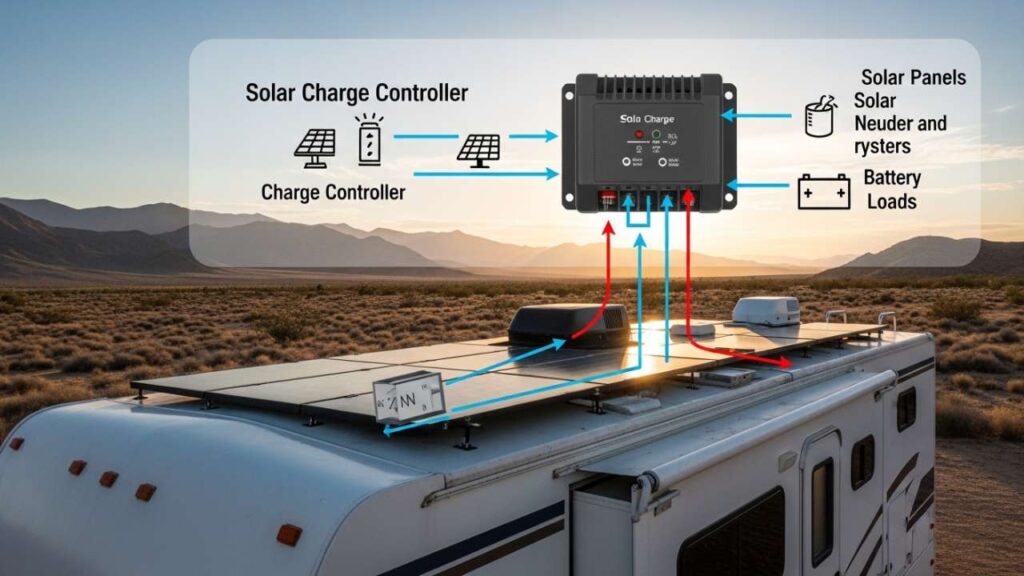
If you’re thinking about going off-grid in your RV, you’ve probably heard the term solar charge controller thrown around. It sounds technical, but here’s the truth: this little device is one of the most important components in your solar setup, and it’s way simpler than it sounds. Think of it as the traffic cop between your solar panels and your battery bank. Without it, your batteries would overcharge, overheat, and eventually die. This guide will walk you through everything you need to know about solar charge controllers, including the two main types and how to pick the right one for your rig.
What Does a Solar Charge Controller Actually Do?
Your solar panels produce electricity whenever the sun hits them. The amount of voltage and current they generate depends on how bright it is outside. On a sunny day, your panels might be cranking out way more power than your batteries can safely handle. If you plugged them directly in, you’d fry your battery bank in no time. This is where the charge controller steps in. Its main job is to regulate the flow of power from your solar panels to your batteries, making sure the current and voltage stay within safe limits. It’s essentially a gatekeeper that prevents overcharging while maximising the amount of power your batteries actually store.
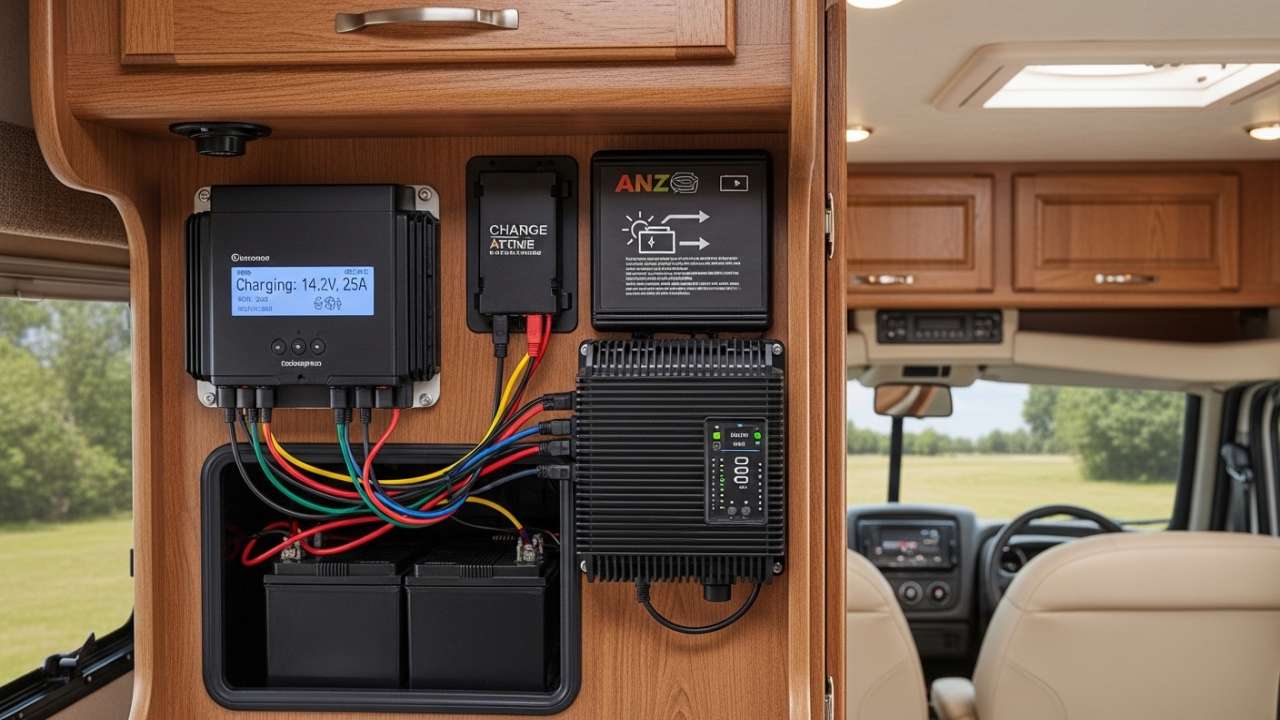
In addition to protecting your batteries, a good charge controller also monitors your system in real time. It tracks voltage, current, power output, and charging state. Many modern controllers display this info on a little screen or send it to your phone via an app. You can see exactly how much power your panels are generating and how much is flowing into your batteries. This gives you real visibility into your solar system’s performance.
MPPT vs. PWM: The Two Types You Need to Know About
There are two main types of solar charge controllers: PWM (Pulse Width Modulation) and MPPT (Maximum Power Point Tracking). Both do the same basic job, but they work differently and have different strengths. Understanding the difference is crucial for choosing the right controller for your RV.
Also Read:- Sioux Falls RV Solar Panels 2026 – How to Install, Maintain & Save Money
How PWM Controllers Work
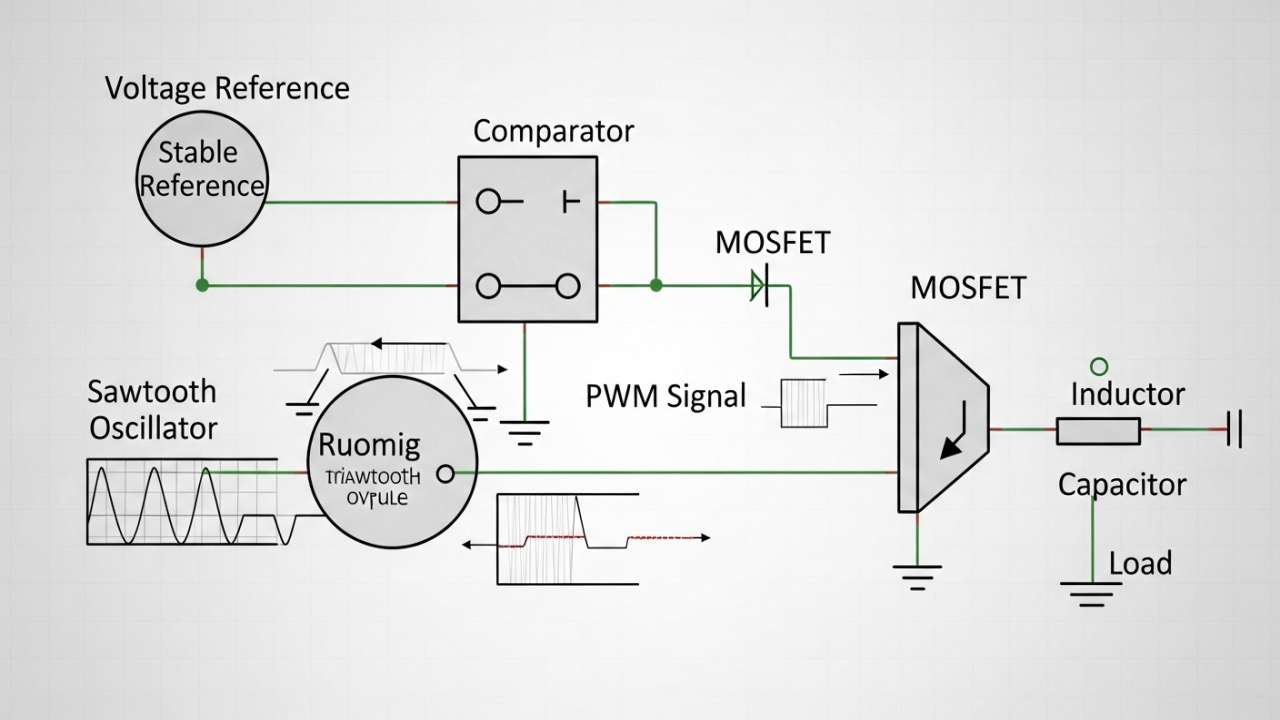
PWM controllers are simpler than the other. They work by rapidly switching the connection between your solar panels and battery bank on and off. This pulsing action reduces the voltage from your panels to match your battery voltage, preventing overcharging. Think of it like a light switch being flicked on and off hundreds of times per second. The faster the switch flicks, the more current flows to your battery. It’s straightforward technology that’s been around for decades, which is why PWM controllers are reliable, rugged, and affordable.
The downside is efficiency. PWM controllers lose some energy during the conversion process. If your solar panel is outputting 100 watts, your battery might only receive 85 or 90 watts of that power. That energy loss becomes heat, which is why PWM controllers can get warm when running hard.
How MPPT Controllers Work
MPPT controllers are smarter. Instead of just reducing voltage, they use a microprocessor to continuously calculate the optimal voltage at which your solar panels should operate to deliver maximum power. The controller adjusts its internal voltage to find this sweet spot, called the maximum power point. When it finds the right voltage, it converts the excess voltage into extra current, then sends that to your battery. This is more complex than PWM, but way more efficient.
The benefit is real: MPPT controllers typically deliver 20 to 30 percent more power to your battery bank than PWM controllers in the same conditions. If your panels are generating 100 watts, an MPPT controller might get 115 to 120 watts to your battery. That’s a huge difference if you’re running on solar power, especially on cloudy days or when the sun is low in the sky. The tradeoff is that MPPT controllers cost more and use a bit more electricity to run their electronics, but most RVers find the extra power is worth the investment.
Also Read:- How to Clean Solar RV Black Tank: Step-by-Step Guide & Pro Tips
Comparison Table: MPPT vs. PWM
| Feature | PWM | MPPT | Best For |
|---|---|---|---|
| Efficiency | 85-90% | 95-98% | Maximum output needed |
| Typical Cost | $150-$400 | $400-$1,500 | Budget conscious |
| Power Output | Standard | 20-30% more | Serious solar users |
| Complexity | Simple | Moderately complex | Either choice works |
How to Choose the Right Size for Your RV
Picking the right size controller comes down to understanding your solar panel watts and battery voltage. The controller’s size is rated in amps, and you need one that can safely handle the maximum current your panels can produce.
Here’s the simple formula: Take your total solar panel wattage and divide it by your battery bank voltage. For example, if you have 400 watts of solar panels and a 12-volt battery system, that’s 400 divided by 12, which equals about 33 amps. You’d want a controller rated for at least 40 amps to give yourself some headroom. Most manufacturers recommend sizing up so your controller is never running at full capacity, which helps it stay cool and last longer.
For typical RV solar setups, you’ll find controllers ranging from 20 amps all the way up to 100 amps or more. A small RV with 100 watts of panels might use a 10-amp controller. A larger RV with 800 watts of panels on a 24-volt system could need a 40 to 50-amp controller. When in doubt, go bigger rather than smaller. An oversized controller just works less hard. An undersized controller will limit how much power gets into your batteries and will run hot.
One more thing: make sure your controller’s voltage matches your battery system. Most RVs run 12-volt or 24-volt systems. Some larger setups use 48-volt systems. A 12-volt controller won’t work with a 24-volt battery bank, so check this before you buy.
Frequently Asked Questions About RV Solar Charge Controllers
Q: Can I use a solar charge controller with lead-acid batteries and lithium batteries?
A: Most modern controllers can work with both, but lithium batteries often need special settings or a lithium-compatible controller. Lead-acid batteries have been around forever and are the standard. If you’re upgrading to lithium down the road, make sure your controller supports it or buy one that does from the start. Some fancy MPPT controllers let you choose between battery types in the menu.
Q: What happens to my solar panels if the charge controller fails?
A: Without a controller, your panels would be directly connected to nothing useful. In most RV setups, a failed controller means your panels just sit there not charging anything. Your batteries won’t get damaged, but you also won’t be charging them. You’d need to replace the controller to get solar charging working again. This is why it’s good to pick a reliable brand.
Q: Do I really need a display on my charge controller, or can I get one without?
A: You don’t need one, but they’re super helpful. A display or app lets you see charging current, power output, and battery voltage in real time. It’s useful for troubleshooting and understanding your system’s performance. Many newer controllers come with phone apps instead of screens, which is even better. If you want the cheapest option possible, you can skip the display, but most people find the information worth the small extra cost.
Q: How hot should my charge controller get?
A: Your controller will warm up when it’s working hard on a sunny day, and that’s totally normal. You should be able to touch it without burning yourself. If it’s too hot to hold your hand on for five seconds, it’s getting too warm. Make sure your controller has good airflow around it and isn’t crammed into a tight cabinet with no ventilation. Poor ventilation can shorten its lifespan. Some people install small fans in their battery boxes to help cool everything down.
Q: Can I use a car battery charger as a charge controller?
A: No, not really. A car battery charger is designed to charge a car battery from the grid, usually over a few hours. A solar charge controller is specifically designed to handle the varying output from solar panels and regulate it safely into a battery bank over all hours of daylight. They’re completely different tools for different jobs. You need a real solar charge controller for solar panels.