
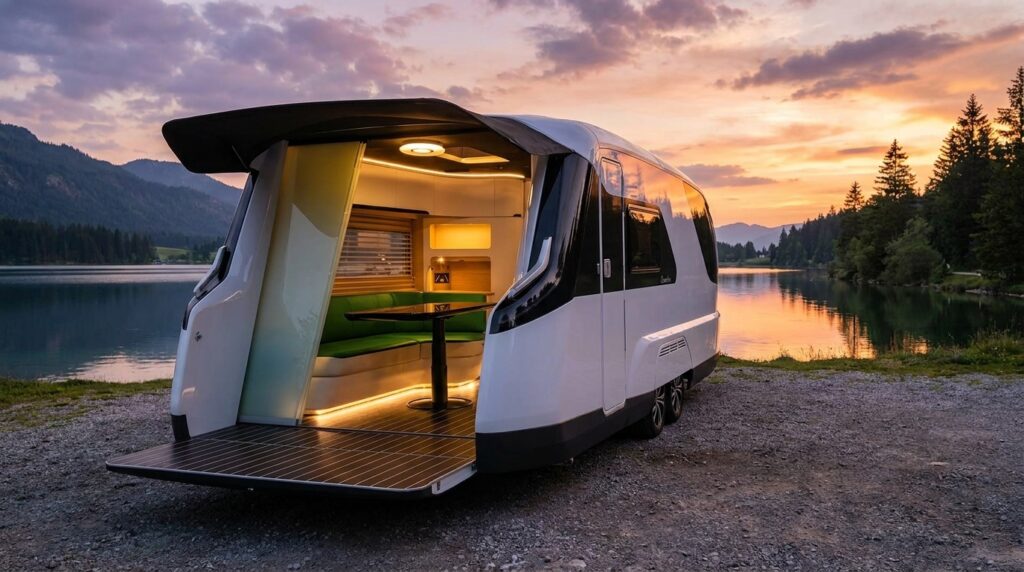
When people talk about futuristic RV design, one name still comes up even after more than a decade — the Knaus Tabbert Caravisio. Unveiled as a concept in 2013, this luxury travel trailer was never meant for mass production, yet it continues to influence modern camper van and travel trailer design trends even today.
At a time when most caravans focused on comfort and practicality, the Caravisio went in a completely different direction. It aimed to become a “land yacht” — a mobile living space that blends the elegance of a luxury boat with the freedom of road travel. Even now, many enthusiasts consider it one of the most impressive futuristic RV concepts ever built.
A Concept Camper That Redefined Luxury Travel Trailers
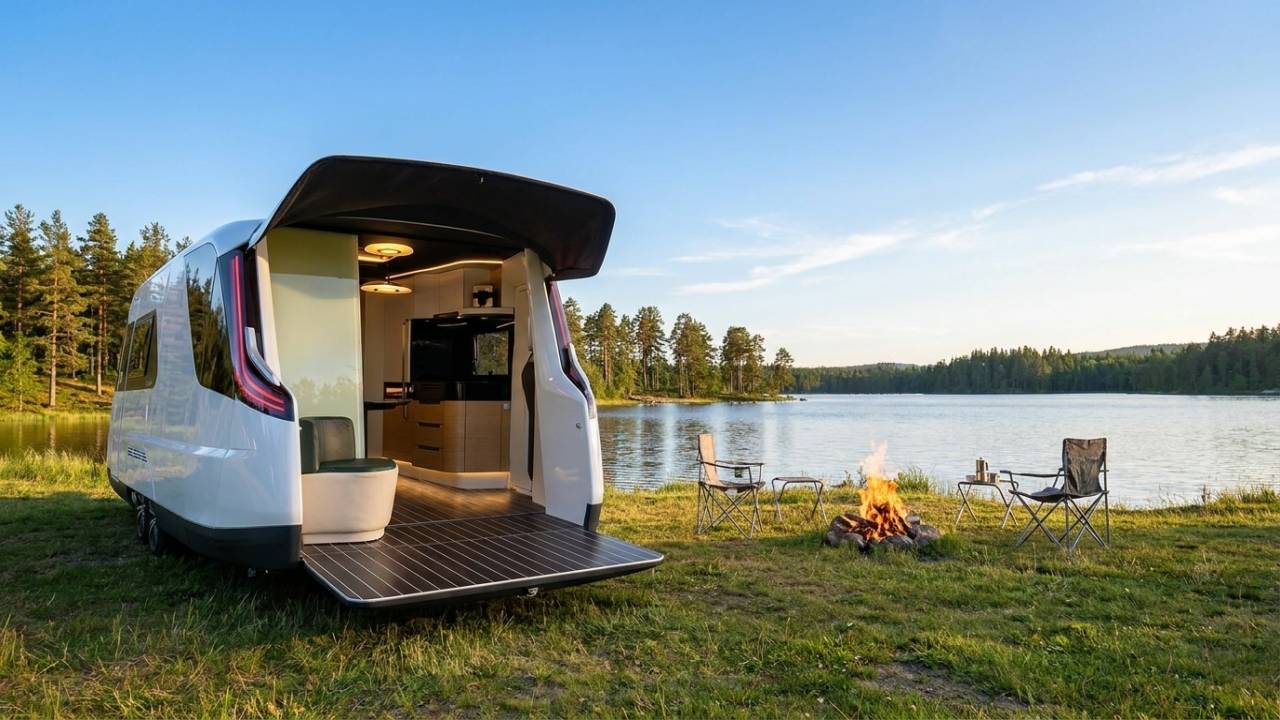
The Caravisio was introduced by Knaus Tabbert as a bold experiment in design and innovation. Unlike traditional campers, it wasn’t built for dealerships or customers. It was created as a statement piece — a vision of what the future of mobile living could look like.
Measuring around 9 meters (29.5 feet), the trailer had a sleek, aerodynamic shape that immediately stood out. Its body was crafted using fiberglass, giving it a smooth, continuous look with flowing lines. Even today, this design still feels more modern than many new luxury caravans and high-end RVs on the market.
What made it even more interesting was its semi-monocoque structure. Instead of a simple box-style build, the Caravisio combined strength and flexibility, allowing designers to experiment with large openings, integrated storage, and seamless panels. For many RV fans, this was the moment when camper design started to feel truly futuristic.
Innovative Design Inspired by Luxury Yachts
One of the biggest inspirations behind the Caravisio was the world of luxury yachts. The interior and exterior design both followed the same philosophy — clean lines, premium materials, and an open, flowing space.
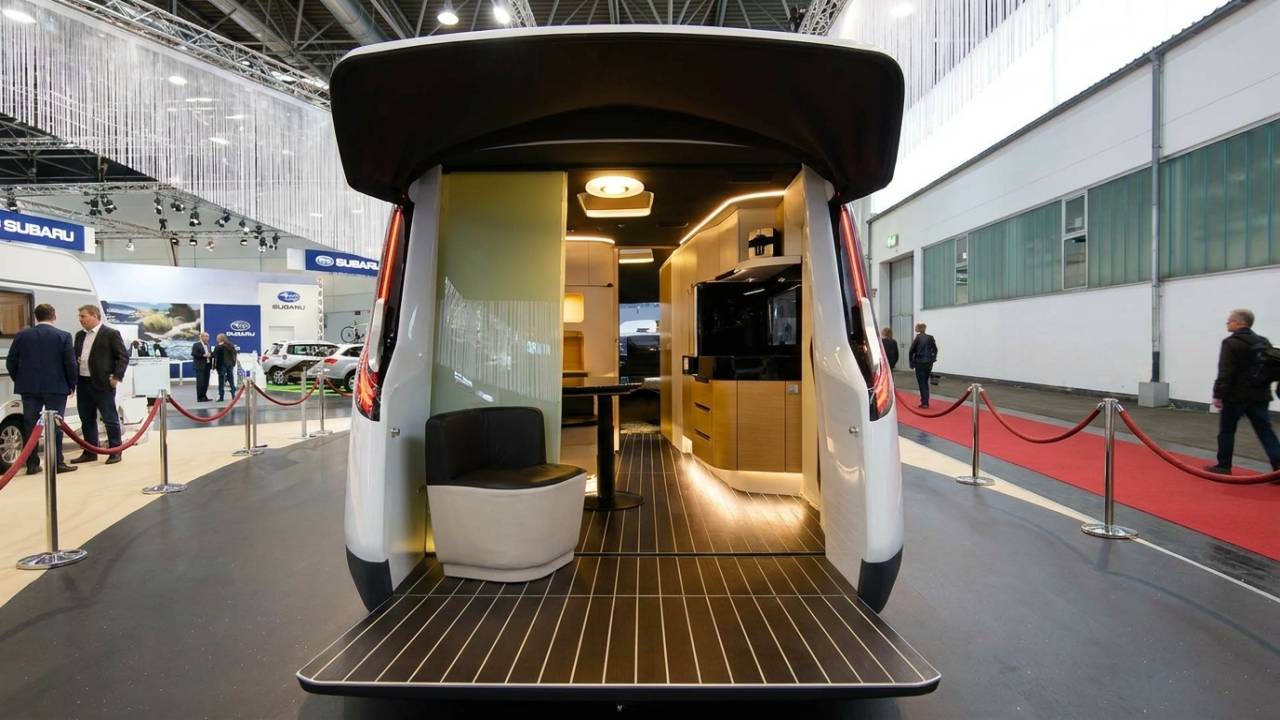
At the rear, the concept included a unique soft-top system that could retract to open up the entire back section. When activated, the lower rear panel would also drop down, transforming the area into a kind of open terrace. This created a “beach club” effect, something almost unheard of in travel trailers at the time.
Imagine parking your camper by a lake or mountain view, opening the rear, and turning your living space into a small private deck. This feature alone made the Caravisio stand out as one of the most creative RV concepts in the world.
The exterior also featured large windows and carefully placed panels that gave it a modern, yacht-like identity. Even though it was a caravan, it didn’t feel like one — it felt like a floating apartment designed for land travel.
A Smart Interior Built for Future Living
Step inside the Caravisio, and it quickly becomes clear that this was not a normal camper. The interior was designed to feel like a luxury hotel suite mixed with a yacht cabin.
Warm lighting, premium wood finishes, leather accents, glass elements, and metallic touches all worked together to create a refined atmosphere. The layout was simple but highly functional, designed mainly for two adults or a small family.
The seating and dining area was placed on one side, while the kitchen sat opposite it. Toward the front, the sleeping and bathroom spaces were cleverly separated to maximize privacy and comfort.
Large windows and skylights filled the interior with natural light, making the space feel much bigger than it actually was. At night, soft LED lighting created a cozy, premium mood — something you would expect in a high-end luxury motorhome, not a concept trailer from 2013.
What truly made the Caravisio ahead of its time were its smart features. Reports from its unveiling mentioned technology that felt futuristic even by today’s standards, such as:
- Fingerprint-based security access
- Remote-controlled doors and locking systems
- Advanced leveling and suspension control
- Built-in climate control systems
- Integrated entertainment setup with projector
- Premium onboard amenities like a wine cooler
For a concept revealed more than a decade ago, these features still feel relevant in today’s smart RV and connected camper trends.
Why the Caravisio Still Influences Modern Camper Design
Even though the Caravisio never entered production, its influence is still visible in today’s RV and caravan industry. Many modern manufacturers have started focusing on open layouts, luxury finishes, and smart technology — all ideas that were part of this concept years ago.
The idea of turning a travel trailer into a lifestyle space rather than just a sleeping unit is now widely accepted. Features like expandable living areas, panoramic windows, and high-end interiors are becoming more common in premium campers.
The Caravisio also helped shift expectations around what a “travel trailer” could be. Instead of being purely functional, it showed that campers could also be stylish, emotional, and experience-driven.
Today’s growing demand for luxury RV living, off-grid travel trailers, and high-end motorhome design all connect back to ideas first seen in this concept.
Many enthusiasts still believe that if Knaus Tabbert ever decided to revive the Caravisio concept, it could easily compete with some of the most expensive RVs on the market today.
A Dream Camper That Still Feels Unreachable
Part of what makes the Caravisio so fascinating is the fact that it was never meant to be owned. It exists more as a design experiment than a commercial product. That gives it a rare, almost mythical status in the world of camper enthusiasts.
Rumors suggest that the original unit may still be stored at a Knaus Tabbert facility, possibly preserved as a showpiece. Whether or not it is accessible today, it continues to attract attention from RV lovers around the world.
Its estimated concept value once reached close to $800,000, highlighting just how ambitious and premium the project was meant to be.
Even now, more than 10 years later, the Caravisio still sparks the same reaction: curiosity, admiration, and a bit of disappointment that it never reached production.
But perhaps that is what makes it special. It represents a “what if” moment in RV history — a glimpse into a future that never fully arrived, but still influences what we see on the roads today.
Also Read:-
- This Compact Camper Van Kit Has a Genius Feature That Other RV Brands May Soon Copy
- Couple Retires at 39 After Turning Old Shuttle Bus Into Stunning Tiny Home on Wheels
- Mini SRS-9 Camper Review: The Tiny Australian Caravan That’s Turning Heads Worldwide
- The Real Truth About 200W Solar Panels for Your RV: Beyond the Hype and Marketing Speak