You are 40 miles from the nearest town; the kids just got back from the lake, and someone turns on the shower — only to get hit with a wall of ice-cold water. The tank ran dry. Again. Sound familiar? If you have been there, this guide was written specifically for you.
Finding the best RV water heater for the money is not about picking the most expensive one or the one with the flashiest Amazon listing. It is about matching the right technology to your camping style — whether you are a full-timer boondocking in the desert, a weekend warrior at state parks, or somewhere in between.
We dug into hundreds of verified reviews, compared specs from six leading brands, and cross-referenced real user experiences to build this guide. No brand sponsorships. No affiliate pressure. Just the clearest breakdown you will find anywhere in 2026.
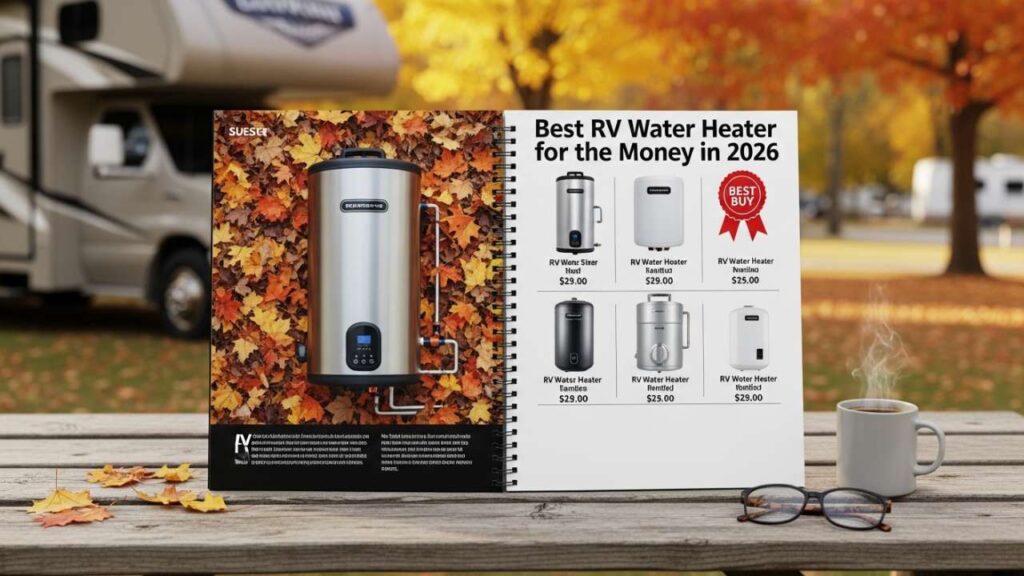
Best RV Water Heaters in 2026
| Category | Winner | Price Range | Best For |
|---|---|---|---|
| Best Overall | FOGATTI InstaShower 8 Plus | $380–$420 | Full-timers & families |
| Best Budget | APUS 68,000 BTU Tankless | $280–$310 | Off-grid boondockers |
| Best Tank-Style | Suburban SW6DEL 6-Gallon | $300–$370 | Weekend campers |
| Best Premium | Girard GSWH-2 Tankless | $550–$650 | Luxury RVs & fifth wheels |
| Best Electric | Camplux 5500W Tankless | $120–$160 | Shore-power campers |
Tank vs. Tankless: The Decision That Actually Matters
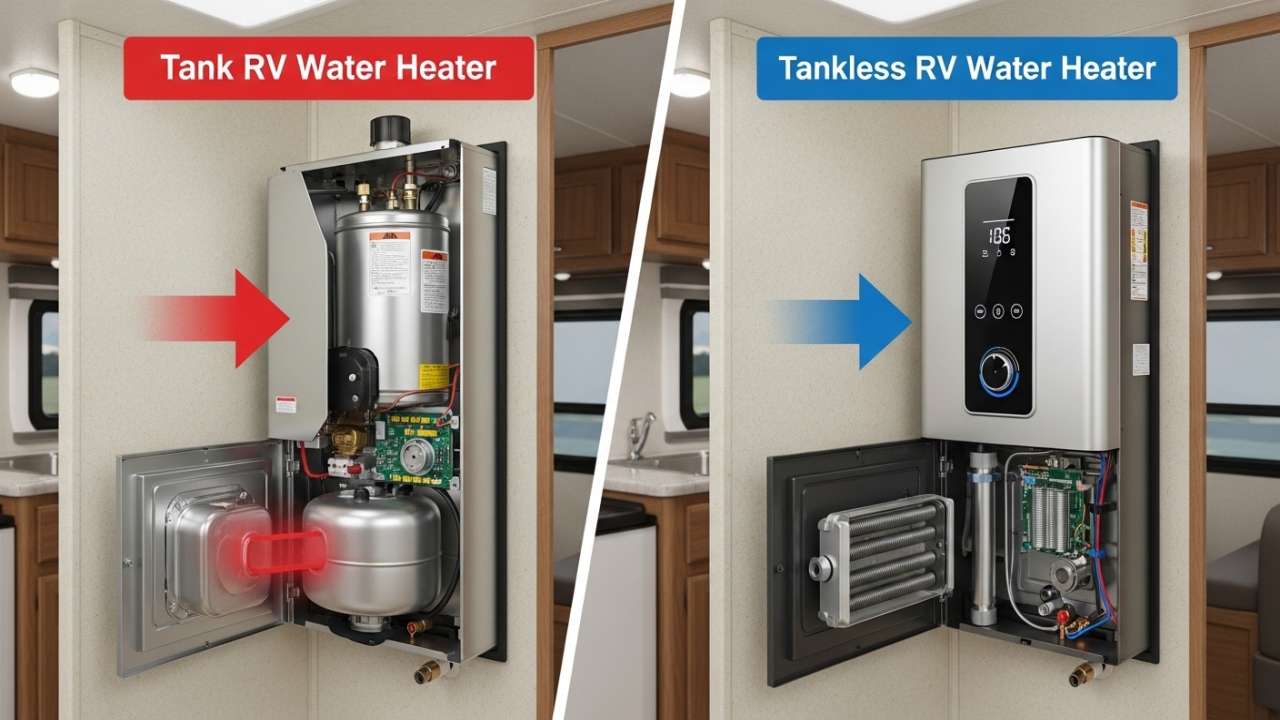
Before you look at a single product, you need to answer one question honestly: How do you actually use your RV?
This single question will determine whether a tank or tankless model makes more sense for you — and getting it wrong is an expensive mistake.
Tank Water Heaters
Traditional tank-style RV water heaters store 6 to 10 gallons of pre-heated water. They are the industry standard for a reason. They are reliable, widely understood by RV mechanics, inexpensive to repair, and they work perfectly well for most weekend campers who are not running the shower for 20 minutes at a stretch.
Pros:
- Lower upfront cost ($250–$370 for quality models)
- Familiar installation — most RVs already have a tank-compatible compartment
- Can run on propane, electric, or both simultaneously (dual-fuel models)
- Rock-solid reliability with fewer electronic components to fail
- Great for solo campers or couples who plan their hot water use
Cons:
- 6-gallon capacity equals roughly one short shower before you are waiting 20–30 minutes
- Energy is wasted keeping water hot even when nobody needs it
- Heavier and bulkier than tankless options
Warning: A 6-gallon tank heater runs out of hot water in about 8–10 minutes of showering. If your household has three people and a dog to wash after a lake day, everyone will be taking a cold shower — full stop.
Tankless (On-Demand) Water Heaters
Tankless units heat water instantly as it flows through the unit — no storage tank, no waiting, no running out mid-rinse. For families, full-timers, or anyone who is tired of timing their showers around a small tank, this is where RV hot water finally starts feeling like home.
Pros:
- Unlimited hot water on demand — truly endless
- Lighter and smaller than tank models
- Only uses propane when you are actively calling for hot water
- Lifespan of 15–20 years versus 6–10 years for tank models
- High BTU output (40,000–68,000 BTU) heats water fast even in cold climates
Cons:
- Higher upfront cost ($280–$650)
- More complex installation — some require professional setup
- Brief “cold water sandwich” effect when starting — a few seconds of lukewarm water before temperature stabilizes
- Minimum flow rate required to activate the heater (~0.5 GPM)
Also Read:- What Is a Solar Charge Controller and Why Does Your RV Need One?
Top 5 RV Water Heaters for the Money in 2026
FOGATTI InstaShower 8 Plus
| Specification | Detail |
|---|---|
| BTU | 55,000 |
| Flow Rate | 2.9 GPM |
| Fuel | Propane (LP) |
| Power Draw | 12V DC |
| Door Size Options | 15″ × 15″ / 15″ × 18″ / 18″ × 18″ |
| Price Range | $380–$420 |
The Fogatti InstaShower 8 Plus earns the top spot because it gets the most important things right all at once: high BTU output, a generous 2.9 GPM flow rate, multi-door-size compatibility for retrofitting, and remote control operation – all at a price that does not require refinancing your rig.
What sets it apart in 2026 is the upgraded mixing tank technology, which smooths out the temperature fluctuations that plague most tankless units when water pressure varies. Anyone who has experienced that irritating “hot-cold-hot” oscillation in the shower will immediately appreciate this feature.
Installation drops into existing 15″×15″ openings with no modifications, and the optional larger door panels are included in the box to suit different RVs. The 12V draw is low enough to run comfortably off a battery bank during boondocking without draining your power reserves.
Pros:
- Three door size options cover virtually every RV compartment
- Mixing tank eliminates temperature swings mid-shower
- Remote controller included as standard
- Verified 4.5+ star rating across 600+ real buyer reviews
Cons:
- Slightly higher price than budget competitors
- Forced exhaust venting required — not suitable for open-air installations
Also Read:- RV Water Heater Replacement Cost 2026 — How Much Should You Actually Budget?
APUS 68,000 BTU Propane Tankless
| Specification | Detail |
|---|---|
| BTU | 68,000 |
| Flow Rate | 3.9 GPM |
| Fuel | Propane (LP) |
| Power Draw | 12V DC |
| Door Size | 15″×15″ |
| Price Range | $285–$310 |
Here is the thing that will surprise you: the APUS delivers 68,000 BTU and 3.9 GPM — numbers that exceed many units costing $150 more. For boondockers who want serious hot water performance without the serious price tag, this model earned its Amazon’s Choice status fair and square.
The high altitude compatibility is a bonus that most budget models skip entirely. If you are camping in the Colorado Rockies or the Sierra Nevada, altitude can cause LP burners to run inefficiently — and the APUS has a built-in compensation mode that keeps the flame dialed in regardless of elevation.
Pros:
- Highest BTU-to-dollar ratio in this entire guide
- High altitude mode built in for mountain camping
- CSA certified for safety compliance across the USA
- 3.9 GPM handles simultaneous shower and kitchen sink use
Cons:
- Build quality feels slightly less premium than the Fogatti
- Single door size (15″×15″) offers less retrofit flexibility
- Customer support response times are slower than those of top-tier brands
Suburban SW6DEL
| Specification | Detail |
|---|---|
| Capacity | 6 Gallons |
| Fuel | Propane + Electric (Dual-Fuel) |
| Ignition | Direct Spark (DSI) |
| Recovery Time | ~15–20 minutes |
| Tank Construction | Porcelain-lined steel |
| Price Range | $300–$370 |
Suburban has been building RV water heaters since 1947. The SW6DEL is not exciting — and that is exactly why thousands of RVers trust it with their rigs year after year. Porcelain-lined steel tank, Direct Spark Ignition with no pilot light to fuss over, and dual-fuel capability mean it adapts to campgrounds with electric hookups just as easily as remote off-grid sites.
If you are a weekend camper, a snowbird who times hot water use around the tank size, or if you simply want a heater that virtually any RV technician in America can repair on the spot — this is your unit.
Pros:
- Decades-proven reliability in American RVs
- Dual-fuel operation on both propane and 120V electric
- Direct drop-in replacement for most existing RV tank units
- Wide national service and parts network
Cons:
- 6 gallons runs out fast with multiple users back-to-back
- Heavier than tankless alternatives
- Standby heat loss wastes propane overnight when the tank sits hot
Also Read:- How to Fix a Problem Solar RV Toilet Not Flushing? 5 Easy Fixes You Can Do Yourself
Girard GSWH-2 Tankless
| Specification | Detail |
|---|---|
| BTU | 42,000 |
| Flow Rate | 2.0 GPM |
| Fuel | Propane (LP) |
| Power Draw | 12V DC |
| Key Features | Freeze protection, microprocessor control, quiet operation |
| Price Range | $550–$650 |
The Girard GSWH-2 is what Lippert — one of the largest RV parts manufacturers in the USA — deploys in their premium lines, and there is a solid reason for that. The onboard microprocessor continuously adjusts the burner for consistent output across varying pressure conditions. Freeze protection kicks in automatically when temperatures drop toward dangerous levels. It is quiet. It is precise. It is built for full-timers who treat their RV exactly like a home.
The 42,000 BTU rating is lower than the APUS on paper, but Girard’s modulation technology means it actually maintains stable temperature better than many higher-BTU units. This is a case where smart engineering beats raw numbers every time.
Pros:
- Microprocessor-controlled for exceptional temperature stability
- Built-in freeze protection removes winterizing stress
- Whisper-quiet operation during use
- Premium build quality backed by the major RV parts network
Cons:
- The most expensive model in this guide
- 2.0 GPM flow rate is adequate for one to two users but tight for families
- Complete overkill for occasional weekend campers
Camplux 5500W
| Specification | Detail |
|---|---|
| Power | 5,500W / 110–120V |
| Flow Rate | 0.5–1.5 GPM |
| Fuel | Electric (shore power) |
| Controls | Digital display + remote control |
| Certifications | CE, ETL listed |
| Price Range | $120–$160 |
Not everyone wants propane. If you camp primarily at full-hookup sites and have consistent 30-amp or 50-amp service, an electric tankless unit like the Camplux 5500W slots in cleanly, heats water in 3–5 seconds, and costs a fraction of propane models.
The remote control lets you dial the temperature from across the RV, and the compact under-sink form factor frees up meaningful storage space compared to bulkier alternatives. Just know the limits: electric units struggle in very cold climates where incoming groundwater drops below 50°F — at that point, flow must be reduced significantly to reach a comfortable output temperature.
Pros:
- Lowest price in this guide for on-demand hot water
- No propane connection required whatsoever
- Compact design installs under the sink in minutes
- Remote control and digital display included as standard
Cons:
- Requires consistent shore power — completely useless while boondocking
- Struggles in cold climates with inlet water below 50°F
- Lower GPM than any propane model in this guide
Also Read:- Best RV Solar Panels for New Mexico: Desert Climate Guide 2026
How to Buy the Right RV Water Heater: 6 Things to Check First
Before clicking “add to cart,” walk through this checklist. Skipping even one of these steps is how people end up posting frustrated reviews about wrong fits and units that cannot get hot enough.
- Measure your compartment opening. Standard RV water heater doors are 15″×15″ or 18″×16″. Measure yours before buying anything. A tankless unit that does not fit your existing door opening is an expensive problem with no quick fix.
- Know your camping style honestly. Boondocking? You need propane. Shore power only? The electric works fine. A mix of both? Go with a dual-fuel tank or a propane tankless unit with a low 12V battery draw.
- Count your users and active fixtures. One shower head needs approximately 1.5 GPM. One shower running simultaneously with the kitchen sink needs roughly 2.5 GPM. Size accordingly — do not buy a 1.5 GPM unit for a family of four.
- Check your camping altitude. Above 4,500 feet? Look specifically for high-altitude certification on the unit. The APUS model carries this designation. Budget units without it will underperform or fail to ignite reliably at mountain campgrounds.
- Match the power source to your setup. Propane tankless units run on 12V DC and are compatible with any RV battery system. Electric units need consistent 110–120V AC shore power. Make absolutely sure your setup matches what the heater requires before purchasing.
- Factor in installation complexity. Drop-in replacements of the same type and door size are genuinely DIY-friendly. Switching from a tank unit to a tankless system may require venting changes and new propane line routing — if you are not comfortable with that level of work, budget for a professional installation from the start.
What Does an RV Water Heater Actually Cost to Run?
The purchase price is only part of the real story. Here is a realistic look at what each type costs over the long run:
| Heater Type | Purchase Cost | Avg. Annual Fuel Cost | Expected Lifespan | 10-Year Total Estimate |
|---|---|---|---|---|
| Tank (Propane + Electric) | $300–$370 | $80–$130 | 6–10 years | $1,250–$1,700 |
| Propane Tankless | $280–$650 | $50–$90 (on-demand only) | 15–20 years | $780–$1,550 |
| Electric Tankless | $120–$160 | $40–$70 (shore power) | 10–15 years | $520–$860 |
The math is clear: tankless models cost more upfront but pay for themselves over time through lower fuel consumption and a significantly longer service life. The U.S. Department of Energy confirms that tankless water heaters can be 24–34% more energy efficient than conventional storage tank models for households with moderate hot water use — and the same principle applies just as strongly on the road.