Picture this: You’re parked near the stunning Sandia Mountains at sunset, your coffee brewing quietly, your refrigerator humming along—and you’re completely off-grid. No generator noise. No fumes. Just you, your RV, and unlimited power from the Albuquerque sun.
This isn’t a luxury only for serious boondockers anymore. More RVers in Albuquerque and New Mexico are discovering that solar panels aren’t just about freedom—they’re about reclaiming your camping experience entirely.
Here’s the thing: Albuquerque sits in one of North America’s best solar resource zones, receiving over 300 days of sunshine annually. That’s more reliable sunlight than most U.S. cities. For RV travelers, this means you could power your entire mobile home with clean energy while saving thousands on generator fuel and campground fees over your lifetime.
But here’s where many RVers get stuck: Should you go DIY or hire a professional shop? What do those mysterious components actually do? How much will it cost? And most importantly—will your RV system actually work when you’re parked in a remote canyon with no electrical hookup?
We’ve researched the top installation shops serving Albuquerque, analyzed hundreds of RV solar setups, and talked to seasoned RVers who’ve already made the jump. In this guide, you’ll get the honest breakdown of both paths forward.
Understanding Your RV Solar System
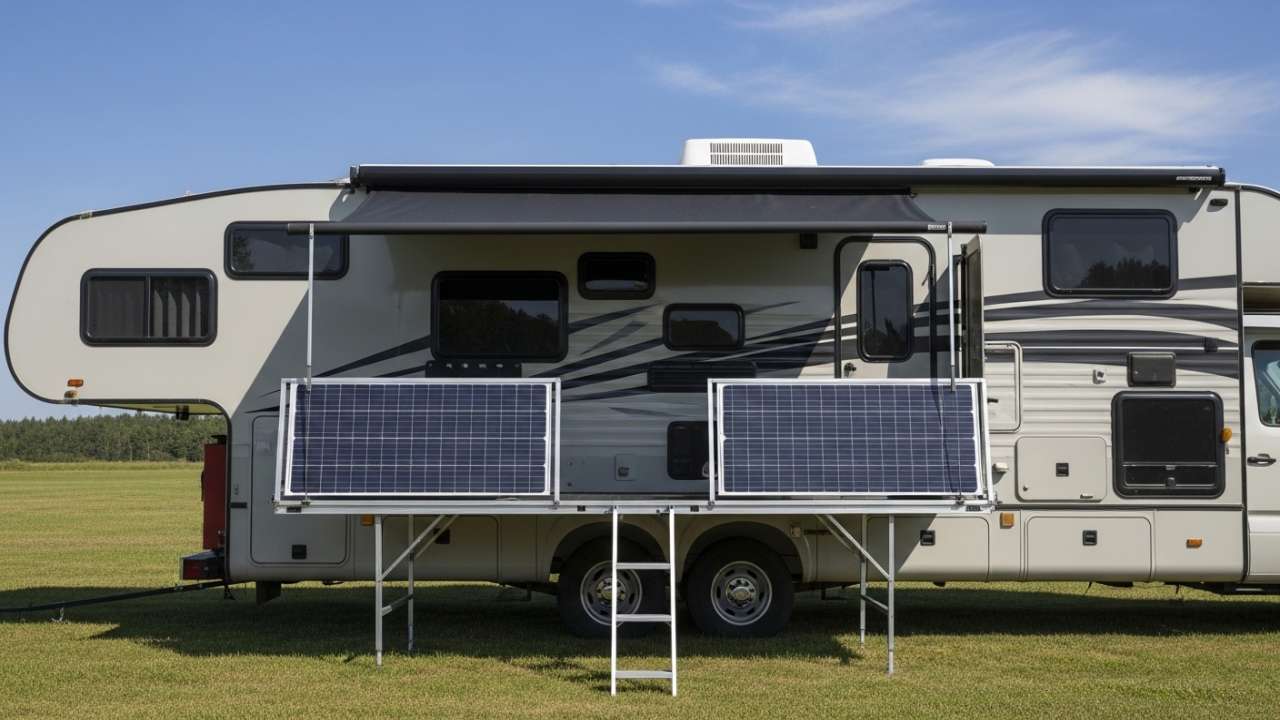
Before shopping around or grabbing tools, let’s demystify how these systems actually work.
The Four Essential Components
Think of your RV solar system as a mini power plant. Each component plays a specific role:
Solar Panels are your energy collectors. Mounted on your roof, they convert sunlight into DC (direct current) electricity. Modern panels are lightweight, durable, and built to withstand highway vibrations and harsh desert weather.
The Charge Controller acts like a traffic cop for your electrical system. It regulates the power flowing from your panels to your batteries, preventing overcharging and protecting your battery bank from premature failure. Two main types exist: PWM (Pulse Width Modulation) and MPPT (Maximum Power Point Tracking). MPPT controllers harvest up to 30% more power from your panels, making them worth the investment if you’re serious about off-grid living.
Battery Bank is your energy storage—essentially, the reserve tank for your power plant. Your panels charge these during the day; they power your lights, fridge, and devices at night or on cloudy days. Your choice here matters enormously (more on this below).
The Inverter is what lets you live like you’re plugged in. It converts 12V DC power from your batteries into 120V AC power—the same electricity your house uses. Without an inverter, you’re limited to 12V devices only. With one, you can run your microwave, charge laptops, and operate coffee makers.
Why These Four Components Matter
Many RVers who attempted DIY installations and failed made one critical mistake: they didn’t understand how these parts communicate. They’re not independent units—they’re a system. Wire them wrong, undersize a component, or choose the wrong battery type, and you’ll spend your first night in the desert with dead batteries and a very expensive lesson learned.
Albuquerque’s Climate Advantage (And Unique Installation Challenges)
Albuquerque isn’t just a good place for solar—it’s an exceptional place. The region’s elevation (around 5,000 feet), low humidity, and 300+ annual sunshine days create perfect conditions for solar energy production.
However, the high desert climate comes with unique challenges for RV installation:
Intense UV radiation means your wiring can degrade faster in standard installations. Shops that know the local climate use UV-resistant conduit and materials designed specifically for high-altitude desert environments.
Thermal stress from temperature swings—Albuquerque can swing 40°F between day and night, especially in autumn and spring. This expansion and contraction is brutal on poorly sealed roof penetrations, which is why professional installers here invest in premium sealants and brackets.
Dust and sand accumulate more heavily than in coastal areas. This reduces panel efficiency by 15-25% if not maintained, but it’s easy enough to manage with occasional water rinsing.
Altitude considerations: At 5,000+ feet, your panels are closer to the sun and less atmospheric filtering occurs. This is great for power output but means solar radiation is more intense, requiring solid grounding and rapid shutdown capabilities.
RV solar shops operating in Albuquerque understand these nuances. They’re not just installing generic systems—they’re building desert-hardened power plants for mobile homes.
Choosing Your Battery Type (The Most Important Decision)
Your battery choice determines everything: how long your investment lasts, how much power you can reliably use, your maintenance requirements, and your budget.
Comparison of Battery Types for Albuquerque RVs
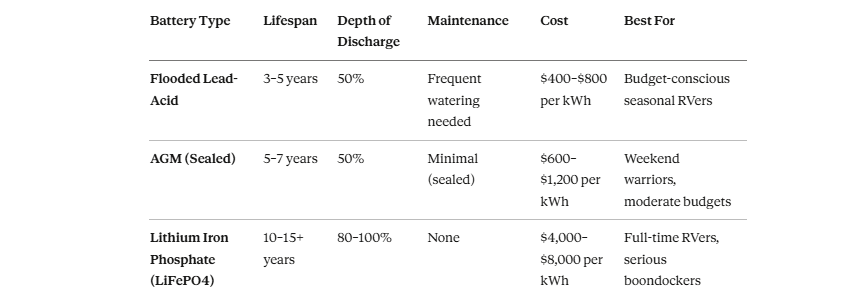
Real-world example: A full-time RV couple in Albuquerque running a typical 300Ah lithium battery bank costs about $6,000 upfront but eliminates charging expenses, maintenance, and replacement cycles for over a decade. That same system with flooded lead-acid would cost $1,200 initially but require $300–$400 in replacements every 4 years, plus regular water top-offs and monitoring.
The Desert Case for Lithium
Albuquerque’s heat actually favors lithium batteries. Traditional lead-acid batteries lose capacity in heat and struggle with the temperature swings characteristic of high-desert climates. Lithium handles thermal stress far better, delivering consistent performance from summer highs to winter lows.
If you’re planning to boondock seriously in New Mexico—parked in remote BLM land, national forest camps, or private dispersed sites—lithium is becoming the quiet standard among experienced RVers.
Top 5 RV Solar Installation Shops in Albuquerque
We analyzed local shops based on customer reviews, warranty support, experience with local climate, custom system design, and post-installation service. Here are the standouts:
1. Echo One Adventures
Specialty: Mobile and stationary installations | Service Area: Albuquerque metro + surrounding NM
Why RVers Choose Them: Specializes in off-grid systems and battery installations. They’re experienced with the unique electrical configurations needed for New Mexico’s high altitude and have a strong reputation for thorough customer education.
What to expect: Full system design consultation, custom component selection, and follow-up support. Many customers praise their willingness to troubleshoot issues months after installation.
Contact: echooneadventures.com
2. Albuquerque Solar (Residential Focus with RV Experience)
Specialty: Hybrid systems (grid-tied + battery backup) | Service Area: Albuquerque, Rio Rancho, Santa Fe
Why RVers Choose Them: While primarily residential, they’ve installed high-capacity systems on RVs and understand battery integration better than most. Their warranty support is industry-leading.
What to expect: Professional project management, permitting coordination (if needed for fixed installations), and a robust app for system monitoring.
3. Positive Energy Solar
Specialty: Employee-owned, full-service solar | Service Area: Albuquerque, Santa Fe, surrounding areas
Why RVers Choose Them: Over 25 years in business in New Mexico means deep knowledge of regional electrical codes, climate factors, and long-term reliability. They offer a 30-year warranty (industry-leading) and maintain a dedicated service team locally.
What to expect: In-house installation teams (not subcontractors), extensive pre-consultation, and priority service support. More expensive upfront but excellent for peace of mind.
Contact: positiveenergysolar.com
4. EverGuard Roofing & Solar
Specialty: Roofing + solar integration | Service Area: Albuquerque metro
Why RVers Choose Them: If you need roof work before solar installation (common in older RVs), they handle both in one project. Prevents hiring two contractors and ensures roof integrity for long-term panel mounting.
What to expect: Combined roofing and solar assessment, simplified project coordination, and integrated warranties.
Contact: everguardsolar.com
5. Experienced Solar (Custom System Design)
Specialty: Custom remote/off-grid installations | Service Area: Albuquerque, surrounding rural areas
Why RVers Choose Them: They specialize in off-grid solar, meaning they understand power audits, backup generator integration, and boondocking scenarios better than grid-tied residential installers.
What to expect: Detailed site surveys, thorough power consumption analysis, and system recommendations tailored to your specific travel style.
Contact: experiencedsolar.net
Also Read:- Best RV Solar Panels for Montana: Cold Weather Guide 2026
DIY RV Solar Installation – Is It Right for You?
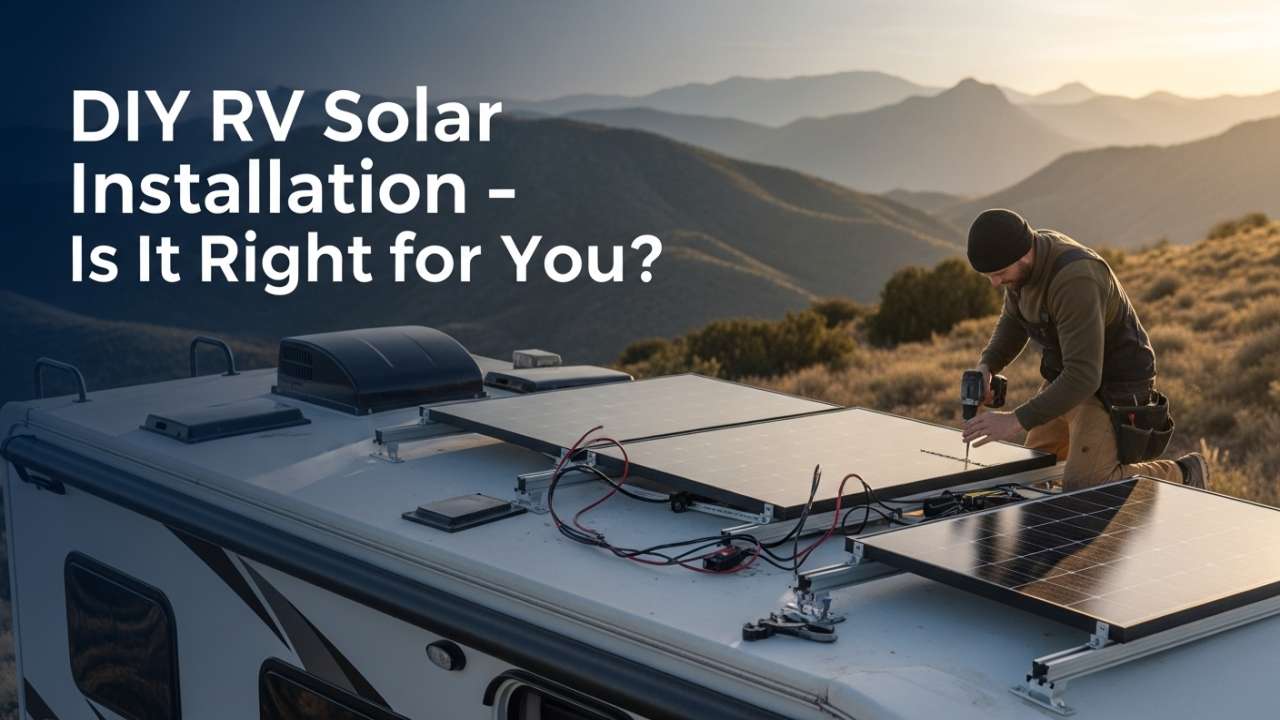
Going DIY can save $1,500–$4,000 in labor, but it requires electrical knowledge, safety discipline, and several full days of physical work.
Honest Assessment: Can You DIY?
You’re a good candidate if you:
- Have experience with DC electrical systems or automotive wiring
- Understand 12V and 120V circuits and can read wiring diagrams
- Feel comfortable working on your RV roof (drilling, sealing penetrations)
- Have the proper tools: multimeter, wire crimper, torque wrench, power drill
- Can commit 2–4 full days to the project without rushing
You should hire a professional if:
- Electrical work makes you uncomfortable
- Your RV roof has unusual geometry or structural concerns
- You want warranty protection on the installation labor
- You value peace of mind over cost savings
Step-by-Step DIY Overview
1. Power Audit First Calculate every electrical device you actually use:
- How many hours per day does your refrigerator run? (typically 8–10 hours in desert heat)
- How many lights and for how long?
- Do you plan to run AC? (Most small RV air units need 2,000–4,000 watts and aren’t practical for solar)
- How many charge cycles for laptops, phones, tablets?
Multiply wattage × hours for each device. Add 20% buffer for inefficiency losses.
2. System Sizing Based on your power audit, you’ll likely need:
- Panels: 400–800W for moderate users (weekend campers), 1,200–2,400W for full-time RVers
- Battery Bank: 200–400Ah lithium for full-timers; 100–200Ah for weekend use
- Charge Controller: MPPT, 60A minimum (smaller systems can use 40A)
- Inverter: 1,500–3,000W continuous (doesn’t need to handle peak loads simultaneously)
3. Mounting Your Panels Options include:
- Roof-mounted (fixed): Best efficiency in most positions; requires roof penetrations and careful sealing
- Tilting brackets: Allows seasonal angle adjustments; bulkier but more flexible
- Ground-mounted racks: Only if you’re parked permanently; not ideal for mobile RVers
For Albuquerque, a fixed mount at 35–40° south-facing is optimal year-round.
4. Wiring and Connections This is where most DIY failures happen:
- Use proper gauge wire (too thin = power loss + heat risk)
- Install breakers and fuses as specified in your controller manual
- Use quality connectors (MC4 standard on modern panels)
- Seal all roof penetrations with marine-grade sealant
- Test everything with a multimeter before final connections
5. Safety First
- Cover panels with opaque cloth while wiring (live panels can shock you)
- Never work on wet surfaces or in windy conditions
- Wear insulated gloves and safety glasses
- Have a fire extinguisher nearby
- Turn off main battery switch before making any final connections
Also Read:- How Much Does It Cost to Convert an RV to Solar? The Real 2026 Pricing
Cost Breakdown and ROI
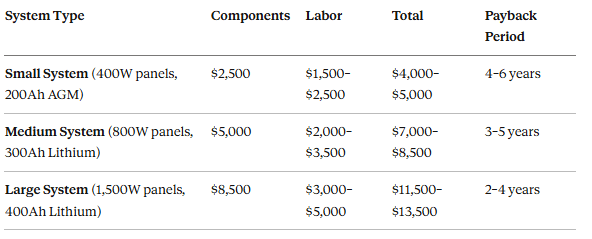
What will this actually cost you?
Professional Installation Costs
DIY Cost Savings
DIY installations typically cost 30–50% less because you’re eliminating labor. A medium system might drop from $7,500 to $4,500–$5,200.
Real ROI for Albuquerque RVers
If you boondock just 3–4 months per year in New Mexico, you’ll save:
- $300–$400 annually on generator fuel
- $1,200–$2,000 annually on campground hookup fees (avoiding expensive RV parks with electrical)
- Eliminated battery replacements every 4 years (if using lithium)
Over 10 years, that’s $4,500–$6,000 in direct savings—plus the intangible value of camping freedom and peace and quiet.
Common Questions RVers Ask About Albuquerque Solar
Will my solar panels work in winter at high altitude?
Yes, absolutely. While winter days are shorter, Albuquerque’s altitude and clear skies mean you’ll get excellent winter solar production. Your panels might generate 40–50% of summer output in December, but that’s still enough for moderate winter camping. Many RVers in New Mexico use solar year-round with supplemental generator backup during rare multi-day cloudy spells.
Can I expand my system later?
Yes. Design your electrical box and wiring for future growth. Install a larger charge controller than you currently need. Add panels in batches over time (many RVers add 2–4 panels each year). Your lithium battery bank can often accept additional batteries in series or parallel.
What happens if I have a problem with a shop’s installation?
Reputable shops carry liability insurance and warranty their work (typically 2–5 years on labor). Positive Energy Solar’s 30-year warranty is exceptional. Always get a warranty in writing before installation begins.
Do I need permits for RV solar installation?
For mobile RVs, typically no. For permanently fixed RV installations or large systems, check with Albuquerque City regulations. Professional shops navigate this automatically.
My RV manufacturer says solar voids my warranty. True?
Outdated concern. No major RV manufacturer voids warranties for solar installation. Professional shops know how to install cleanly without affecting structural or mechanical warranty coverage.
Should I go grid-tied or off-grid?
RVs are inherently off-grid by nature (no grid connection when boondocking). Residential grid-tied systems don’t apply. Focus on battery-backed systems designed for mobile or dispersed camping.
How often do panels need cleaning in Albuquerque?
Monthly rinsing with a hose during normal use. The high desert’s dust settles faster than coastal areas. Many RVers clean panels quarterly as part of their routine maintenance.
Albuquerque’s Solar Incentives and Tax Credits
Federal Tax Credit (30%)
Residential installations: The 30% federal solar Investment Tax Credit applies to home installations (and some RV installations if permanently fixed). Expires December 31, 2032.
What it means: A $10,000 system nets you a $3,000 federal tax credit, reducing your actual cost to $7,000.
State Incentives
New Mexico offers limited state-level rebates but has excellent federal incentive coordination. Contact your local utility (PNM for the Albuquerque area) for any current rebate programs.
Net Metering
If your RV is fixed or you install a ground-mounted system at a permanent location, New Mexico’s net metering program allows you to send excess power back to the grid for credit. Few mobile RVers use this, but it’s available.
Also Read:- RV Solar Series vs Parallel Wiring — Which Is Better?
What Separates Great Solar Installers from Average Ones
After analyzing customer feedback across local shops, certain patterns emerge:
Great installers:
- Conduct thorough power audits before recommending components
- Design systems slightly larger than your estimated need (not undersized)
- Use only commercial-grade components with proven reliability
- Offer 5+ years of labor warranty
- Provide ongoing technical support and troubleshooting
- Are willing to educate customers on system operation and maintenance
- Understand Albuquerque’s climate and design accordingly
Average installers:
- Quote standard systems without detailed assessment
- Use cheaper components to increase margins
- Offer 1–2 year warranties
- Disappear after installation
- Rush projects to maximize volume
- Install generic systems everywhere (no local adaptation)
Red flags:
- Pressure to decide immediately
- Unwillingness to provide detailed component specs in writing
- No references or customer testimonials available
- Lowest price significantly below market average
- No warranty or “limited warranty” without specifics
Making Your Final Decision
Hiring a Professional? Use This Checklist
- [ ] Request at least 3 detailed quotes in writing
- [ ] Verify business license and insurance credentials
- [ ] Ask for references from recent Albuquerque installations
- [ ] Confirm warranty details (labor, components, years covered)
- [ ] Get system design documentation with component specs
- [ ] Understand the maintenance requirements for your specific setup
- [ ] Confirm timeline and have it in writing
- [ ] Request a system monitoring app or performance tracking method
Going DIY? Use This Checklist
- [ ] Complete power audit documented
- [ ] Bill of materials finalized and ordered (buy once, buy right)
- [ ] All tools gathered and tested
- [ ] Clear roof access planned with safety equipment
- [ ] Pre-installation electrical diagram sketched
- [ ] Post-installation testing plan documented
- [ ] System manual and wiring diagram filed for future reference
- [ ] Weather window identified (clear, calm days for installation)
Conclusion: Your Albuquerque RV Solar Journey Starts Now
Solar isn’t just about technology—it’s about freedom. It’s waking up where you want, camping as long as you want, and never again worrying about generator fuel or campground availability.
Albuquerque’s 300+ days of annual sunshine, combined with professional installation shops that understand desert conditions and DIY pathways for the mechanically inclined, makes this the perfect place to make the leap.
Whether you choose a professional like Positive Energy Solar for peace of mind, a specialized installer like Echo One Adventures for custom off-grid expertise, or decide to DIY and reclaim your weekends from a generator’s drone—your decision will be one of the best investments you make in your RV lifestyle.
The sun’s been powering the Albuquerque region for millennia. Now it’s your turn to harness that power, hit the road, and experience true RV freedom.