You spent thousands on your RV solar setup. Panels on the roof. A $1,000+ lithium battery sitting right there on the tongue of your trailer. An inverter, a charge controller, maybe even a generator.
And then one morning — gone.
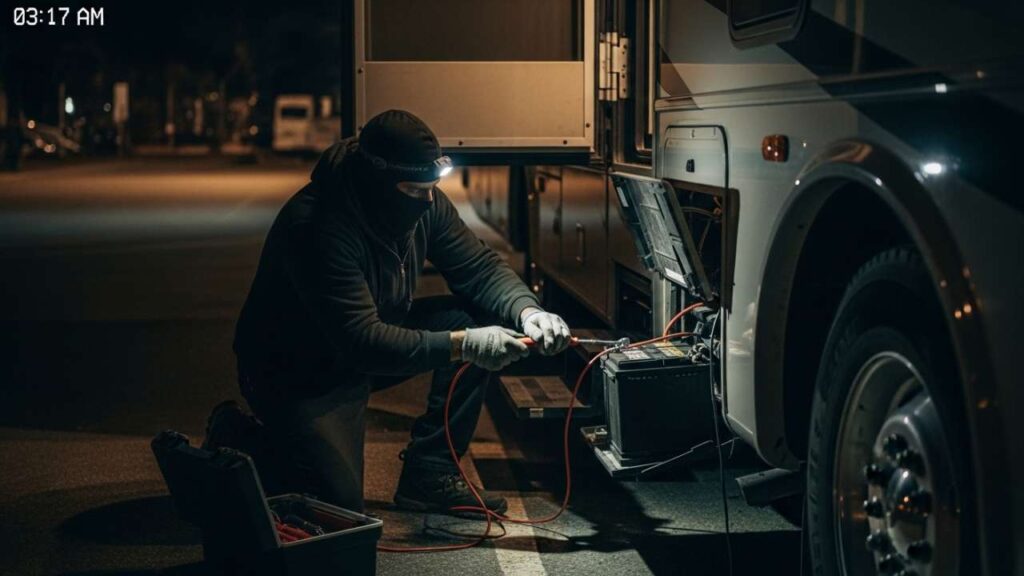
It happens more than most RVers want to admit. Solar equipment theft is rising fast, and the RV community is feeling it hard. A lithium battery can vanish in under 30 seconds. A portable solar panel left outside overnight? Easy target. And the worst part? Most people never see it coming.
This guide covers everything you need to know to protect your RV solar panels, batteries, and power equipment — without ruining your camping experience in the process.
Why RV Solar Equipment Is a Thief’s Dream Target
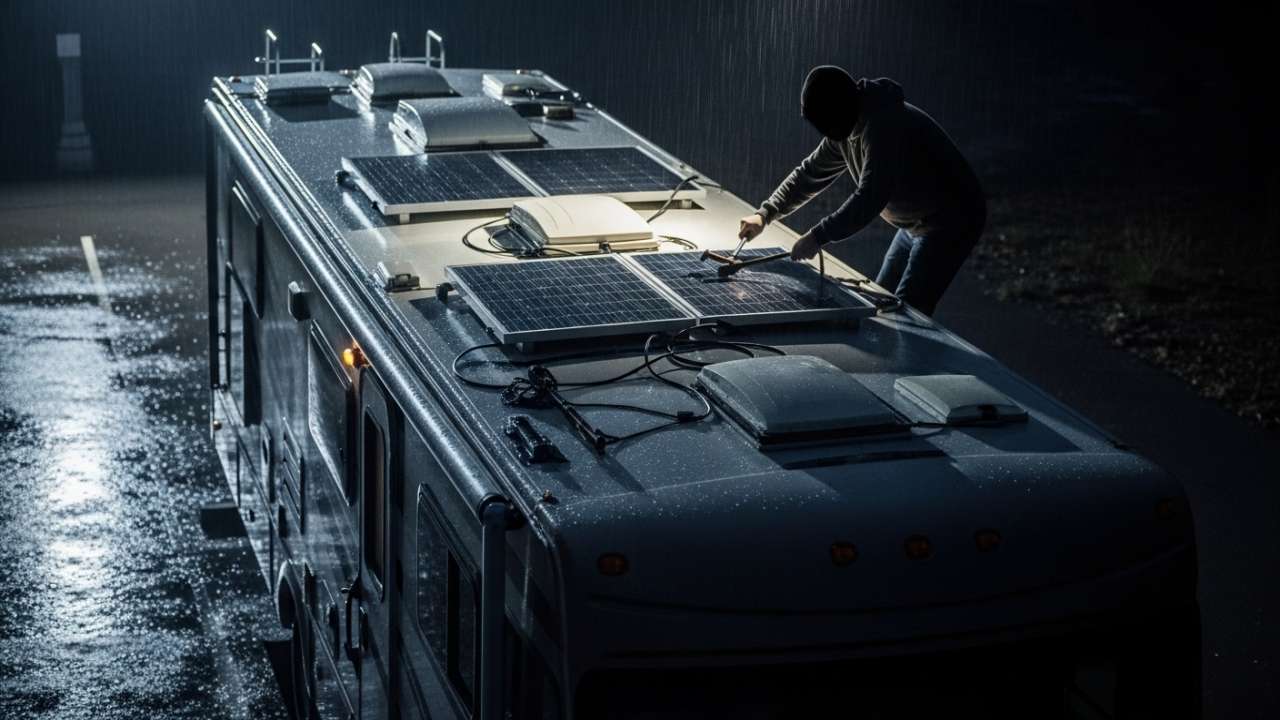
Let’s be honest about what you’re dealing with.
Solar panels, lithium batteries, and inverters are expensive — and thieves know it. A single 100Ah lithium battery resells fast. Portable solar panels are light and easy to carry. And most RV storage lots offer zero surveillance.
Here’s the reality most solar guides skip:
- Travel trailer batteries are often mounted right on the tongue, with nothing but a nylon strap and two wing nuts holding them
- Lithium batteries can be resold quickly because they’re universal — no VIN, no serial number check at most resale points
- Portable panels left at campsites while you hike? Stolen in minutes
- Storage facilities typically state in their contracts that they’re not responsible for theft
The good news: thieves are lazy. Anything that slows them down — even by 60 seconds — sends them to an easier target. That’s your whole strategy.
Also Read:- RV Solar System Cost 2026: Real Prices Nobody Tells You
The 5 Weak Points in a Typical RV Solar System
Before you can protect your system, you need to know where it’s vulnerable.
| Weak Point | Risk Level | Why Thieves Target It |
|---|---|---|
| Travel trailer tongue batteries | Very High | Exposed, no tools needed, removable in 30 seconds |
| Portable solar panels | High | Lightweight, no mounting, no alarm |
| Roof-mounted rigid panels | Medium | Harder to reach, but not impossible at storage lots |
| Inverter/charge controller | Medium | High resale value, usually inside compartments |
| Generator | High | Heavy but high resale value, often unsecured |
Most RVers only think about locking their door. But the solar system is sitting outside, completely exposed.
How to Protect Your RV Batteries
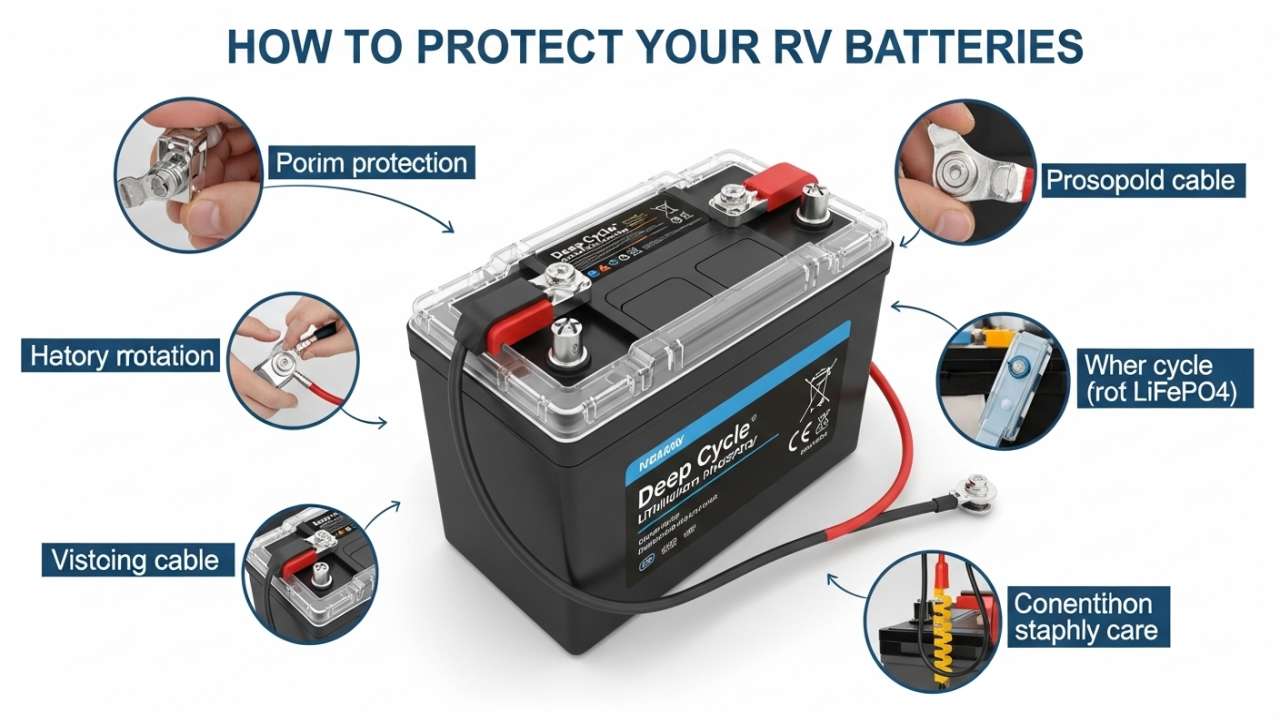
Batteries are the most stolen RV solar component. Lithium batteries, especially, are worth serious money on resale.
Use a Locking Battery Box
This is your first line of defense. A proper locking battery box bolts directly to your trailer frame or tongue — it can’t be removed without significant effort.
The Torklift PowerArmor Lithium is a popular choice. It’s made from powder-coated aluminum, holds up to two batteries, and includes a lock. It also has a ventilated design and an acid-neutralizing mat inside.
Some versions even have a built-in solar trickle charger on the lid — which is brilliant. Your battery stays charged while it’s stored, and protected at the same time.
Use a Battery Shackle as a Backup
The Battery Shackle is a locking bracket system that wraps around your existing battery boxes. It takes about 2 minutes to install, requires no tools, and makes removal significantly harder.
It’s not a replacement for a proper locking box — but it’s a fast, affordable deterrent. And anything that makes the theft take longer is a win.
Mark Your Batteries Permanently
This sounds old-school, but it works. Permanently mark your batteries with your phone number using a paint marker or engraving tool.
Why? Because if police pull someone over with a trunk full of batteries, they’ll call you. It also makes reselling the batteries harder.
Best option for storage: Take batteries home.
When your RV is sitting in a storage lot for weeks, remove the batteries and bring them home. Keep them on a maintenance charger. It takes 5 minutes and eliminates the #1 most common theft scenario completely.
Also Read:- RV Water Heater Not Working? Fix It in 30 Minutes (2026)
Protecting Your Solar Panels
Roof-Mounted Rigid Panels
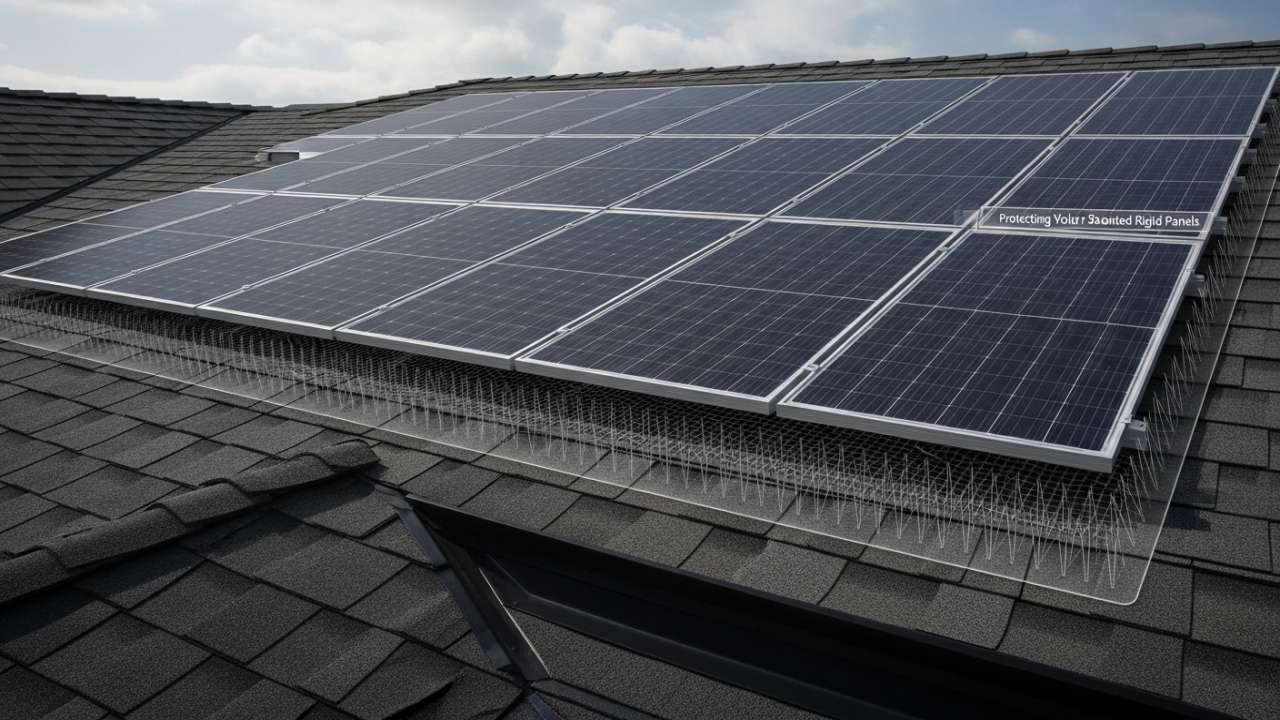
Roof-Mounted Rigid Panels
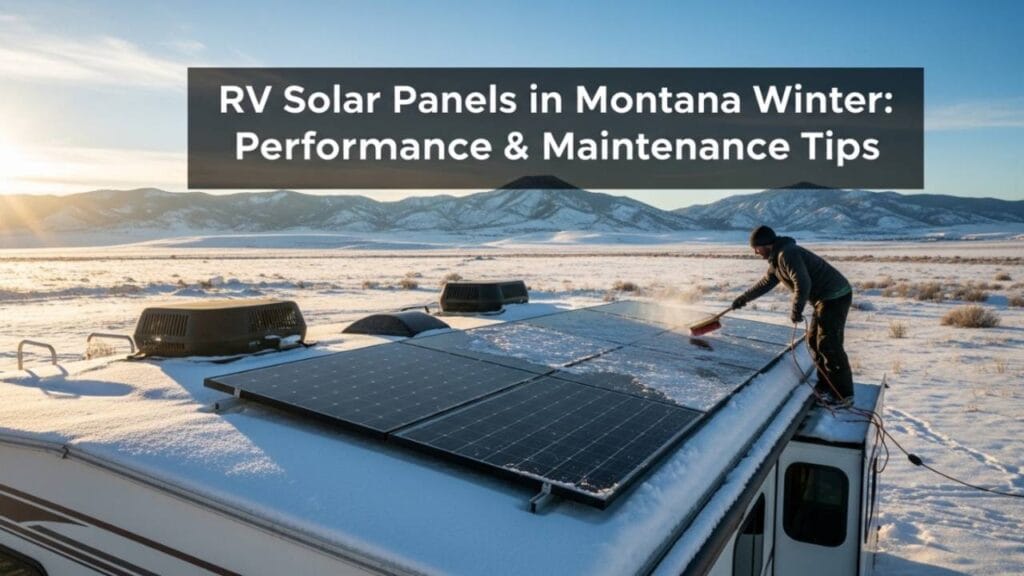
Good news: roof-mounted panels are your safest panels. They’re hard to access, especially in a crowded campground. That said, storage lots are a different story.
For storage situations:
- Use a tilt-mount system that keeps panels flat and less visible from the ground
- Apply security screws (Torx or one-way screws) to all mounting brackets — regular screws can be removed in seconds
- Add a UV-resistant panel marking or label with your contact info underneath the frame
Portable Solar Panels
These are the highest-risk panels because they’re designed to be moved — and thieves know it.
Never leave portable panels outside unattended overnight. It sounds obvious, but campsite theft almost always happens when you’re hiking or sleeping.
If you need to leave panels out during the day:
- Use a steel cable lock threaded through the panel frame and anchored to a fixed point (your RV hitch, a tree, a picnic table bolt)
- Never leave them in high-traffic areas of a campground
- Fold them and store them in a locked compartment whenever you leave the site
GPS Tracking: Your Recovery System
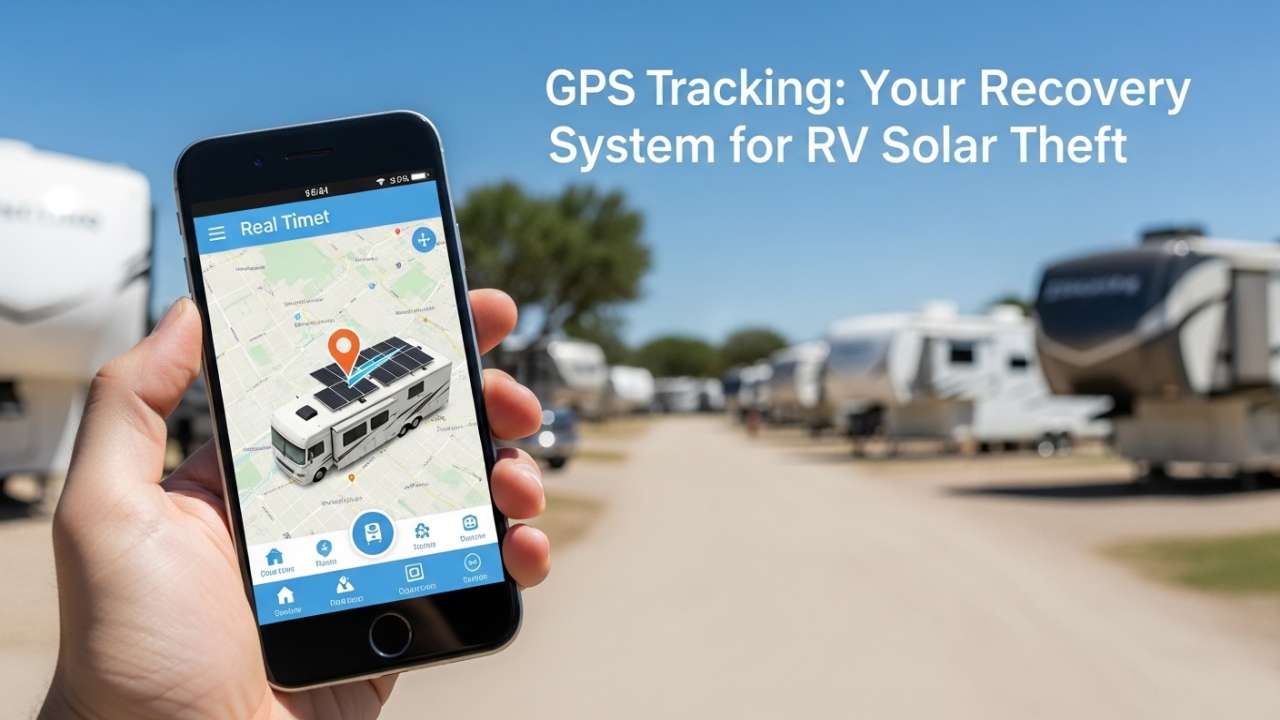
Locks slow thieves down. GPS trackers help you get your stuff back.
Solar-Powered GPS Trackers for RV Equipment
Here’s something most people don’t know: you can get GPS trackers that are powered by solar — which means no battery swapping, no dead tracker when you need it most.
Devices like the GoTrack Solar Powered GPS Asset Tracker are waterproof, compact, and designed for exactly this kind of application. They run on AT&T LTE, have up to a 10-year operational life, and can be hidden inside battery compartments, under panels, or anywhere on your rig.
| GPS Tracker Type | Best For | Avg Cost | Battery Life |
|---|---|---|---|
| Solar-powered GPS (GoTrack, etc.) | Batteries, trailers | $80–$150 device | Indefinite (solar) |
| Magnetic GPS with solar | Panels, generators | $60–$120 device | 6+ months |
| Hardwired GPS | Full RV tracking | $100–$200 install | Runs off RV power |
| LTE Asset Tracker | High-value gear | $99 device + $18/mo | 3–12 months |
Key features to look for:
- Tamper alerts — instant notification if the tracker is removed from the asset
- Geofence alerts — get a text if your gear moves outside a set zone
- Waterproof rating — minimum IP67 for outdoor RV use
- Real-time updates — some trackers update every 3 seconds when movement is detected
Place one tracker inside your battery compartment. Place another under a solar panel frame. If anything moves, you’ll know before you finish your morning coffee.
Also Read:- How to Fix RV Plumbing Problems: Step-by-Step Repairs That Actually Work
Generator Security: Don’t Forget This One
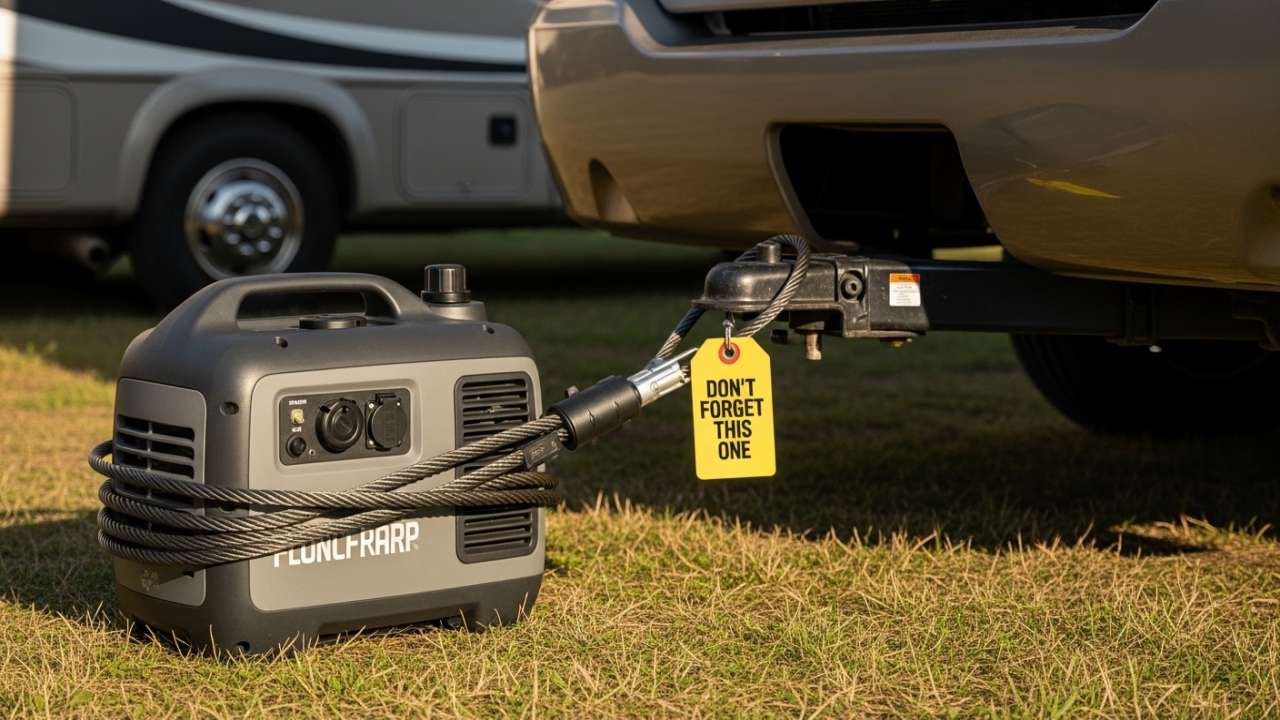
Generators are heavy — but that doesn’t stop thieves. They use dollies. They work in pairs.
Best practices:
- Use a dedicated generator lock (Vigilante Locks makes steel locks specifically for Honda and Yamaha generators)
- Chain your generator to a fixed point using a hardened steel chain — not a cable, which can be cut with bolt cutters in seconds
- Keep your generator inside a locked compartment when not in use
- Never leave a running generator unattended at night outside
Campground vs. Storage Lot: Two Different Threat Levels
Your security strategy should change depending on where your RV is.
| Situation | Main Threat | Priority Actions |
|---|---|---|
| Active campground (you’re present) | Opportunistic theft | Cable lock panels, don’t leave gear unattended |
| Campground (overnight, unattended) | Targeted theft | Bring valuables inside, GPS trackers active |
| Storage lot (weeks/months) | Organized theft | Remove batteries, add locking box, use GPS |
| Parked at home | Low risk | Basic deterrents, security camera if possible |
Storage lots are where most serious theft happens. Many storage facility contracts include a clause stating they are not responsible for anything stolen on their property. Read that again before you leave $5,000 worth of lithium batteries on your tongue all winter.
RV Solar Theft Prevention: Quick-Reference Checklist
Use this before every trip and every storage drop-off.
Before leaving for storage:
- [ ] Remove lithium batteries and bring home
- [ ] Activate GPS trackers on all assets
- [ ] Fold and lock portable solar panels inside
- [ ] Set a geofence alert on your tracker app
- [ ] Apply security screws to panel mounts
At the campsite:
- [ ] Never leave portable panels outside overnight
- [ ] Cable lock panels to RV if leaving for the day
- [ ] Keep generator locked or chained when running unattended
- [ ] Secure battery compartment with locking box or shackle
Always:
- [ ] Mark all equipment with permanent contact info
- [ ] Check tracker battery/solar status monthly
- [ ] Keep photos of serial numbers for insurance
Do RV Insurance Policies Cover Solar Equipment Theft?
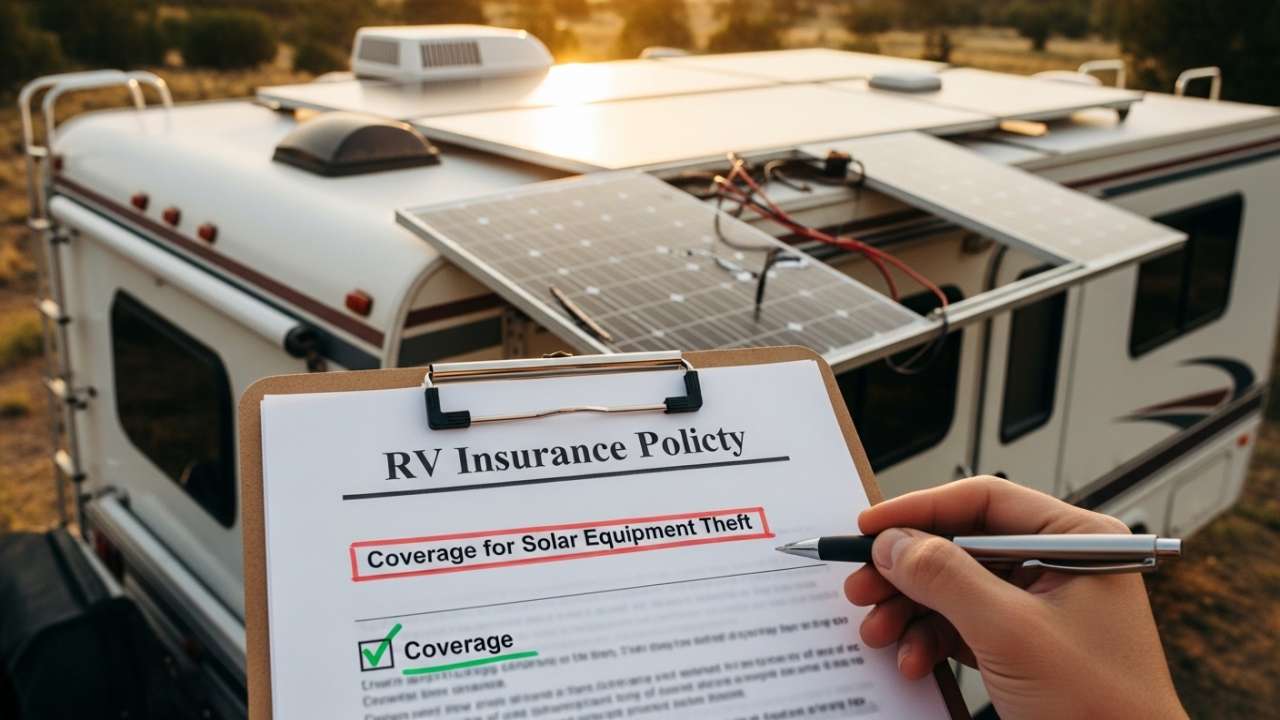
This is one of the most overlooked questions in the RV solar community.
The short answer: it depends on your policy and how the equipment is installed.
Roof-mounted panels that are factory-installed or professionally added are often covered under the RV’s comprehensive policy. But portable solar panels, external battery boxes, and aftermarket inverters? Those may fall into a gray area.
What to do:
- Call your RV insurer and specifically ask about solar equipment coverage
- Ask whether aftermarket lithium batteries are covered and up to what dollar amount
- Get a separate rider or floater if your solar investment is over $3,000
- Keep all purchase receipts and take dated photos of your setup
Some policies will also require a police report within a certain timeframe. File it immediately if anything is stolen — don’t wait.
FAQs:
How long does it take for thieves to steal RV batteries?
Fast. A travel trailer battery mounted on the tongue can be removed in as little as 30 seconds — two wing nuts and you’re done. That’s why a locking battery box is so important. It doesn’t make theft impossible, but it makes it take much longer — long enough for a thief to move on to an easier target.
Are roof-mounted solar panels safe from theft?
Largely yes, especially at campgrounds. But in unmonitored storage lots, roof panels can still be taken — especially on lower-profile trailers. Use security screws on all mounts and add a GPS tracker under the panel frame for peace of mind.
Can I track my RV battery if it gets stolen?
Yes, if you’ve installed a GPS tracker inside or near the battery compartment before the theft. Solar-powered trackers are ideal because they don’t require you to remember to charge them. Many modern trackers send tamper alerts the moment they’re moved, so you’ll know the second something is wrong.
What’s the best way to secure portable RV solar panels?
Use a steel cable lock threaded through the frame, anchored to a fixed point. Never leave them outside overnight. If you’re leaving the site for a few hours, fold them up and put them in a locked compartment — even sliding them inside your RV works.
Should I use a battery lock box or a battery shackle?
A locking battery box is stronger protection. It bolts to your frame and completely encases the battery. A battery shackle is a good add-on if your batteries are already mounted somewhere a full box won’t fit. For high-value lithium batteries, go with the box.
Does RV insurance cover stolen solar panels?
Factory-installed panels are usually covered under standard RV comprehensive insurance. Aftermarket panels, portable panels, and external battery boxes may not be — check your specific policy and add a rider if needed. Keep receipts for all solar equipment.
Where do most RV solar thefts happen?
Storage lots are the highest-risk location by far. Most theft happens when RVs are stored between trips, not at active campgrounds. The storage facility is often not liable, so protecting your gear is entirely up to you.
Final Thoughts: Don’t Let Thieves Cancel Your Next Adventure
Here’s the thing — most RV solar theft is completely avoidable.
Thieves want easy targets. They walk through storage lots and campgrounds looking for the lowest-hanging fruit. A battery with no lock, a panel left on a picnic table, a generator with no chain.
Your job isn’t to make theft impossible. It’s to make your rig the hard one — so they keep walking.
A locking battery box, a GPS tracker, and a steel cable lock for your portable panels will cost you maybe $300 total. That’s a fraction of what you’d spend replacing your lithium battery alone.
Start with the battery. Add a tracker. And never leave portable panels outside overnight.
Your solar system is your freedom on the road. Lock it down.