You wake up on a cold morning. The heater won’t kick in. Your stove doesn’t light. The refrigerator’s silent.
No heat. No hot water. No cooking.
That sinking feeling? It’s what happens when your RV’s propane system fails.
But here’s what most RV owners don’t realize: propane problems look serious but are often simple fixes. A frozen regulator. A tripped safety valve. A clogged line. Propane hasn’t actually leaked—it’s just not flowing where you need it.
The panic comes from not knowing. Propane feels dangerous (it is, in extreme cases), so people assume the worst. They call technicians. They pay $200+ for diagnostics. They sit in the cold waiting for help.
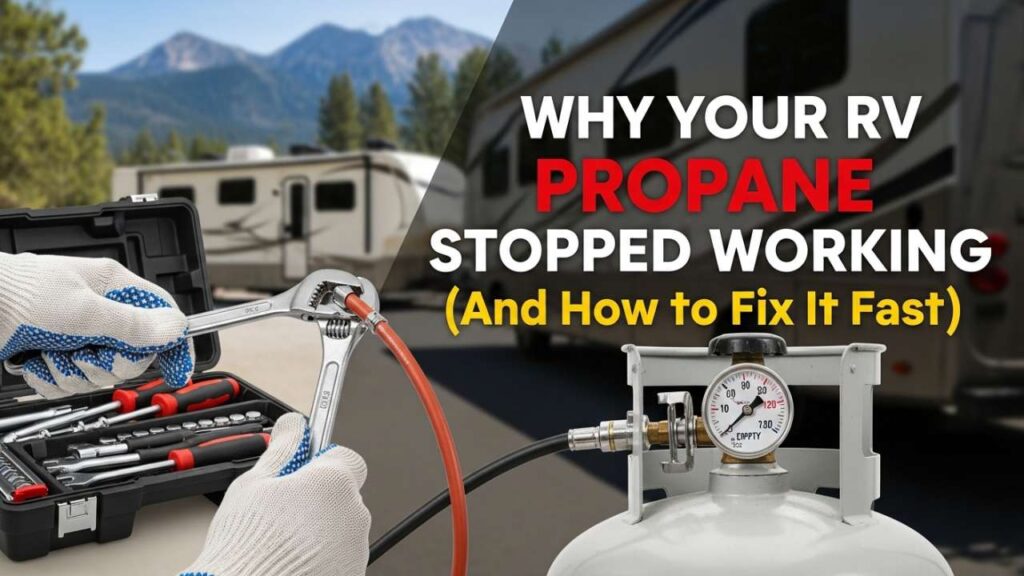
This guide changes that. We’re walking through exactly what causes RV propane problems, how to diagnose them safely, and which fixes you can actually do yourself. No mystery. No guesswork. Just straightforward troubleshooting that works.
How Your RV Propane System Actually Works
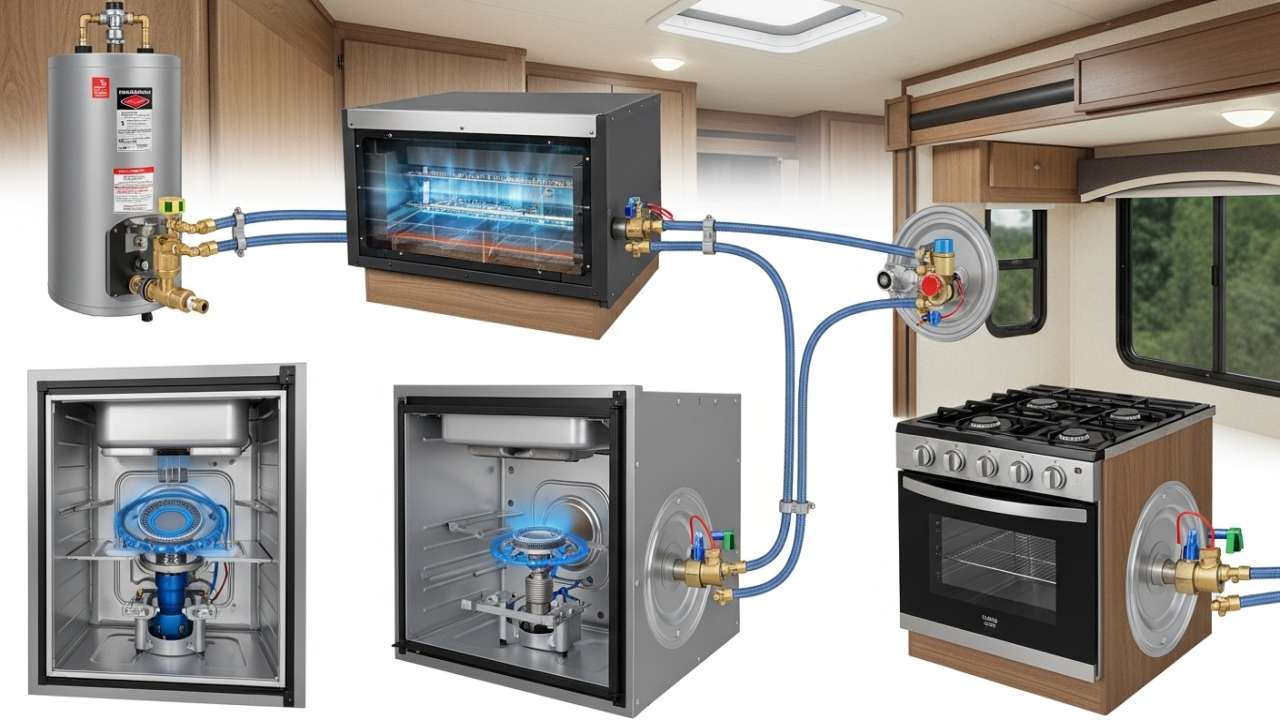
Before you troubleshoot, you need to understand the journey propane takes from the tank to your appliances.
Your RV propane system has four main parts working together:
Propane Tank — Usually two 30-lb tanks (one active, one backup) mounted in a compartment. They store liquid propane under pressure. A valve at the top controls flow.
Regulator — This is the critical piece. It sits between the tank and the rest of the system. It reduces high pressure from the tank (200+ PSI) down to low pressure (11 inches of water column) that your appliances can use. It’s also a safety device—if something goes wrong downstream, the regulator shuts off flow.
Supply Lines — Copper tubing runs from the regulator to every propane appliance: heater, water heater, stove, fridge. Some lines go through walls, under cabinets, exposed to cold and vibration.
Appliances — Your heater, water heater, stove, and refrigerator each have their own valve and ignition system. They need propane flow AND electricity (for ignition) to work.
Here’s the critical part: propane doesn’t just magically reach your stove. It travels through this entire system, and a failure at ANY point stops everything downstream.
Tank valve stuck? Whole system dead. Regulator frozen? No propane flows. Supply line pinched? Just that appliance loses gas. One appliance’s valve broken? Others still work.
Understanding this flow is 70% of successful troubleshooting.
Also Read:- Why Your RV Electrical System Fails (And How to Fix It Without a Technician)
The Most Common RV Propane Problems (In Order of Frequency)
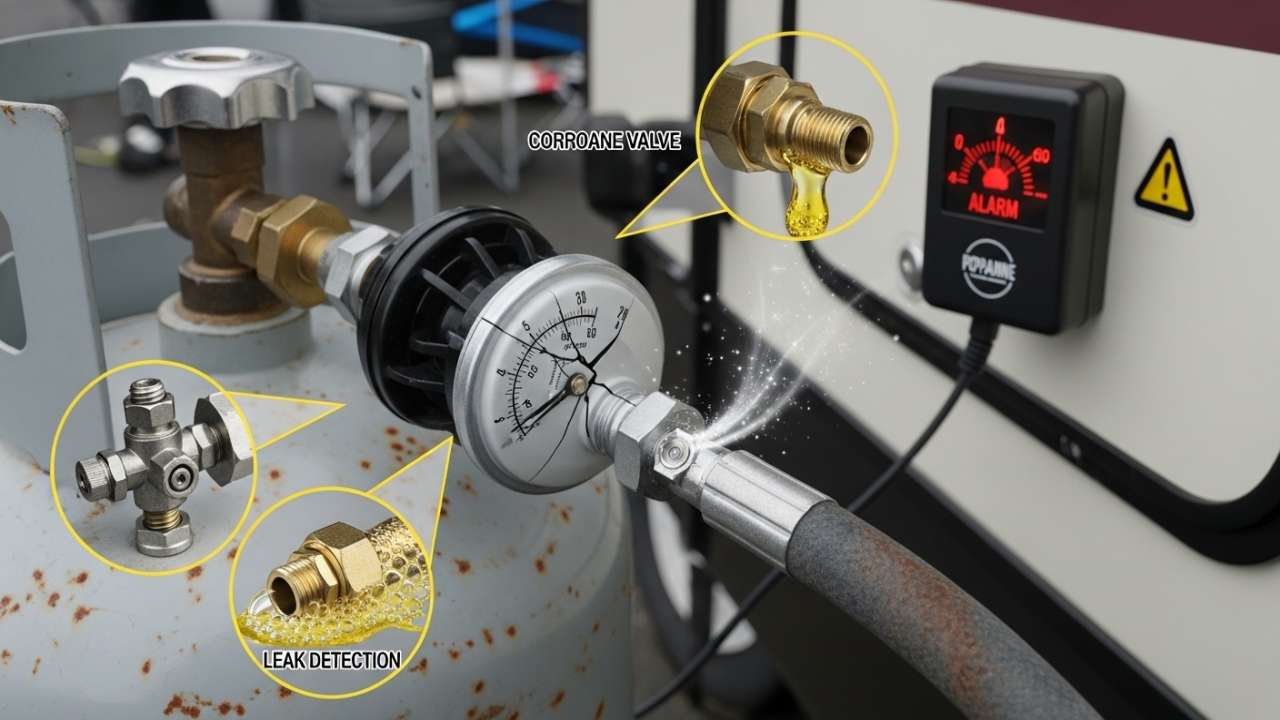
Not all propane failures are equal. Some happen constantly. Some are rare.
Here’s what we see most often:
Frozen or Iced Regulator
Cold weather causes moisture in the propane line to freeze at the regulator, blocking flow. This is the #1 winter problem. Symptom: propane tank shows it’s full, but no appliance gets gas.
Tank Valve Not Fully Open
Someone turned the valve to the “off” position and forgot to open it again. Or it’s partially open. Symptom: weak or no propane flow to anything.
Empty Propane Tank
The active tank is drained, but the backup tank valve isn’t opened. Or both tanks are empty. Symptom: complete loss of propane to all appliances.
Regulator Failure
The regulator stops reducing pressure properly or shuts off flow entirely. This usually requires replacement. Symptom: no gas to anything even though tank is full and valve is open.
Tripped Safety Valve
Most RVs have a mechanical safety valve that closes if pressure drops suddenly (indicating a leak). Once triggered, it won’t re-open without manual reset. Symptom: sudden loss of propane to all appliances, and a small “click” or “pop” when it tripped.
Clogged or Kinked Supply Line
A line gets pinched, clogged with sediment, or frozen internally. Symptom: one appliance loses gas, others work fine.
Bad Appliance Valve
The stove, water heater, or heater’s individual propane valve is stuck. Symptom: that specific appliance won’t light, others work.
Failed Igniter or Pilot Light
Propane is flowing but electricity or ignition isn’t working. Symptom: you smell propane but appliance won’t light.
Diagnosis Step 1: Which Appliances Are Affected?
Your first move: find out if it’s all propane or just one appliance.
Test 1: Try multiple appliances
- Attempt to light the stove
- Try the heater
- Check the water heater’s pilot light
- See if the fridge is cooling
Why this matters:
- All dead? Problem is at the tank, regulator, or main supply line
- Only one dead? Problem is that appliance’s valve, line, or ignition
- Some work, some don’t? Problem is likely a specific line or valve
Test 2: Check the tank gauge
- Look at your propane tank gauge or weight scale
- Does it show propane remaining?
- If the gauge shows empty but you just filled it, the gauge is broken
- If it shows something and appliances won’t work, it’s a flow problem, not a supply problem
Test 3: Listen and smell
- Do you smell rotten eggs (propane’s characteristic odor)? That’s the additive—propane itself is odorless
- Smell at each appliance connection point
- If you smell it at the tank but not the stove, the line is blocked
- If you smell it everywhere, you might have a leak (see Safety section)
This quick test isolates the problem immediately.
Also Read:- Best RV Awnings: Manual vs. Electric—$800-$3,500 Explained
Diagnosis Step 2: The Visual Inspection
Look before you touch anything.
Tank compartment:
- Is the main tank valve fully open? (Turn counterclockwise—it should stop after one full rotation)
- Is the backup tank valve open if you’re using it?
- Are there any wet spots or frost around connections? (Sign of leak or ice)
- Is the tank gauge accessible and readable?
Regulator inspection:
- Look at the regulator (usually a silver cylinder near the tank)
- Is it covered in frost or ice? (Frozen regulator—most common winter issue)
- Are there any cracks or visible damage?
- Is there any propane smell nearby?
Supply lines:
- Trace copper lines from the regulator toward appliances
- Are any lines pinched, kinked, or obviously blocked?
- Any frost buildup on the lines?
- Any visible damage, dents, or corrosion?
Appliances:
- Look at each appliance’s propane valve (usually at the back or bottom)
- Are they in the “on” position?
- Any frost, corrosion, or visible damage?
- Is the pilot light lit (if your heater or water heater has one)?
Connections:
- Look where propane lines connect to the regulator, tank, and each appliance
- Are they finger-tight or loose?
- Any corrosion around fittings?
This visual check catches 50% of problems without needing tools.
Diagnosis Step 3: The Pressure Test (Advanced But Critical)
If visuals didn’t reveal the issue, it’s time to measure.
You’ll need:
- A propane system pressure gauge (specialized tool, $30–50, or borrow from an RV shop)
- Basic confidence
What normal pressure looks like:
- Tank pressure: 150–200 PSI (liquid propane under pressure)
- Regulator output: 10–12 inches water column (very low pressure for appliances)
Test your tank pressure:
- Close all appliance valves
- Attach the gauge to the tank’s service port (if equipped)
- Pressure should read 150–200 PSI (varies with temperature)
- If 0 PSI and gauge shows full → tank might be empty or valve blocked
- If extremely high (250+ PSI) → overfilled tank, call propane company
Test regulator output pressure:
- Attach the gauge to the low-pressure side (after regulator, before appliances)
- Turn on one appliance (like the stove)
- Should read 10–12 inches water column
- If 0 → regulator isn’t outputting
- If extremely high (over 15) → regulator is failing
This test tells you exactly where the failure is.
Also Read:- RV Air Conditioner Not Working? Save $200+ With These 5-Minute Fixes
Common Fixes You Can Do Right Now (SAFE FIXES ONLY)
Once you know what’s wrong, many fixes are genuinely simple.
Fix #1: Thaw a Frozen Regulator (15 minutes)
What you need:
- Warm (not hot) water
- Cloth
- Propane smell detector or soapy water
Steps:
- Turn off the tank valve
- Wait 5 minutes for pressure to stabilize
- Wrap a warm (not boiling—you don’t want to crack it) wet cloth around the regulator
- Let it sit for 10–15 minutes
- Remove the cloth and turn the tank valve back on
- Test an appliance—propane should flow
- If it doesn’t, apply heat again—sometimes takes multiple rounds in extreme cold
Cost: $0
Why this works: Ice inside the regulator melts, flow resumes.
Fix #2: Open a Closed Tank Valve (30 seconds)
What you need:
- Nothing—just your hands or a wrench if valve is stuck
Steps:
- Locate your propane tank valve (top of the tank)
- Turn it counterclockwise slowly
- One full turn = fully open
- Stop—don’t force it
- Test an appliance
Cost: $0
Safety note: If the valve is stuck and won’t budge, don’t force it. Call propane company.
Fix #3: Reset a Tripped Safety Valve (2 minutes)
What you need:
- Wrench (if valve has a reset knob)
- The knowledge that you heard a “pop” or sudden click
Steps:
- Locate your safety valve (usually at the regulator or main supply line)
- Some have a manual reset button—press it
- Some reset automatically after a few minutes—just wait
- If it has a screw, don’t touch it—call a professional
- Turn tank valve back on and test
Cost: $0
Important: If the safety valve keeps tripping, you have a leak. Don’t keep resetting—call propane company.
Fix #4: Tighten a Loose Connection (5 minutes)
What you need:
- Two wrenches (one to hold the fitting, one to turn)
- Soapy water to check for leaks after
Steps:
- Turn off the tank valve first
- Locate the loose connection (usually a hex fitting)
- Hold the fitting with one wrench, turn the nut with another
- Turn clockwise, snug but not over-tight
- Turn tank valve back on
- Spray the connection with soapy water—if bubbles form, it’s still leaking
- Tighten more if needed
Cost: $0
Safety: Never use a flame to find leaks—use soapy water only.
Also Read:- They Stole My RV Battery in 30 Seconds — Here’s What I Do Now (2026 Guide)
Fix #5: Replace a Clogged Filter or Regulator Strainer (10 minutes)
What you need:
- Small wrench
- Replacement filter (specific to your regulator, $15–30)
Steps:
- Turn off the tank valve
- Wait 5 minutes
- Locate the filter bowl under the regulator (usually a small cylinder)
- Unscrew it with the wrench
- Shake out old sediment or replace the filter element
- Screw the bowl back on, snug but not over-tight
- Turn tank valve back on and test
Cost: $15–30
Why this works: Sediment clogs the regulator—clearing it restores flow.
When to Call a Professional (Don’t DIY These)
Some propane problems require trained hands.
Call a propane technician if:
Propane smell everywhere — You smell rotten eggs throughout your RV or outside the propane compartment. This indicates a leak in the tank, regulator, or main supply line. Leaks are fire hazards. Don’t use any electrical appliances. Call your propane company immediately.
Regulator is visibly cracked or damaged — Even a small crack can leak. Regulators can’t be repaired—they must be replaced. Cost: $150–300.
Tank valve is stuck or damaged — If the valve won’t turn or is cracked, the tank might need replacement or professional valve replacement. Cost: $50–200.
Safety valve keeps tripping — If it trips repeatedly even after reset, you have a leak somewhere. Professional inspection required.
Appliance won’t light despite propane flowing — If you’ve confirmed propane reaches the appliance but it still won’t ignite, it’s an ignition system issue (spark electrode, igniter, or pilot assembly). Professional repair: $150–400.
Regulator hisses or makes unusual sounds — This suggests internal failure. Professional replacement needed.
Multiple appliances fail after one another — This pattern suggests a regulator failure gradually worsening. Call a technician before it fails completely.
You’re not 100% confident — Propane safety is serious. A $150 professional inspection beats a fire or explosion.
Propane Safety: The Critical Rules
Propane is safe when used correctly but dangerous when ignored.
Never:
- Use a flame to check for leaks (use soapy water)
- Overfill propane tanks yourself (propane company does this—wrong fill can damage the tank)
- Ignore a propane smell (evacuate, call propane company, don’t use electronics that spark)
- Leave tank valves partially open (fully open or fully closed only)
- Let appliance valves stay on when not in use (always turn off when done cooking, heating, etc.)
Always:
- Keep the tank compartment ventilated (propane is heavier than air and sinks—poor ventilation can cause buildup)
- Test connections with soapy water after any work
- Know where your propane shut-off valve is (tank main valve)
- Have a propane detector installed in your RV (like a carbon monoxide detector)
- Store propane tanks upright in a well-ventilated area
Red flags that mean stop immediately:
- Strong propane smell
- Hissing sound from connections
- Visible damage to tank or regulator
- Propane pooling visibly (frost or ice around connections beyond normal condensation)
- Any fire or burning smell
Preventive Maintenance (Stop Problems Before They Start)
Most propane failures are preventable.
Monthly Checks:
- Visually inspect the tank compartment for frost, ice, or leaks
- Test each propane appliance (stove, heater, water heater, fridge)
- Confirm tank gauge is readable and shows propane remaining
- Smell around connections for any propane odor
Quarterly Checks (Especially Before Cold Season):
- Verify both tank valves open and close smoothly
- Check all visible supply lines for kinks or damage
- Test pressure with a gauge if you have one
- Clean any debris or corrosion from tank and regulator area
Seasonal Checks (Before Winter):
- Wrap the regulator with insulation to prevent freezing in extreme cold
- Ensure tank compartment ventilation isn’t blocked
- Have propane system professionally inspected ($100–150 but catches big problems)
- Stock propane before winter demand spikes (harder to get refills in cold season)
Annual Tasks:
- Professional propane system inspection (especially if you live in cold climates)
- Replace any hoses that are cracked or corroded
- Test all appliance igniters and pilot lights
- Verify safety valve is functioning
Why this works: Regular checks catch worn connections, small leaks, or frozen issues before they become emergencies.
Also Read:- RV Solar System Cost 2026: Real Prices Nobody Tells You
RV Propane Problems vs. Solutions
| Problem | Symptom | Likely Cause | DIY Fix? | Cost |
|---|---|---|---|---|
| Frozen regulator | No gas flow in winter | Ice buildup | Yes (thaw) | $0 |
| Closed tank valve | No gas to any appliance | Valve in “off” | Yes (open) | $0 |
| Empty tank | Complete loss of propane | Tank drained | Yes (swap tank) | $0 |
| Loose connection | Propane smell, weak flow | Fitting not tight | Yes (tighten) | $0 |
| Clogged filter | Weak flow or one appliance dead | Sediment blockage | Yes (clean/replace) | $15–$30 |
| Tripped safety valve | Sudden loss of all gas | Pressure drop/leak | Yes (reset) | $0 |
| Bad regulator | No output even with full tank | Internal failure | No | $150–$300 |
| Propane leak | Strong smell everywhere | Crack in tank/line | No | $100–$500+ |
| Broken appliance valve | One appliance won’t work | Valve stuck or failed | Maybe | $75–$200 |
| Failed igniter | Gas flows but won’t light | Ignition issue | No | $150–$400 |
Cold Weather Propane Issues & Prevention
| Issue | When It Happens | Why | Prevention | Quick Fix |
|---|---|---|---|---|
| Frozen regulator | Below 20°F | Moisture in line freezes | Insulation, use propane | Warm water wrap |
| Low propane pressure | Below 0°F | Liquid can’t vaporize in cold | Tank heater, location | Move tank to warmer spot |
| Tank gauge inaccurate | Very cold | Pressure drop affects reading | Keep tank full | Don’t rely on gauge alone |
| Brittle hoses | Extended extreme cold | Rubber hardens | Replace hoses before winter | Keep spares |
| Condensation buildup | Temperature swings | Warm inside, cold outside | Ventilation, dehumidifier | Check tank compartment |
FAQ: Your RV Propane Questions Answered
Q: How do I know if my RV propane tank is actually empty or if it’s just a gauge problem? A: The gauge can be wrong, especially in cold weather. The real test: try to light something. If propane flows to an appliance, you have gas. If nothing lights and you’ve confirmed the valve is open and lines aren’t frozen, you’re likely empty. Weight the tank at a propane dealer—they’ll tell you exactly how much is inside.
Q: Can I refill my own propane tank? A: No. Only licensed propane dealers can refill RV tanks safely. They have equipment to prevent overfilling (which damages the tank and is dangerous). Most RV parks and propane retailers offer refill service for $15–25. Some RVers swap empty tanks for full ones instead of refilling.
Q: My propane heater works fine until I’m driving, then it shuts off. Why? A: Propane heaters have a safety tilt switch. If the RV leans too much (normal when turning), the switch cuts gas flow to prevent fire. This is intentional. The heater restarts once you’re level. Some RVs have auto-leveling systems that keep the heater running while driving.
Q: Is it safe to run my propane refrigerator while driving? A: Yes, modern RV fridges are designed for this. The fridge can run on propane, 120V shore power, or 12V battery while driving. Some people turn it off while driving to save propane, but it’s safe to leave on. Just ensure propane appliances have good ventilation.
Q: How long does a full propane tank last in an RV? A: Depends heavily on usage. A 30-lb tank typically lasts 4–6 weeks for occasional heating and cooking, 2–3 weeks with heavy winter heating, or 8–12 weeks in summer with minimal use. Monitor your gauge and refill when it hits the 1/4 mark—don’t wait until empty.
Q: Can I bypass the regulator if it fails? A: Absolutely not. The regulator is critical for safety. It reduces tank pressure to usable levels and acts as a safety valve if something goes wrong. Running propane without a regulator will damage appliances and is dangerous. Always replace a failed regulator.
Q: My RV smells like propane for a few seconds after I light the stove, then it goes away. Is this normal? A: Yes, a brief smell when igniting is normal—it’s the smell additive. But if the smell lingers for minutes, you have a problem. Turn off the appliance, ventilate your RV, and check connections with soapy water. If you find a leak, call your propane company.
Q: What’s the difference between propane and butane in RVs? A: Propane boils at -42°F, butane at 31°F. In cold climates, propane is essential—butane won’t vaporize in freezing weather. Some RVers blend them for mild climates, but pure propane is the standard for most RVs. Stick with propane.
Conclusion: Master Your Propane System
RV propane failures feel catastrophic until you understand what you’re looking at. Then? Most are quick fixes.
Next time your heater won’t light or your stove won’t cook, you know exactly what to do:
- Isolate — Are all appliances dead or just one?
- Inspect — Check tank valve, regulator, and connections visually
- Test — Listen for hissing, smell for propane, check gauge
- Fix — Thaw, open, reset, or tighten what you find
- Know your limits — Call a professional for leaks, regulator failure, or anything unsafe
Most of the time, you’ll solve it yourself in under 30 minutes for nearly free. And even when you can’t, you’ll walk into that propane company appointment knowing exactly what’s wrong—no more mystery diagnoses.
Your RV propane system is reliable when treated with respect. Give it five minutes of attention each month, and it will keep you warm, fed, and comfortable for years.