
You’re ready to hit the road, but the price tags on most RVs make you pause. Then you realize something: you don’t need a $100K luxury motorhome to start your RV adventure. The 2026 RV market has shifted dramatically, and right now is arguably the best time in years to buy an affordable RV.
Dealers are sitting on excess inventory from the 2025 model year. Interest rates are still high. Manufacturers are hungry for sales. This perfect storm means 25–40% discounts off MSRP are common, and first-time buyer incentives are everywhere. A $35K RV is now selling for under $25K. A $40K travel trailer? You can land one closer to $28–30K with the right timing.
But here’s the catch: buying the wrong cheap RV costs far more than the savings. Poor build quality, unsuitable floor plans, and mystery defects can turn your dream road trip into a nightmare. That’s why I’ve researched the 2026 market, analyzed real dealer pricing, and built a guide to help beginners navigate the under-$50K space confidently.
In this guide, you’ll find the 8 best budget RVs for beginners, real MSRP + discounted prices, honest pros and cons, and a buying framework so you skip the dealer tricks and land a solid first rig.
What Changed in 2026: Why Budget RVs Are Actually Good Now
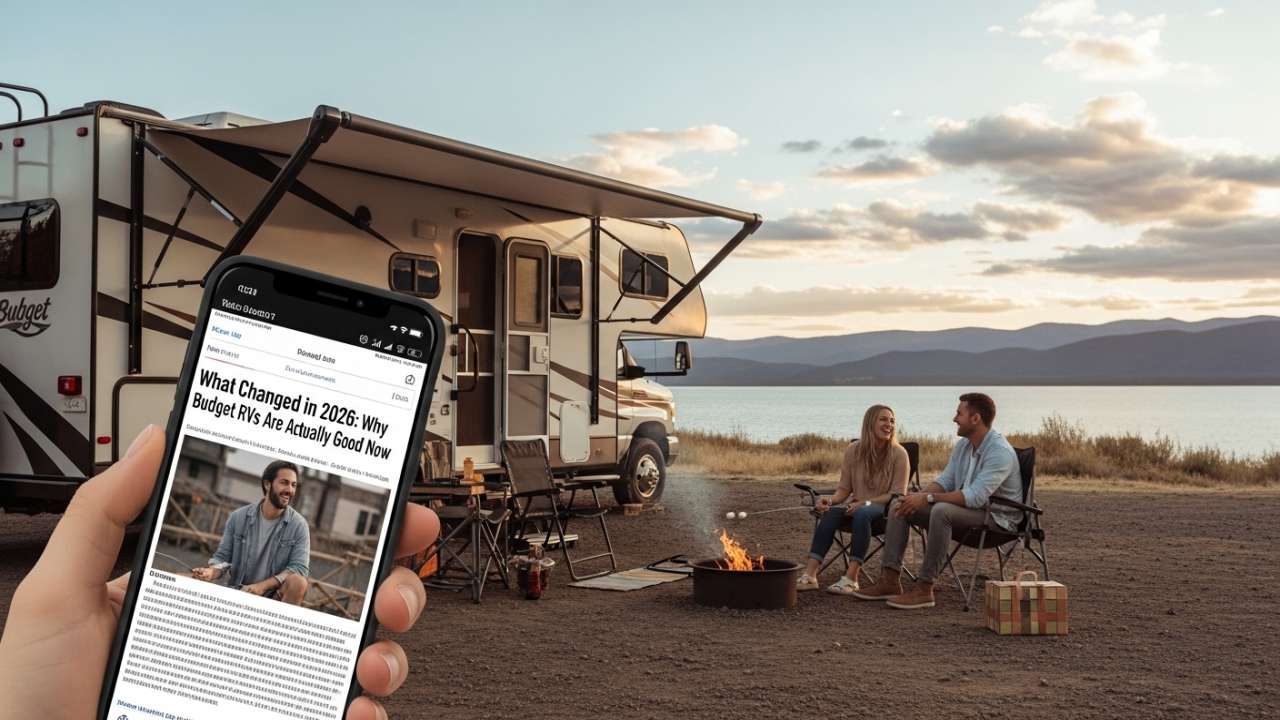
The 2025 RV market took a 6.9% sales dip. That might sound bad, but for budget-conscious buyers, it’s gold. Here’s what shifted:
Dealer incentives are aggressive. A 30% discount was once a “killer deal.” Now it’s the baseline. Layered on top are free freight, extended warranties, and cash-back offers. A $35K MSRP RV is routinely selling for $23–25K out the door.
Lightweight models are trending. Manufacturers realized heavy, feature-packed RVs appeal only to wealthy buyers. So the 2026 lineup emphasizes towable trailers under 8,000 lbs that work with SUVs, not just full-ton trucks. This means beginners can buy their first RV without upgrading their vehicle.
Build quality is stabilizing. The pandemic supply-chain chaos of 2021–2022 is over. Quality checks have tightened. Mid-range brands like Keystone and Forest River are delivering consistently solid units, not the hit-or-miss disaster stories from the early 2020s.
Solar and smart tech are becoming standard. Even $20K travel trailers now come with solar-panel prep, USB charging hubs, and smartphone-connected control panels. This wasn’t the case two years ago.
Also Read:- Norcold RV Refrigerator Not Cooling on Electric or Gas: Fix It in 30 Minutes
The 8 Best Budget RVs Under $50K for First-Time Buyers
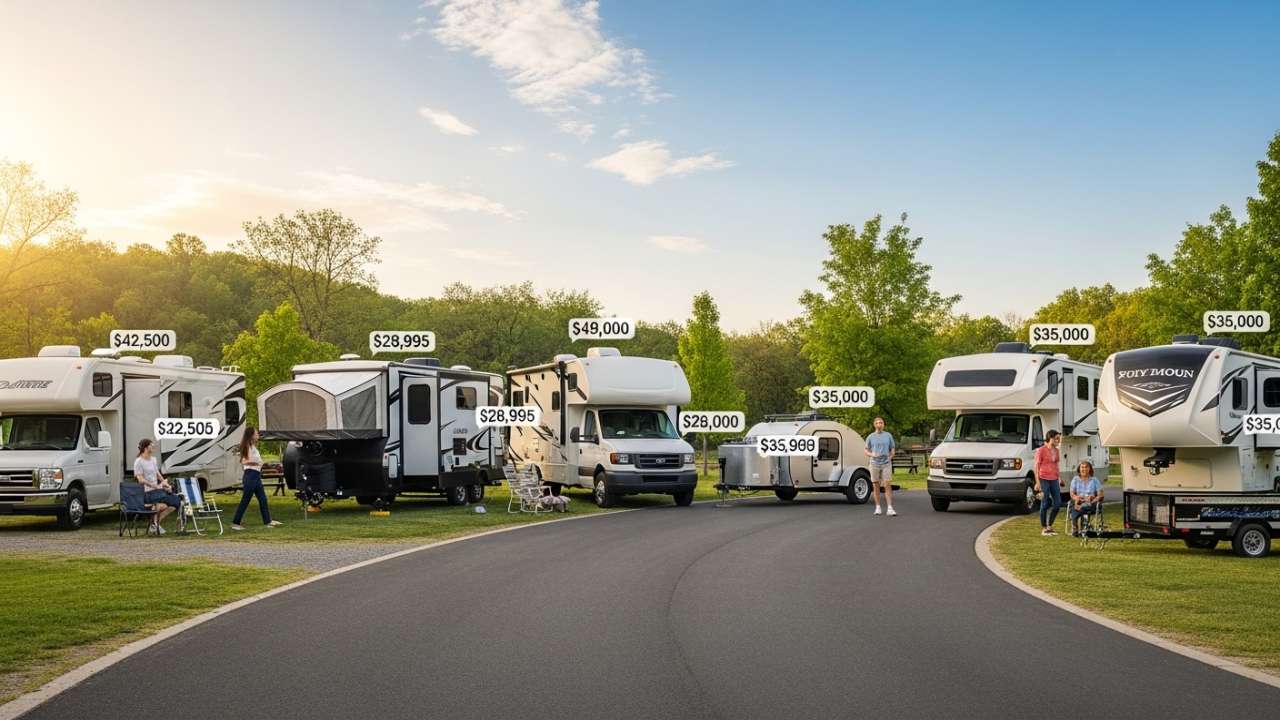
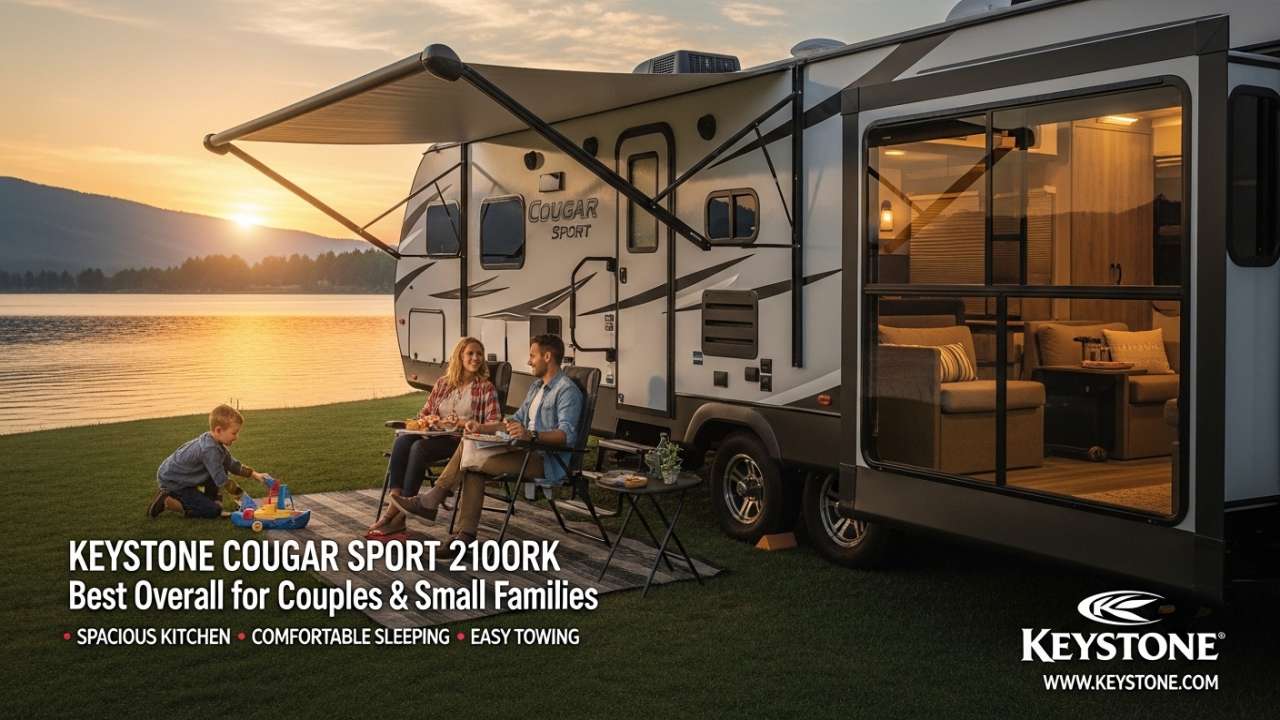
1. Keystone Cougar Sport 2100RK — Best Overall for Couples & Small Families
MSRP: ~$38,000
Real Price (2026): ~$26–28,000
Type: Travel Trailer
Length: 24 ft | Weight: 5,800 lbs | Sleeps: 4–5
The Cougar Sport 2100RK is the most-reviewed budget RV on the market because it does the fundamentals right. It’s not fancy, but it’s reliable and purposeful.
Why we recommend it: This is a half-ton-towable trailer with a rear kitchen layout (huge for families—kids can’t accidentally bump into the stove while driving). The front bedroom is a true queen bed, not a cramped bunk. The living area has a sofa bed and dinette that converts to a sleeping space. The kitchen isn’t an afterthought—it includes a three-burner stove, an 8-cubic-foot fridge, and a microwave.
Real-world pros: Keystone offers a strong warranty, parts are everywhere (no dealer-exclusive headaches), and resale value is solid. The wet bath is compact but functional. Many owners run 200+ amp hours of lithium batteries and solar panels with zero issues.
Honest cons: The bathroom is tight (shower/toilet combo, no privacy between bedroom and bath). Insulation is minimal—not winter-friendly without upgrades. The 110V system is basic; you’ll need an inverter or solar for extended boondocking.
Best for: Couples, small families, or beginners who want a proven, do-everything-okay rig without surprises.
Also Read:- RV Refrigerator Not Cooling? Troubleshooting & Solar Power Fix
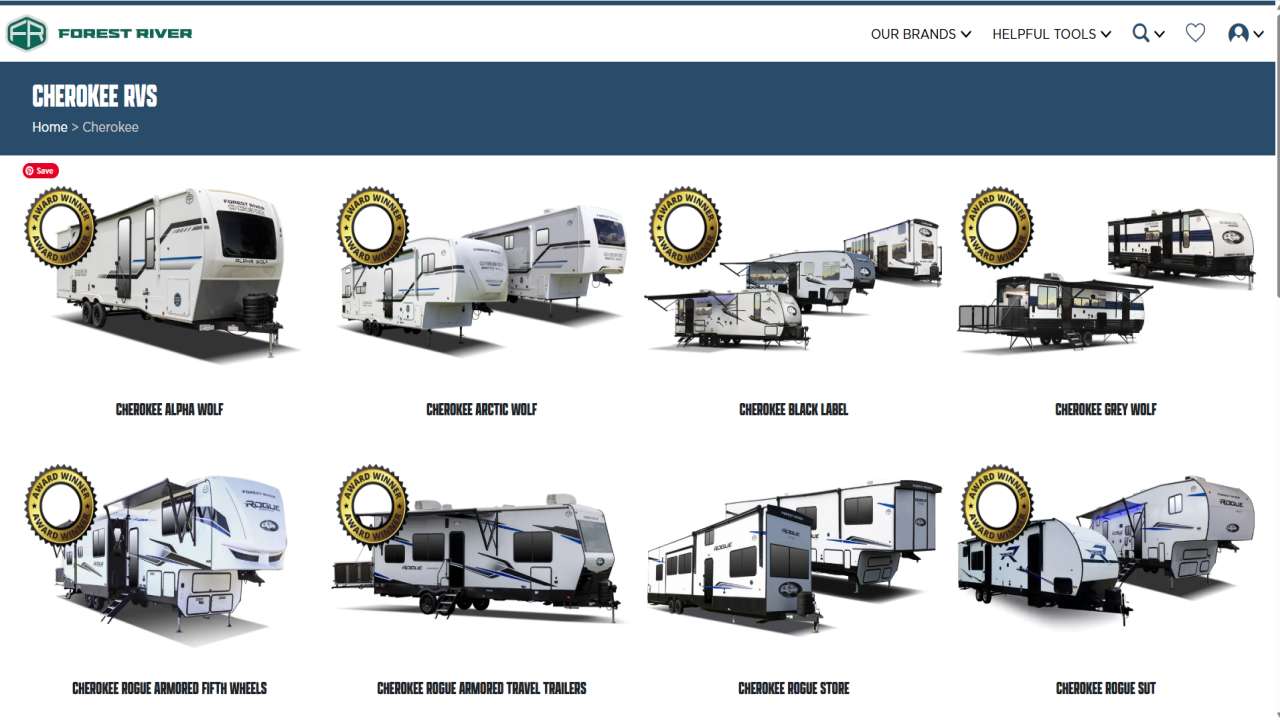
2. Forest River Cherokee Wolf Pup 16JQ — Best Lightweight for Towing
MSRP: ~$28,000
Real Price (2026): ~$18–20,000
Type: Travel Trailer
Length: 16 ft | Weight: 3,100 lbs | Sleeps: 2–4
If your vehicle is an SUV or truck with marginal towing capacity, the Wolf Pup 16JQ is your answer. It’s genuinely lightweight, not “light for a trailer.”
Why we recommend it: At 3,100 lbs dry weight, this trailer can be towed by a half-ton truck, many midsize SUVs, and some large crossovers. The interior is clever—it has a bedroom with a real bed (not a tight bunk), a kitchen with a stove and fridge, and a functional bathroom. The living area has a convertible sofa/dinette.
Real-world pros: Fuel efficiency is drastically better than towing heavy rigs (one owner reported 18 mpg towing vs. 12–14 mpg with heavier trailers). Setup and breakdown are fast—shorter rig means less maneuvering. Repair costs are lower because less goes wrong. First-timers love the confidence of knowing they can park it without stress.
Honest cons: Storage is minimal. The outdoor shower prep exists, but you’ll likely skip it. The fridge is a cooler-sized 6.5 cubic feet (full-size fridges need more power). No washer/dryer hookups.
Best for: Solo travelers, couples, or buyers with older SUVs who refuse to upgrade their vehicle just to tow an RV.
3. Winnebago Micro Minnie 1706FB — Best for Couples Who Want a Real Kitchen
MSRP: ~$32,000
Real Price (2026): ~$21–23,000
Type: Travel Trailer
Length: 17 ft | Weight: 3,800 lbs | Sleeps: 2–4
Winnebago has massive brand loyalty for a reason—their trailers are overbuilt compared to competitors at the same price. The Micro Minnie line is the entry point, and it’s solid.
Why we recommend it: You get a full kitchen with a two-burner stove, oven, and 8 cubic-foot fridge. The bedroom is a proper bed (not a dinette conversion). The living area feels less cramped because Winnebago uses smart slide-out tech. Insulation is noticeably better than competitors—owners report staying warm in 30°F weather with basic heat.
Real-world pros: Winnebago warranty is 5 years on structure (vs. typical 1-year on cabinets/appliances). Dealers are common, so service is easy. Resale is quick—these trailers hold value better than Forest River or Keystone.
Honest cons: Slightly heavier than the Wolf Pup (so you need a proper half-ton truck, not a marginal SUV). The gray tank is smaller, so boondocking requires more water discipline. Micro Minnie interior feels snug for two people for more than a week.
Best for: Couples in their first RV who cook regularly and want a recognized brand with solid support.
4. Grand Design Reflection 22BH — Best Layout for Families
MSRP: ~$39,000
Real Price (2026): ~$27–30,000
Type: Travel Trailer
Length: 24 ft | Weight: 6,200 lbs | Sleeps: 6–7
If your family has kids, Grand Design’s Reflection 22BH is worth stretching your budget for. It’s not $20K cheap, but the floor plan is exceptionally thoughtful.
Why we recommend it: You get a bunkhouse layout—the rear has upper and lower bunk beds, perfect for kids. The front bedroom is a full queen. The dinette and sofa provide two more sleeping spots (or sitting space during the day). The kitchen has a full three-burner stove, oven, and 12-cubic-foot fridge. The bathroom is split—toilet/sink in one room, shower in another, so multiple people can use it at once.
Real-world pros: Grand Design is known for residential-style finishes and solid construction. This isn’t a budget rig that looks budget—the cabinetry, flooring, and upholstery feel upscale. Warranty coverage is strong. Resale value is excellent.
Honest cons: At 6,200 lbs, you genuinely need a half-ton truck with a good hitch and sway bar. Gas mileage takes a hit (12–14 mpg towing). Winter insulation is still limited (you’ll need supplemental heat in cold climates).
Best for: Families with 2–3 kids who plan annual road trips and want comfort without a $60K price tag.
Also Read:- RV Solar & Power System Maintenance: Complete Seasonal Guide to Keep Your Off-Grid System Running
5. Keystone Sprinter 25ML (Fifth Wheel) — Best Value Fifth Wheel
MSRP: ~$42,000
Real Price (2026): ~$28–32,000
Type: Fifth Wheel
Length: 25 ft | Weight: 8,100 lbs | Sleeps: 4–6
Most beginners skip fifth wheels because they assume you need a one-ton truck. The Sprinter 25ML changes that. It’s fifth-wheel space with trailer-compatible weight.
Why we recommend it: Fifth wheels offer a separate bedroom (huge for couples who don’t want dinette-to-bed conversions). The Sprinter has a front master bedroom with a residential queen bed, walk-around access, and its own bathroom. The living area has a rear kitchen, theater seating, and a slide-out. The cab over the hitch is a bonus loft bedroom/storage.
Real-world pros: You get more living space than a 30-foot travel trailer but at a lower dry weight. Fifth wheels have better weight distribution and less sway. Resale is strong because couples love the privacy. The Keystone name means parts and service are accessible.
Honest cons: You need a truck with a fifth-wheel hitch (most modern half-tons and up have this). Towing is noticeably more stable than travel trailers, but it requires driver confidence. Dry weight is 8,100 lbs, so a full half-ton is minimum.
Best for: Couples who tow regularly, can afford a truck payment, and prioritize bedroom privacy over towing ease.
6. Coleman Lantern 32BHS — Best Bang for Buck on Interior Space
MSRP: ~$44,000
Real Price (2026): ~$30–35,000
Type: Travel Trailer
Length: 33 ft | Weight: 7,500 lbs | Sleeps: 6–8
The Coleman Lantern series is Fleetwood’s ultra-budget line, and beginners often overlook it because of the brand perception. Don’t. This is an 8-person RV at a 6-person price.
Why we recommend it: You’re getting a dual-room layout—master bedroom at the front with a queen, bunkhouse at the rear with bunks and a convertible dinette. The kitchen is full-size with a stove, oven, and fridge. The living area feels spacious. For large families or groups, space-per-dollar is unbeatable.
Real-world pros: Fleetwood owns Coleman, so you get access to a major manufacturer’s supply chain. Dry weight at 7,500 lbs is reasonable for the size. Insulation has improved significantly in 2026 models. Price after discount is genuinely affordable.
Honest cons: Coleman is the “economy” brand—interior finishes are plastic-heavy, and cabinetry is veneer over particle board. Warranty is shorter (1 year). Resale is slower because the brand lacks prestige. You need a full half-ton truck with good suspension.
Best for: Large families (6+ people) on tight budgets who view the RV as a utility vehicle, not a status symbol.
7. Jayco Eagle SLE 28BHU — Best for Families Who Boondock
MSRP: ~$40,000
Real Price (2026): ~$27–30,000
Type: Travel Trailer
Length: 28 ft | Weight: 6,800 lbs | Sleeps: 8
The Eagle SLE is designed for families who want to camp away from hookups. It comes with solar prep, larger holding tanks, and serious battery capacity as standard.
Why we recommend it: Jayco is owned by Thor Industries (massive company), so quality control is decent. The bunkhouse layout includes upper and lower bunks, a front master bed, and a dinette that converts. The kitchen is full-service. The battery system supports 200+ amp hours, and there’s room to add solar panels without retrofitting.
Real-world pros: Boondocking-ready out of the box (many competitors charge extra for this). Holding tanks are oversized. Weight distribution is balanced. Towing is stable.
Honest cons: Jayco doesn’t have the prestige of Grand Design or Winnebago, so service can be harder to find in rural areas. Resale is slower. Warranty is 1 year on appliances.
Best for: Families who plan to camp in remote areas and want a rig that supports off-grid living without major upgrades.
8. No Boundaries (NOBO) NB19.6 — Best for Adventurous Couples
MSRP: ~$27,000
Real Price (2026): ~$17–19,000
Type: Travel Trailer
Length: 20 ft | Weight: 3,700 lbs | Sleeps: 2–4
NOBO is the “outdoors-focused” brand. If you want to camp off-pavement, this is a smart bet.
Why we recommend it: Underbody protection is standard (other trailers skip this). The hitch is reinforced for towing on rough terrain. The interior is simple (no frills), with a bedroom, kitchen, and bathroom. Dry weight is light enough for SUVs. The price is the lowest on our list for a functional rig.
Real-world pros: Built for adventure, not glamping. Durability is excellent. Towing is easy. Resale holds up if marketed to outdoor enthusiasts.
Honest cons: Interior is sparse (single-pane windows, minimal insulation). No furnishings or extras. Not comfortable for winter camping without upgrades. Limited dealer network.
Best for: Couples who spend weekends hiking/camping and view the RV as a base camp, not a second home.
Budget RV Comparison Table
| Model | Type | Length | Dry Weight |
|---|---|---|---|
| Keystone Cougar Sport 2100RK | Travel Trailer | 24 ft | 5,800 lbs |
| Forest River Wolf Pup 16JQ | Travel Trailer | 16 ft | 3,100 lbs |
| Winnebago Micro Minnie 1706FB | Travel Trailer | 17 ft | 3,800 lbs |
| Grand Design Reflection 22BH | Travel Trailer | 24 ft | 6,200 lbs |
| Keystone Sprinter 25ML | Fifth Wheel | 25 ft | 8,100 lbs |
| Coleman Lantern 32BHS | Travel Trailer | 33 ft | 7,500 lbs |
| Jayco Eagle SLE 28BHU | Travel Trailer | 28 ft | 6,800 lbs |
| No Boundaries NB19.6 | Travel Trailer | 20 ft | 3,700 lbs |
| Model | Sleeps | MSRP | Best For |
|---|---|---|---|
| Keystone Cougar Sport 2100RK | 4–5 | $38K | Couples, Small Families |
| Forest River Wolf Pup 16JQ | 2–4 | $28K | Lightweight Towing, Solo |
| Winnebago Micro Minnie 1706FB | 2–4 | $32K | Couples, Full Kitchen |
| Grand Design Reflection 22BH | 6–7 | $39K | Families with Kids |
| Keystone Sprinter 25ML | 4–6 | $42K | Couples, Truck Owners |
| Coleman Lantern 32BHS | 6–8 | $44K | Large Families, Budget |
| Jayco Eagle SLE 28BHU | 8 | $40K | Families, Boondocking |
| No Boundaries NB19.6 | 2–4 | $27K | Adventure, Off-Grid |
Feature Comparison: What You Actually Get at Each Budget Level
| Feature | Under $20K |
|---|---|
| Real Bed (not dinette conversion) | Most models do not include a real bed |
| Full Kitchen (stove + oven + fridge) | Full kitchen is rarely available |
| Bathroom with Shower | Mostly wet bath setup |
| Bunkhouse (kids’ beds) | Not available |
| Solar Panel Prep | Mostly older stock without solar prep |
| Feature | $20–50K |
|---|---|
| Real Bed (not dinette conversion) | Available in most models |
| Full Kitchen (stove + oven + fridge) | Partial to full kitchen available |
| Bathroom with Shower | Standard bathroom with shower |
| Bunkhouse (kids’ beds) | Available in some or many models |
| Solar Panel Prep | Often optional or standard in many models |
| Washer/Dryer Hookup | Rare but available in some models |
| 200+ Amp Hour Battery | Optional or included in some models |
| Winter Insulation (R-8+) | Basic to good insulation depending on model |
| Resale Value Hold | Decent to excellent resale value depending on brand and model |
Also Read:- RV Camping White Sands Solar: Your Complete Guide to Desert Camping & Off-Grid Power
The Real Cost: MSRP vs. What You’ll Actually Pay
Here’s the honest money conversation:
MSRP is fiction. Nobody pays sticker price anymore. Here’s what real buyers are paying in March 2026:
- $20K MSRP RV → Realistic price: $13–15K (30–35% discount)
- $35K MSRP RV → Realistic price: $23–26K (30–35% discount)
- $45K MSRP RV → Realistic price: $30–35K (30–35% discount)
But discounts aren’t free. They come with conditions:
Trade-in leverage. Dealers offer bigger discounts if you’re trading in a vehicle. If you own an older truck worth $5K, a dealer might give you $8K as a trade credit to juice the RV discount. Use this.
End-of-season timing. August through November, dealers clear 2025 inventory to make room for 2026 models. This is when 40% discounts happen. Prices tighten in spring.
Cash buyers get better deals. If you can pay $25K cash instead of financing $25K, dealers often knock off another $1–2K because they’re avoiding lending fees.
Hidden costs that blow up the budget:
- Delivery/setup: $1,500–3,000 (dealer delivery, leveling, water/electric hookup)
- Insurance: $800–1,500/year (higher than car insurance)
- Hitch installation (if needed): $500–1,200
- Licensing/registration: $300–800 (state-dependent)
- First-year maintenance: $500–1,000 (seal checks, tire rotation, general inspection)
Real total cost for a $25K RV: $27–31K in year one.
How to Avoid Budget RV Pitfalls (Beginner Checklist)
Before You Visit a Dealer
Check your towing capacity. Grab your vehicle’s manual and find “maximum towing capacity.” Subtract 2,000 lbs (for cargo, passengers, hitch). That’s your RV weight limit. If your truck maxes at 10,000 lbs towing, a 6,000 lb RV is marginal—look for 5,000 lbs or less.
Verify your hitch. A Class III hitch (most common) handles up to 10,000 lbs. A Class II is rated for 3,500 lbs. Mismatched hitch + RV = dangerous towing. Ask the dealer to verify in writing.
Test tow a loaded RV. Before buying, rent a similar RV for a weekend. Tow fully loaded (full water, propane, gear). Pay attention to sway, brake feel, and how the engine sounds on hills. If you hate it, the money spent on rental is nothing.
At the Dealership
Don’t negotiate on MSRP alone. Dealers expect haggling. Focus instead on the true out-the-door price (invoice + dealer fee + delivery). Everything else is negotiating theater.
Inspect the RV like a home inspection. Bring a moisture meter ($15, Amazon). Check walls, ceilings, and cabinetry for soft spots (mold). Open every cabinet. Run the fridge, stove, and heater. Fill the tank and flush the toilet. A 30-minute walkthrough catches 90% of factory defects.
Get a pre-purchase inspection. Hire an independent RV inspector ($200–400). They’ll find the weak points and give you leverage to negotiate down or walk away.
Document everything in writing. Don’t trust a salesman’s promise that “we’ll fix that later.” Get it in the purchase agreement. Dealers forget promises; paper doesn’t.
After Purchase
Register with the manufacturer. This activates your warranty. Many buyers skip this and lose coverage without realizing it.
Do a pre-trip inspection. Dealers often deliver RVs with half-measures (loose connections, unsealed roof, dead batteries). Spend a day checking everything before your first trip.
The Best Budget RV Really Depends on Your Use
Are you camping weekends near home? The lightweight NOBO or Wolf Pup gives you flexibility and low towing stress.
Are you a couple doing annual road trips? The Winnebago Micro Minnie or Keystone Cougar offer comfort and resale value.
Are you a family with kids? The Grand Design or Coleman Lantern give you space without breaking the bank.
Do you plan remote/off-grid camping? The Jayco Eagle or NOBO come ready for boondocking.
Do you already own a truck? A fifth wheel like the Keystone Sprinter opens up space options at lower weight.
The worst mistake is buying a rig that doesn’t match your actual travel style. Couples who buy 8-person RVs waste money on weight and fuel. Families who buy 2-person trailers end up miserable. Think about how you’ll actually camp, then choose the RV that fits.
FAQ: Budget RV Questions Beginners Ask
Q: Can I truly afford an RV on a tight budget?
Yes—if you buy used or catch a dealer discount on new. A 5-year-old Keystone that sold for $35K new is now $15–18K. A new Coleman selling for $44K MSRP is $30–32K out the door in late 2026. The total cost of ownership (including fuel, insurance, maintenance) averages $3,000–5,000/year, which is often less than a vacation rental pattern.
Q: Is financing an RV a bad idea?
Not if rates are low. Right now, RV loans sit at 7–9% APR for good credit. If you have cash, financing at 8% is worth it if your cash earns 5% in savings. But don’t finance an RV if you can’t afford a $3,000 emergency repair—that’s the real risk.
Q: Do I really need solar on my first RV?
Not immediately. Standard solar costs $2,500–4,000 installed. If you’re car-camping (staying in RV parks with hookups), solar is wasted money. If you’re boondocking half the time, solar pays for itself in year two. Compromise: buy an RV with solar prep, skip the panels, and add them later.
Q: How long will a budget RV last?
With care, 15+ years. RVs are metal boxes on wheels—they’re simple. The real limiting factor is corrosion. An RV parked in a damp climate without a cover deteriorates faster. An RV garaged or covered in dry climates lasts much longer. Maintenance matters more than the price you paid.
Q: Should I buy new or used?
New is better for a first RV because warranty covers factory defects. Used is cheaper, but you assume risk. If money is tight, buy a 2–3 year-old model (still under warranty) rather than new or 10+ year-old.
Q: Can I live full-time in a budget RV?
Yes, but not comfortably without upgrades. Budget RVs lack insulation, battery capacity, and storage for full-time living. If you’re planning to full-time from day one, stretch your budget to $40K+ so you get better insulation, solar, and lithium batteries.
Q: What’s the difference between a travel trailer and a motorhome?
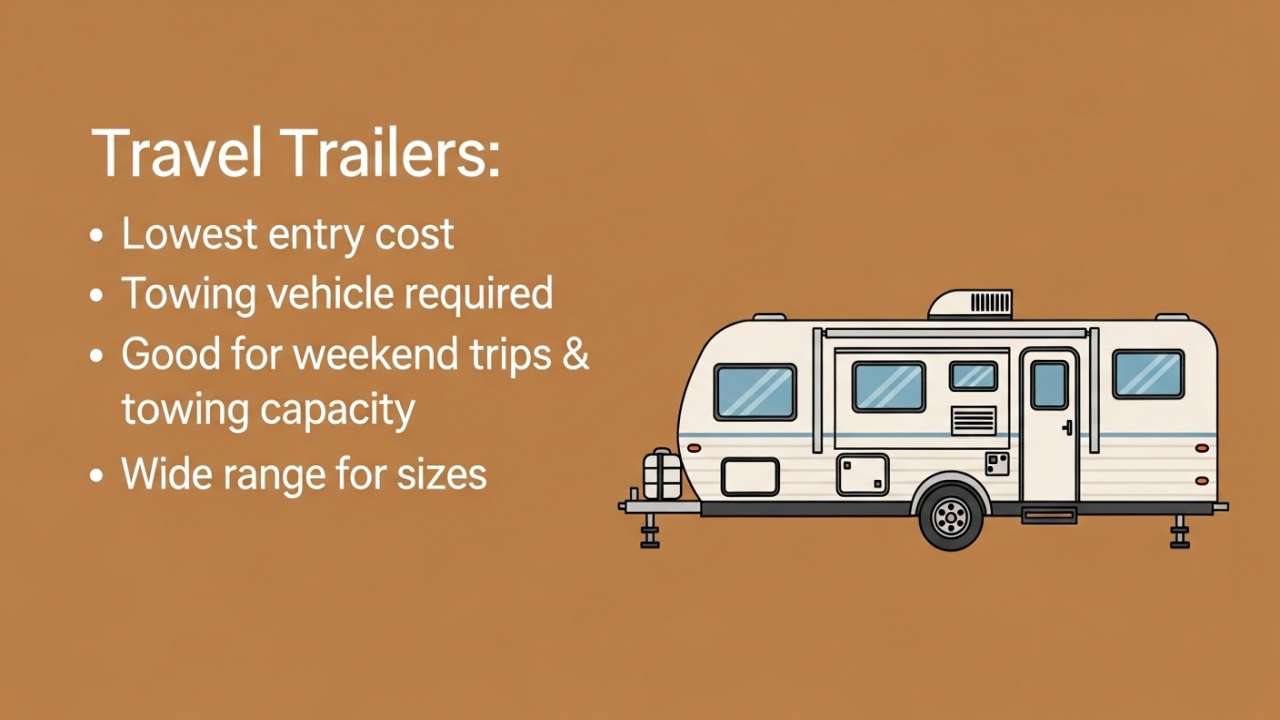
Travel trailers tow behind your vehicle (cheaper, more vehicle options). Motorhomes are self-powered (more freedom, higher fuel costs, often pricier). For beginners, trailers are better—you keep your car for daily use and tow only when camping.
Q: Do I need a truck to own an RV?
No. Many travel trailers under 5,000 lbs can be towed by SUVs. Check your vehicle’s capacity, then choose a lighter RV. A Wolf Pup (3,100 lbs) works with many crossovers.
Final Thoughts: Your RV Journey Starts Here
The 2026 budget RV market is genuinely friendly to first-timers. Prices are realistic, inventory is abundant, and quality has stabilized. You can buy a solid, reliable travel trailer for under $30K—something that would’ve cost $45K five years ago.
But the best RV for you isn’t the cheapest one. It’s the one that matches your travel style, vehicle capability, and camping priorities. Spend time on dealer lots. Walk through multiple rigs. Imagine a week inside that space. Then choose the one that feels right.
The road is calling. Time to answer.
By Saket Kumar | Published March 2026
Have you bought a budget RV? Share your experience and the model you chose in the comments. First-time buyers reading this need your real-world insights.