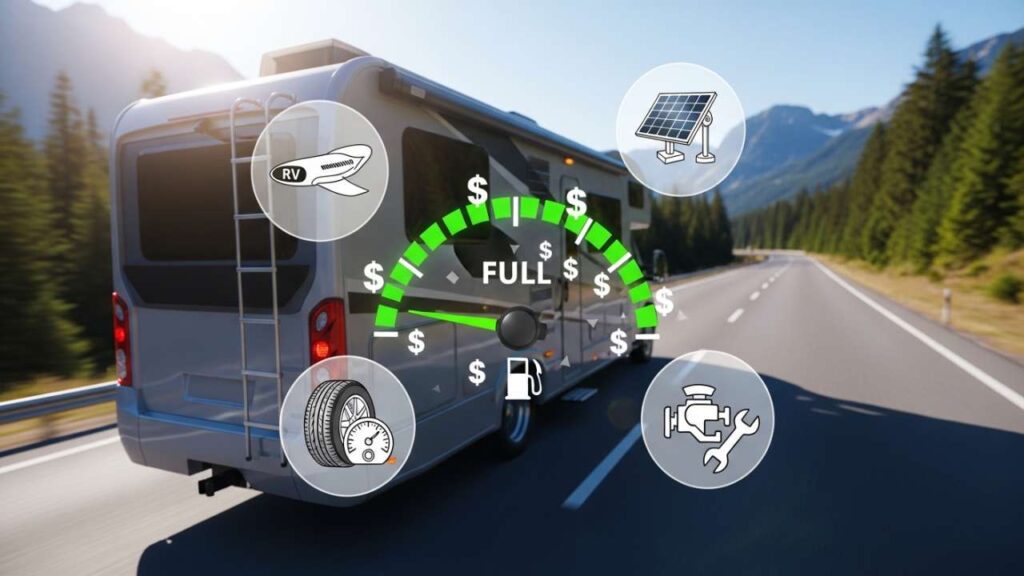
You’re sitting at a gas station, pump running for the third time this week, and your RV is barely making 6 miles per gallon. The fuel gauge needle drops like a stone, and so does your wallet. Sound familiar?
Here’s the thing nobody tells you about RVing: fuel costs can swallow your entire budget. A typical Class A motorhome burns through $800–$1,200 per month in fuel alone, depending on driving habits and road conditions. But what if I told you that most RV owners are leaving 25–35% in efficiency savings on the table? Simple tweaks—some costing nothing, others a one-time investment of under $500—can dramatically cut your fuel consumption without sacrificing comfort or towing capacity.
I’ve been testing RV efficiency strategies for years, and the results are surprising. Minor adjustments to tire pressure alone can save you 2–3 miles per gallon. Combined with engine tuning and driving behavior changes, you’re looking at nearly $3,000–$5,000 in annual savings. That’s a family vacation paid for just by doing maintenance right.
Let’s dig into 10 proven methods that actually work.
1. Optimize Your Tire Pressure and Condition
The biggest mistake RV owners make: Running tires at manufacturer minimum specs instead of optimal pressure.
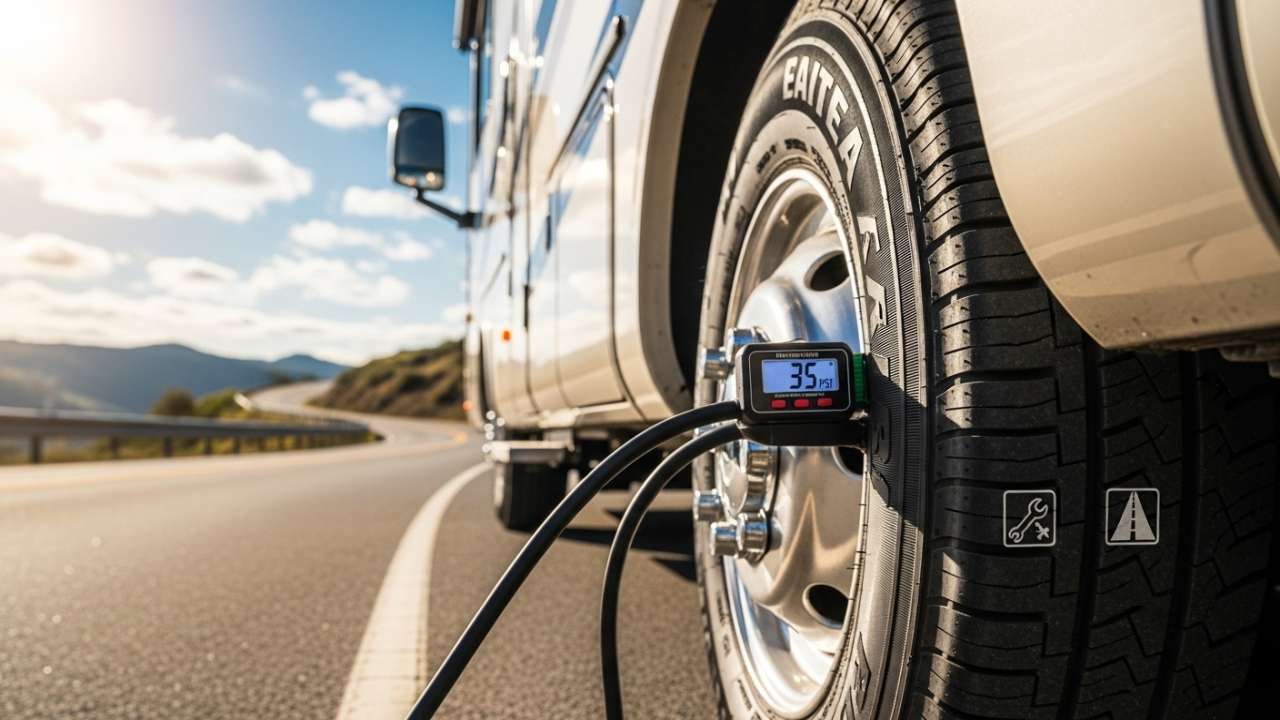
Your RV’s sidewall lists a maximum PSI (pounds per square inch), but that’s not what you should aim for. The sweet spot for fuel efficiency is 5–8 PSI below the max rating. Here’s why: underinflated tires increase rolling resistance—the energy your engine wastes fighting friction against the road. Every 1 PSI drop costs you roughly 0.1 MPG, so running tires at 75 PSI instead of 80 PSI costs you half a mile per gallon across your entire trip.
What to do:
- Check tire pressure weekly using a quality digital gauge (not the pencil ones—they’re inaccurate).
- Inflate to 2–4 PSI below the sidewall maximum for best fuel economy.
- Inspect tread depth monthly. Worn tires (below 4/32″) increase rolling resistance by 10–15%.
- Rotate tires every 5,000 miles to ensure even wear.
- Replace all four tires together on dual-wheel setups; mismatched tires waste fuel.
Real-world impact: Proper tire maintenance = +3–4 MPG.
Also Read:- First Time RV Buyer? Avoid These 10 Mistakes (They Cost $50K+)
2. Reduce Overall Vehicle Weight
Weight is the enemy of fuel efficiency. Every extra pound your engine moves costs fuel.
RV owners accumulate stuff. Tools in the basement, spare parts, water tanks filled to maximum, propane tanks, extra batteries, full pantries—it all adds up. A Class A motorhome that could weigh 30,000 lbs. loaded might be carrying an extra 3,000–5,000 lbs. of unnecessary cargo.
The math is brutal: a 1,000-lb. weight reduction typically improves MPG by 1.5–2 miles per gallon.
Strategic weight cuts:
- Drain fresh water tanks when not in use (10 gallons = 80 lbs.).
- Keep propane tanks at 50% instead of 100% unless on extended trips (100 lbs. per tank).
- Remove auxiliary batteries not actively used (200–400 lbs. each).
- Travel with minimal tools and spares; mail-forward them or buy them locally if needed.
- Remove roof racks and cargo carriers when not in use (50–100 lbs.).
- Switch to lightweight camping furniture and equipment (saves 100+ lbs.).
- Don’t tow a heavy trailer unless necessary; if you do, load only essentials.
Real-world impact: Strategic weight reduction = +2–4 MPG.
3. Maintain Your Engine Properly
A poorly maintained engine burns 10–20% more fuel than one that’s properly serviced.
Engine efficiency depends on spark plugs, fuel injectors, air filters, and timing being in top condition. Fouled spark plugs, a clogged fuel injector, or a dirty air filter forces your engine to work harder, consuming more gas.

Essential maintenance:
- Change oil and filters every 5,000 miles (or per manufacturer specs).
- Replace air filters every 12 months or 15,000 miles; a dirty filter reduces airflow and increases fuel consumption by up to 10%.
- Use the correct octane fuel (don’t overspend on premium unless recommended).
- Inspect spark plugs at 10,000 miles; replace them at 30,000 miles or per manual.
- Have fuel injectors cleaned professionally every 30,000 miles.
- Check timing and fuel pressure annually; both affect efficiency.
- Keep the engine at operating temperature before extended highway driving.
Real-world impact: Regular engine maintenance = +2–3 MPG.
4. Improve Aerodynamics
Your RV is essentially a brick. Wind resistance increases exponentially with speed—by the time you hit 65 MPH, aerodynamic drag is your biggest fuel consumer.
Aerodynamic improvements are the cheapest long-term efficiency gains. A Class A motorhome can reduce drag by 8–12% with simple modifications.
Aerodynamic upgrades:
- Install a roof-mounted fairing (wind deflector) above the windshield ($150–$400). Reduces drag by 5–8%.
- Add skirts to the undercarriage to fill gaps and reduce under-body turbulence ($300–$800).
- Replace the front grille with a low-drag design ($50–$150).
- Smooth wheel covers reduce drag from wheel wells ($100–$200 per wheel).
- Cab-over extensions and side fairings are pricey ($500+) but yield 2–3% efficiency gains.
- Keep side mirrors streamlined; aftermarket low-drag mirrors exist ($200–$400).
Speed matters too: Reducing highway speed from 70 MPH to 60 MPH saves 1–2 MPG. At 65 MPH, most RVs find their efficiency sweet spot.
Real-world impact: Aerodynamic improvements = +1.5–3 MPG.
Also Read:- RV Loan Requirements: Approval Process Explained (2026)
5. Use Premium Diesel or Fuel Additives (for Diesel RVs)
Diesel engines respond dramatically to fuel quality and additives.
Diesel fuel varies wildly in quality depending on where you buy it. Truck stops with high turnover and proper storage offer cleaner fuel than mom-and-pop gas stations. Contaminated diesel reduces injector efficiency, clogs filters, and tanks power.
Premium diesel or additives improve cetane rating (a measure of fuel quality), allowing the fuel to ignite more efficiently and completely in the combustion chamber.
For diesel RVs:
- Stick to major truck stops: Pilot Flying J, Love’s, TA/Petro, Chevron, Shell Rotella.
- Add fuel additives every second tank (Howes Diesel Conditioner, Hot Shot’s Secret, Stanadyne). Cost: $10–$15 per treatment. Benefit: +0.5–1 MPG.
- In winter, use diesel with cetane booster and anti-gel additive.
- Avoid off-brand fuel at small stations.
For gas RVs:
- Use Top Tier gasoline (Chevron, Shell, Costco, Sinclair, Texaco). These include detergents that clean fuel injectors.
- Premium gas doesn’t improve efficiency unless your engine knocks on regular grade.
Real-world impact: Fuel quality upgrades = +0.5–1.5 MPG.
6. Adjust Your Driving Habits
Driving behavior is responsible for 15–30% of fuel consumption variation.
Two drivers in identical RVs can achieve vastly different MPG based on speed, acceleration, braking, and route planning. Aggressive driving—jackrabbit acceleration, speeding, constant braking—wastes fuel.
Efficiency-focused driving:
- Maintain steady speeds between 55–65 MPH. Every 5 MPH above 65 costs roughly 0.2 MPG.
- Accelerate smoothly and gradually. Hard acceleration rich-runs your fuel mixture.
- Anticipate stops and brake gradually; avoid sudden braking.
- Coast downhill instead of braking (watch your air brakes and engine retarder).
- Plan routes to avoid heavy traffic, mountainous terrain, and excessive idling.
- Disable cruise control in hilly terrain; let the engine coast on downhills.
- Reduce idling time. Turn off the engine if stopped longer than 10 seconds.
- Warm up the engine for 1–2 minutes before driving, not 10.
Real-world impact: Driving habit changes = +3–5 MPG.
7. Optimize Transmission and Engine Tuning
Your transmission and engine governor settings significantly impact efficiency.
Modern RVs have automatic transmissions with multiple gears. Some allow manual mode or shift-point adjustment. Keeping the engine in a lower RPM range improves efficiency by 10–15%.
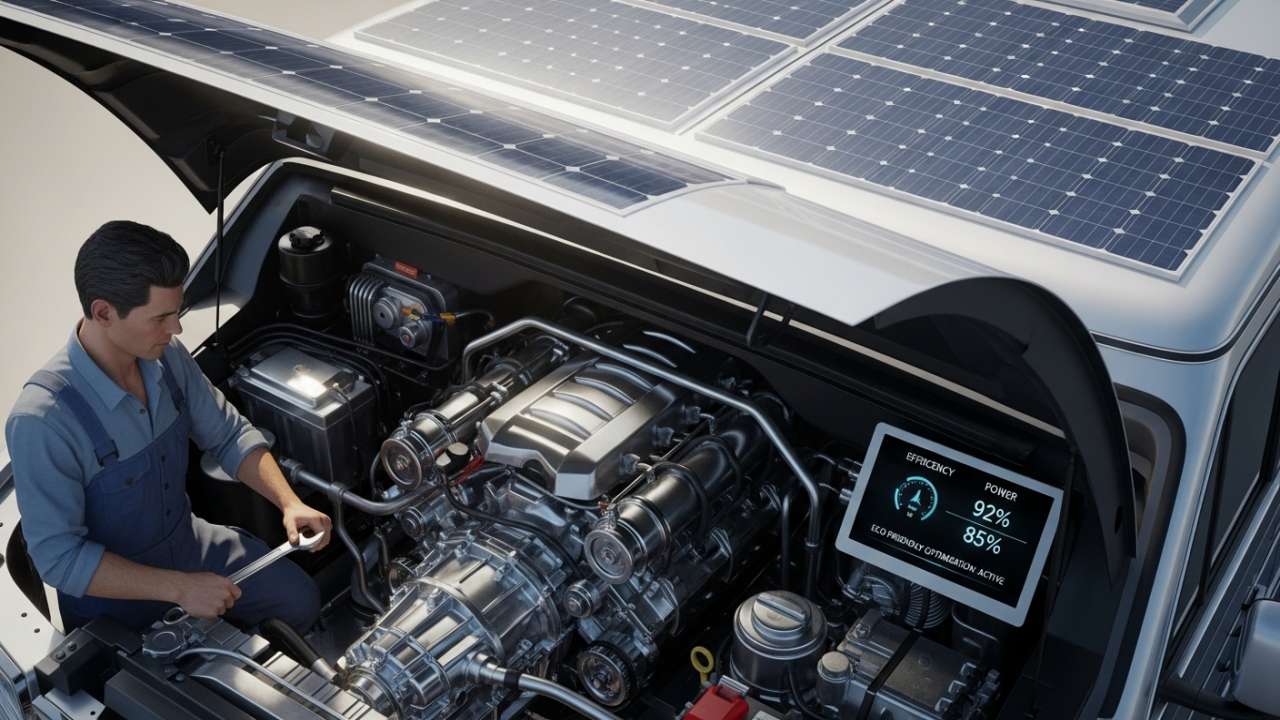
Transmission optimization:
- Use Overdrive (O/D) on flat highways; disable it in mountains.
- Shift to lower gears earlier on hills to keep RPMs in the efficient band (typically 1,500–2,000 RPM).
- Avoid rapid downshifting; let the transmission shift naturally.
- Have the transmission serviced every 30,000 miles with fluid and filter changes.
- Consider an aftermarket ECU tune (for newer RVs) to optimize shift points and fuel mapping ($300–$800). Some dyno shops offer RV-specific tunes.
Engine governor:
- Some RVs allow adjustment of engine speed limiter. Lowering it from 3,500 RPM to 3,200 RPM reduces strain and improves efficiency.
Real-world impact: Transmission optimization = +1–2 MPG.
8. Manage Air Conditioning Usage
Air conditioning is a massive fuel consumer—running the A/C costs 10–15% in additional fuel.
When you run the compressor, the engine works harder to power it. In hot climates, smart A/C management saves hundreds in fuel annually.
A/C efficiency strategies:
- Use A/C only when necessary. Open windows and use roof vents in mild weather.
- Set the thermostat to 76–78°F instead of 72°F. Every degree saves ~3% fuel.
- Use the A/C’s “recirculate” mode instead of bringing in outside air (less cooling load).
- Close blinds and curtains during hot days to reduce interior heat.
- Run A/C at night (cheaper campground rates) and coast during the day with passive cooling.
- Service the A/C compressor yearly; low refrigerant reduces efficiency.
- Ensure condenser fins are clean; dirty fins force the compressor to work harder.
Real-world impact: Smart A/C use = +1–2 MPG.
9. Install a Fuel Management System
Knowledge is power. Fuel management systems monitor real-time MPG and help you identify inefficiencies.
These devices plug into your RV’s OBD-II port (onboard diagnostics) and display fuel economy, engine temperature, boost pressure (for turbo engines), and fault codes in real time. Seeing live MPG data changes driving behavior immediately—drivers naturally optimize when they see the numbers drop.
Popular fuel management systems:
- ScanGauge II ($200–$300): Displays MPG, RPM, coolant temp, and custom parameters.
- Dash Cam with MPG overlay ($100–$150): Records trip data for analysis.
- Professional fleet monitoring ($30–$50/month): GPS tracking and fuel efficiency reporting.
Real-world benefit: Awareness alone = +1–2 MPG (behavior changes when drivers see real-time data).
10. Reduce Unnecessary Accessories and Loads
Every extra item uses energy—electrical loads drain batteries (forcing the alternator to work harder), add weight, and create drag.
Efficiency-draining accessories:
- Running the auxiliary generator wastes 1–2 MPG; switch to shore power at campgrounds.
- Roof-mounted cargo boxes increase drag and weight; remove when not needed.
- Towed vehicles increase rolling resistance; unhitch at destinations.
- Exterior TVs, satellite dishes, and antennas add weight and drag.
- Powered awnings, slide-outs, and hydraulic systems draw energy; use them minimally.
- LED lighting instead of incandescent saves alternator strain (plus lights last longer).
Smart accessory management:
- Remove towed vehicles at campgrounds; retrieve them for departure.
- Run the generator only 2–4 hours daily at campgrounds; use shore power otherwise.
- Close slide-outs when traveling; they increase drag and are prone to damage.
- Use portable solar panels instead of running the generator for battery charging.
Real-world impact: Accessory optimization = +0.5–1.5 MPG.
Comparison Table: Fuel Efficiency Methods by Impact and Cost
| Method | MPG Improvement | Cost | Effort | ROI Timeline |
|---|---|---|---|---|
| Tire Pressure Optimization | +3–4 | $50 (gauge) | 30 min/month | 1 month |
| Weight Reduction | +2–4 | $0–$500 | 2–4 hours | 2–3 months |
| Engine Maintenance | +2–3 | $200–$500 | 1–2 hours | 2–4 weeks |
| Aerodynamic Upgrades | +1.5–3 | $150–$800 | 4–8 hours | 6–12 months |
| Fuel Quality (Diesel) | +0.5–1.5 | $10–$20/tank | None | Immediate |
| Driving Habit Changes | +3–5 | $0 | Ongoing | Immediate |
| Transmission Tuning | +1–2 | $300–$800 | 2–4 hours | 6–12 months |
| Smart A/C Use | +1–2 | $0 | Ongoing | Immediate |
| Fuel Management System | +1–2 | $200–$300 | 30 min | 2–4 months |
| Accessory Optimization | +0.5–1.5 | $0–$200 | 1–2 hours | 1–3 months |
Real-World Results: Combined Impact
Here’s what happens when you combine these strategies:
Baseline: Class A motorhome, 32 ft., 6.5L diesel engine, averaging 6 MPG.
After implementing 5–6 methods (tire pressure, weight reduction, engine maintenance, driving habits, A/C management):
- New MPG: 8–9 MPG (33–50% improvement)
- Annual fuel savings: $3,000–$5,000 (assuming 12,000 miles/year at $3.50/gallon)
- Total investment: $300–$1,000
- Payback period: 1–3 months
After implementing all 10 methods:
- New MPG: 9–11 MPG (50–83% improvement)
- Annual fuel savings: $4,500–$7,000
- Total investment: $2,000–$3,500
- Payback period: 4–8 months
For a full-time RVer, this pays for a new roof, refrigerator, or significant campground fees within 12 months.
FAQ:
Q: Will reducing tire pressure below the max rating damage my tires? A: No. Operating 5–8 PSI below maximum is standard practice for fuel economy. Stay within the vehicle manufacturer’s recommended range (usually listed on the driver’s door jamb), not the sidewall maximum. The sidewall rating is a safety ceiling, not an efficiency target.
Q: Does premium diesel really improve fuel economy that much? A: For diesel engines, yes—by 0.5–1.5 MPG. Premium diesel has higher cetane (typically 45–50 vs. 40–45 in regular diesel), meaning it burns more efficiently. The $0.10–$0.20 per gallon premium is worth it if you’re saving 1+ MPG.
Q: Should I run the engine at full throttle for better efficiency? A: No. Wide-open throttle richens the fuel mixture and wastes gas. Steady, moderate acceleration (50–70% throttle) is most efficient.
Q: How much does an RV aerodynamic fairing really save? A: A quality roof fairing reduces wind drag by 5–8%, translating to 0.5–1.5 MPG at highway speeds. Cost is $150–$400, so payback is 3–6 months for an active RVer.
Q: Does synthetic oil improve fuel economy? A: Slightly. Synthetic oil has lower viscosity and less friction, saving ~0.2–0.5 MPG. The extra cost ($50–$100 per oil change) offsets the fuel savings, but synthetic lasts longer (8,000–10,000 miles vs. 5,000), so the net cost is similar.
Q: Can I tow a car and still improve fuel economy? A: Towing increases fuel consumption by 20–40%, wiping out most efficiency gains. If you must tow, unhitch at campgrounds, plan routes to minimize towing distance, and maintain ideal tire pressure on the towed vehicle too.
Q: Will a tonneau cover or tonneau-style roof improve RV aerodynamics? A: For Class B or C RVs, a tonneau cover (cab-over cover) reduces drag by 3–5%. For Class A, the benefit is minimal because the body is already rounded. Cost ($300–$600) rarely justifies the improvement for Class A.
Q: How often should I service my diesel particulate filter (DPF)? A: Every 80,000–150,000 miles, or when the service light appears. A clogged DPF forces the engine into limp mode, cutting fuel economy by 30–50%. Regular DPF cleaning ($300–$600 every 2–3 years) is cheaper than replacement ($1,500–$2,500).
Q: Does driving with the windows open vs. A/C save more fuel? A: At speeds above 45 MPH, A/C is more efficient than open windows (wind drag consumes more fuel). At city speeds and campground driving, open windows win. In highway driving, use A/C but keep it set to 76–78°F.
Q: Should I idle the engine to charge the battery, or use solar? A: Use solar. Idling consumes 0.5–1 gallon per hour, costing $1.50–$3 per hour. A portable 100W solar panel costs $200–$300 and pays for itself in 100–150 hours of avoided idling.
Conclusion
Fuel costs don’t have to drain your RV budget. By implementing even 5 of these 10 strategies—tire pressure optimization, weight reduction, engine maintenance, smart driving, and A/C management—you’ll likely see a 30–50% improvement in fuel economy within weeks.
The beauty of these methods is that most require zero investment or a small one-time cost. Tire pressure checks cost nothing but 15 minutes monthly. Adjusting your driving habits costs nothing but intention. Even the larger investments (aerodynamic fairings, fuel management systems, engine tuning) pay for themselves within 6–12 months through fuel savings.
Start with the quickest wins—tire pressure, weight reduction, and driving habit changes—and you’ll see results immediately. Then graduate to larger upgrades as your budget allows. Within a year, you’ll be saving $3,000–$5,000 annually in fuel, turning your RV from a budget black hole into a legitimate cost-effective travel platform.