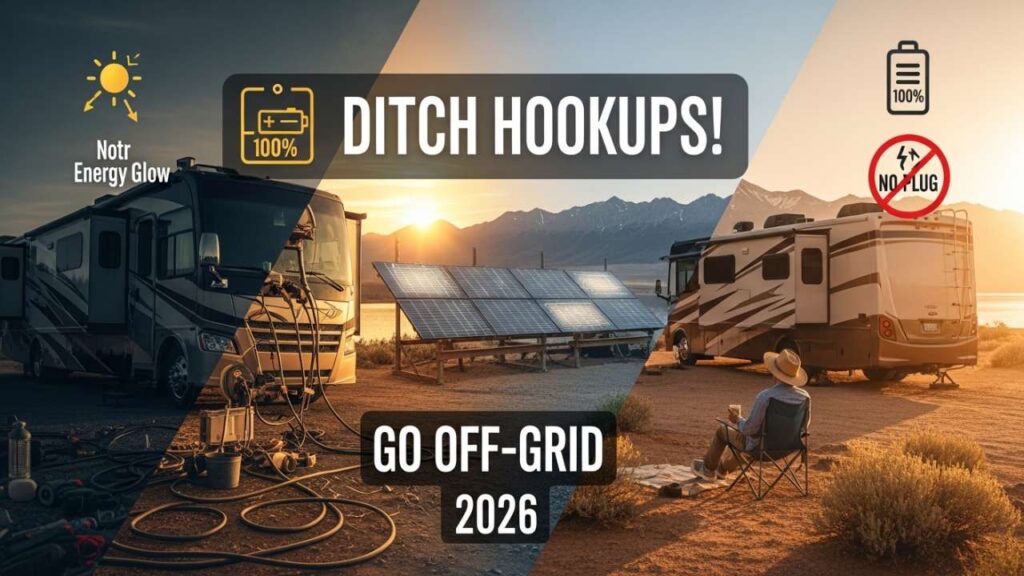
Picture this: You’re parked deep in the Arizona desert at sunset. No noisy generator rumbling. No extension cords fighting with your neighbor’s site. Just the quiet hum of your fridge, the glow of your lights, and maybe even the AC kicking on — all powered by the sun beating down on your RV roof.
That peaceful, independent feeling? That’s what RV solar panels deliver. Thousands of American RVers are making the switch every year to escape crowded campgrounds and explore the backroads without worrying about battery drain or fuel costs. But with so many options out there, how do you choose the right setup without wasting money or ending up with a system that falls short when you need it most?
In this guide, we’ll walk through everything step by step — from understanding the basics to building a reliable off-grid system that actually works for real-life RV living in the USA.
Why RV Solar Panels Are a Game-Changer for American RVers
If you’ve ever boondocked in places like BLM land in Utah or national forests in Colorado, you know the struggle. Your batteries die by morning, the generator wakes everyone up, and suddenly that “free” camping spot doesn’t feel so free.
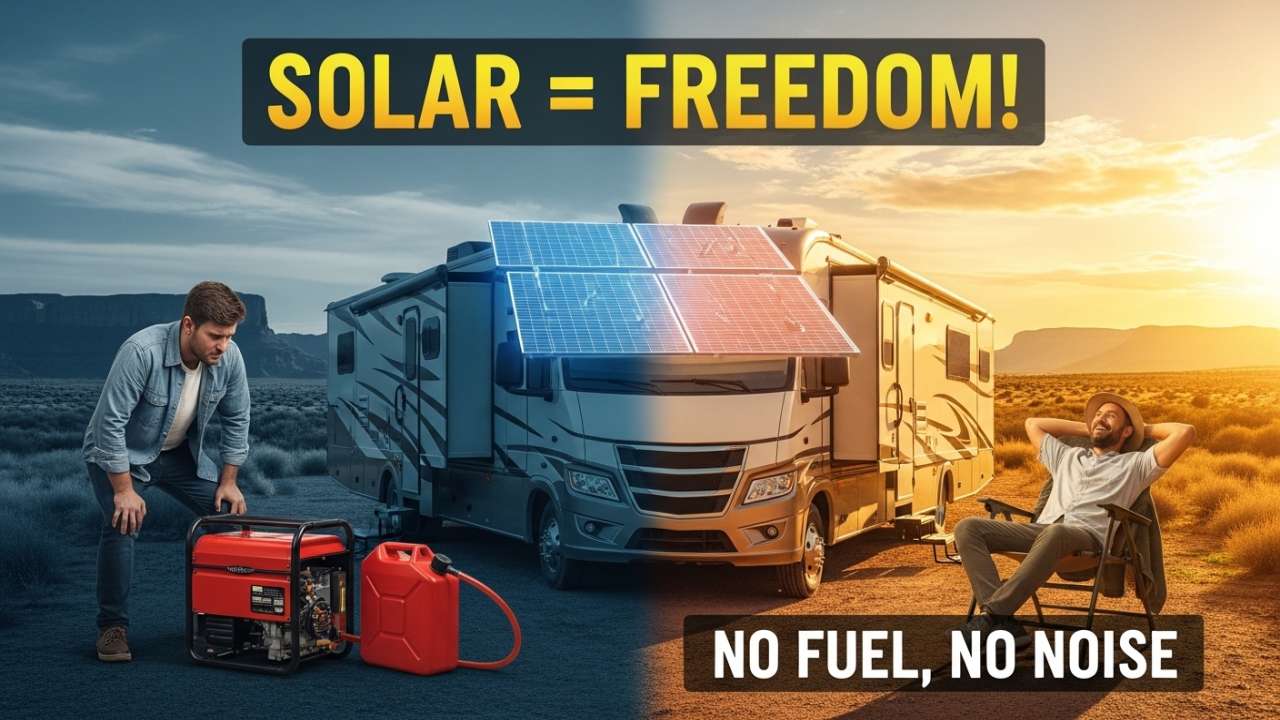
RV solar panels solve that by silently harvesting free energy from the sun. On a good sunny day in most parts of the US, you can generate enough power to run lights, fans, your refrigerator, charge devices, and even small appliances — all while keeping your batteries topped up.
The best part? Once installed, solar has almost zero ongoing costs. No gas for a generator. No hook-up fees at crowded RV parks. Many full-time RVers report saving hundreds of dollars a month while enjoying more remote, beautiful locations.
Also Read:- Best Solar System for Home in Nigeria 2026 – Ultimate Guide to Save ₦64,800+ Yearly
Portable vs. Rooftop RV Solar Panels: Which One Should You Choose?
Most new RVers face this first big decision. Here’s a clear breakdown to help you decide:
Portable Solar Panels
- Easy to set up and move around for maximum sun exposure
- Great for beginners or weekend warriors
- No drilling or permanent modifications to your RV
- Can be folded and stored when driving
- Ideal if you rent your RV or switch rigs often
Rooftop (Permanent) Solar Panels
- Always collecting power — even while you’re driving down the highway
- More efficient long-term with no daily setup hassle
- Better for full-time or frequent boondockers
- Can be wired directly into your RV’s electrical system
- Usually cheaper per watt once installed
Many experienced RVers start with a portable suitcase-style panel to test the waters, then upgrade to a rooftop system later.
Here’s a quick comparison table:
| Feature | Portable Solar | Rooftop Solar | Best For |
|---|---|---|---|
| Ease of Setup | Very easy (plug and play) | Requires installation | Beginners or short trips |
| Daily Sun Optimization | Excellent (you can tilt/move) | Good (fixed angle) | Full-time boondockers |
| Cost per Watt | Higher | Lower | Long-term users |
| Power While Driving | None | Yes | Travelers who move daily |
| Durability on Road | Must store inside | Weatherproof on roof | Harsh weather areas |
How Much Solar Power Do You Actually Need?
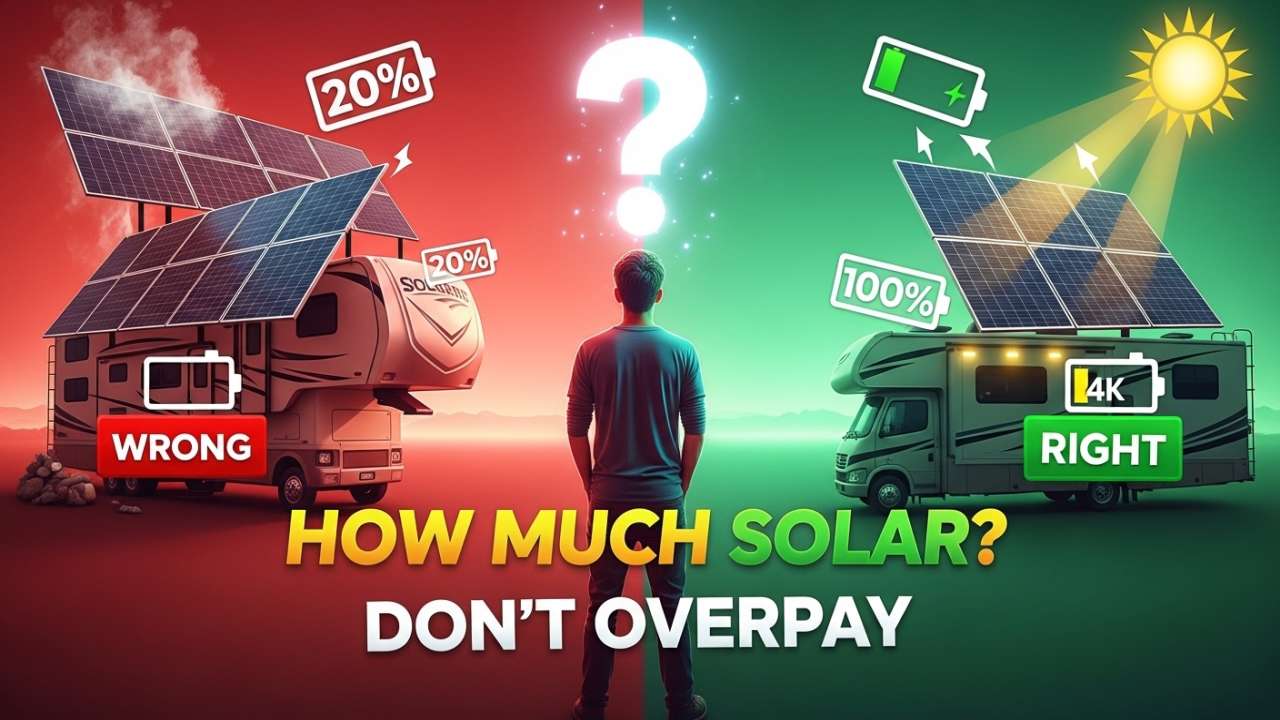
This is the question everyone asks — and the answer depends on your lifestyle.
Start by listing what you run in your RV:
- LED lights: 5–10 watts each
- Refrigerator (propane or 12V): 50–150 watts when running
- Laptop/phone charging: 20–60 watts
- Small inverter for TV or microwave: 300–1000+ watts
- Air conditioner (big power user): 1000–1500 watts or more
A typical weekend boondocker with basic needs might get by with 200–400 watts of solar panels and a decent battery bank.
Full-time RVers who want to run lights, fridge, fans, and occasional small appliances comfortably often aim for 600–1200 watts of solar combined with 200–600 amp-hours of lithium battery storage.
Real-world tip: In the sunny Southwest, you’ll produce more power than in cloudy Pacific Northwest winters. Always add a 20–30% buffer for cloudy days and system inefficiencies.
Also Read:- Solar Panel Price in Nigeria 2026: Real Costs (Nobody Tells You)
Essential Components of a Complete RV Solar System
Solar panels are just the beginning. A reliable setup needs these key parts:
- Solar Panels — Monocrystalline panels are the most popular in 2026 for RVs because they offer high efficiency (up to 22–25%) in a compact size.
- Charge Controller — This brain of the system prevents overcharging your batteries. MPPT controllers are worth the extra money — they can squeeze 20–30% more power from your panels.
- Battery Bank — Lithium (LiFePO4) batteries have taken over because they’re lighter, last longer (thousands of cycles), and discharge deeper than old lead-acid types.
- Inverter — Converts 12V battery power to 120V household electricity for your microwave, coffee maker, or TV.
- Wiring, Fuses & Monitors — Proper wiring and a good battery monitor help you track usage in real time.
Step-by-Step: How to Size and Plan Your RV Solar Setup
- Calculate your daily energy use (watt-hours)
- Estimate peak sun hours in your favorite camping areas (average 4–6 hours in most US states)
- Divide your daily needs by sun hours and add a safety margin
- Choose panel wattage and quantity
- Match with the right charge controller and battery capacity
Example: If you use 800 watt-hours per day and get 5 peak sun hours, you’d need roughly 200–300 watts of solar panels minimum.
Top Considerations When Buying RV Solar Panels in 2026
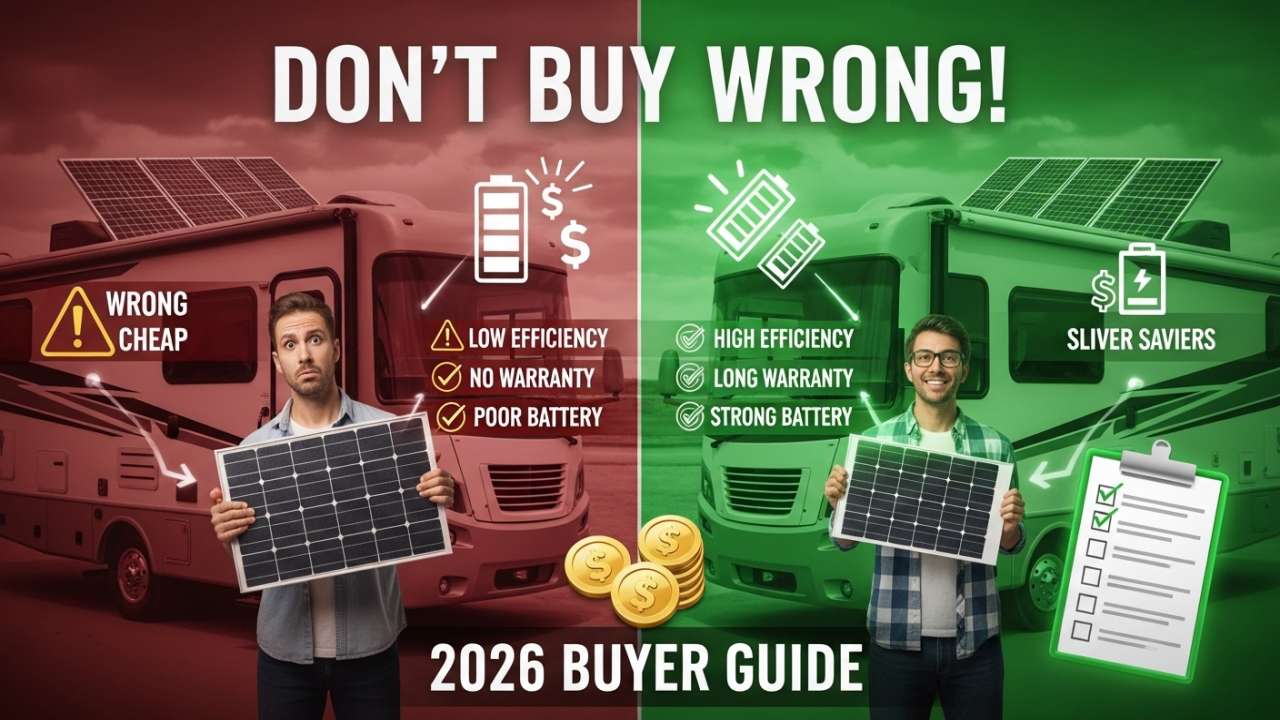
- Efficiency & Technology: Look for monocrystalline panels with good low-light performance.
- Warranty: Quality panels offer 25 years on power output.
- Mounting Options: Rigid panels for roof, flexible for curved surfaces, portable for versatility.
- Expandability: Choose a system you can grow later.
- Cost: Basic portable kits start around $300–600. Full rooftop systems with batteries can range from $1,500 to $8,000+ depending on size.
Helpful Comparison: Popular RV Solar Setups
Here’s a simple table comparing common setups for different RV lifestyles:
Pro Tips from Experienced RVers
- Tilt your portable panels toward the sun when possible — it can boost output by 20–40%.
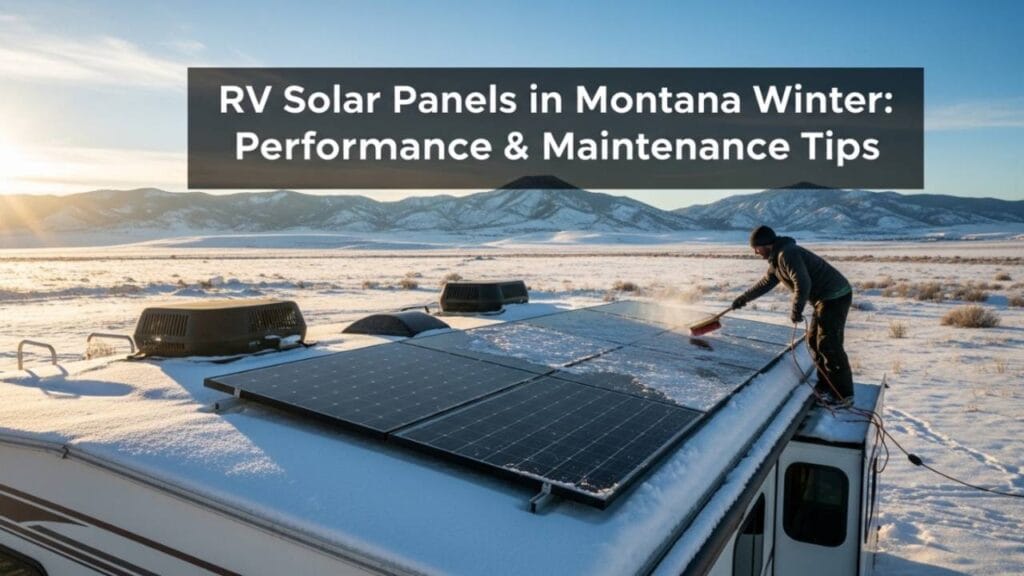
- Keep panels clean — dust and bird droppings reduce efficiency fast.
- Use a Bluetooth monitor so you can check your system from your phone while relaxing outside.
- Consider your roof space and weight limits before going big on rooftop panels.
- In hot climates, flexible panels sometimes perform better in high temperatures.
For official guidance on energy calculations, check resources from the U.S. Department of Energy on estimating appliance usage.
Is RV Solar Worth It in 2026?
Absolutely — especially if you love boondocking or dry camping. The upfront investment pays for itself through freedom, quiet nights, and lower campground fees. Many RVers say the peace of mind alone is worth every penny.
With panel prices continuing to drop and lithium batteries becoming more affordable, 2026 is one of the best times yet to go solar on your RV.
Also Read:- RV Fuel Efficiency: 10 Secrets That Cut Gas Costs 50% (2026 Guide)
FAQ: Common Questions About RV Solar Panels
How many solar panels do I need for boondocking? It depends on your power usage, but most RVers start comfortably with 400–600 watts for weekend to moderate off-grid use. Full-timers often run 800 watts or more.
Can RV solar panels run my air conditioner? Yes, but you’ll need a large system (1000+ watts of solar and a big inverter/battery bank). Many people use solar to keep batteries charged while running a generator or shore power for the AC itself.
Are flexible solar panels good for RVs? They’re excellent if your roof is curved or you want a no-drill option. They weigh less but can be slightly less efficient than rigid monocrystalline panels.
Do I need a special charge controller? Yes — an MPPT controller is highly recommended as it maximizes power harvest compared to older PWM types.
Will solar panels damage my RV roof? Properly installed with correct mounting hardware and sealants, they won’t. Many professional installers use non-penetrating mounts or strong adhesives designed for RVs.
Can I install RV solar panels myself? Many people do successful DIY installs with good tutorials and basic electrical knowledge. If you’re unsure about wiring, hire a professional to avoid safety issues.
Do RV solar systems qualify for tax credits? Check current IRS rules for 2026 — some residential solar incentives may apply to mobile setups, but confirm with a tax professional or official IRS guidelines.
Ready to take the next step toward solar-powered adventures? Start small if you’re unsure, or go big if you’re ready for true off-grid freedom. Either way, once you experience quiet, sun-powered camping, it’s hard to go back to the old way.