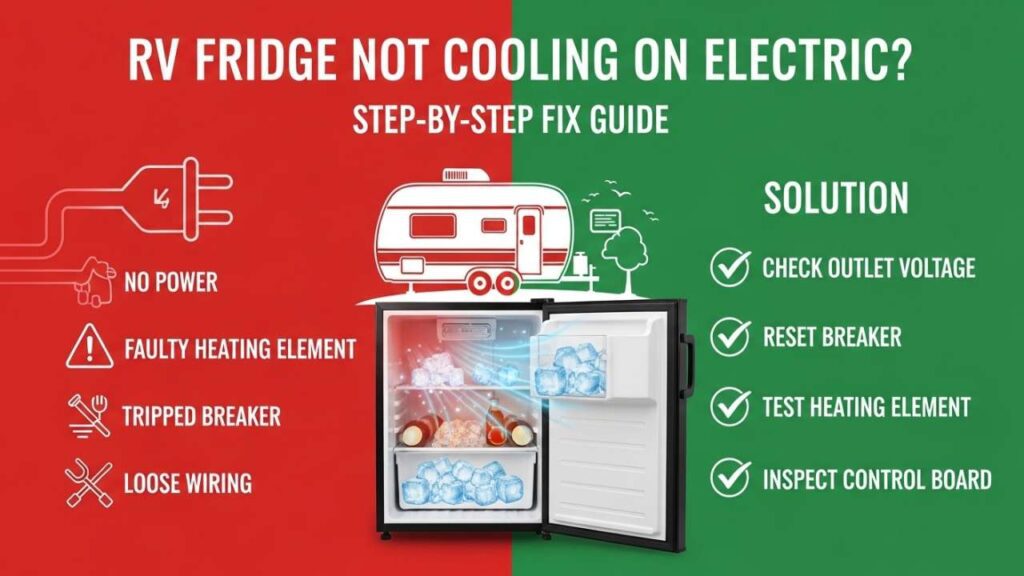
Why Your RV Fridge Is Probably Fine (And How to Prove It)
You’re sitting in your favorite campsite. The sun’s out. The vibe is perfect. And then—your RV fridge decides to betray you.
The food inside is warming up. You start panicking. Mental math kicks in: How long before those eggs go bad? Did I leave milk in there?
Here’s the thing though—your fridge probably isn’t broken.
Seriously. I know that sounds crazy right now, but around 80% of RV refrigerator complaints aren’t actually about dead units. They’re about owners not understanding how these weird, old-fashioned cooling systems actually work. And lucky for you? Most of those problems are fixable in about 15 minutes.
This guide walks you through exactly what to check first, why your fridge is probably just being stubborn, and what actually needs professional help.
How RV Absorption Refrigerators Actually Work (The Boring But Important Part)
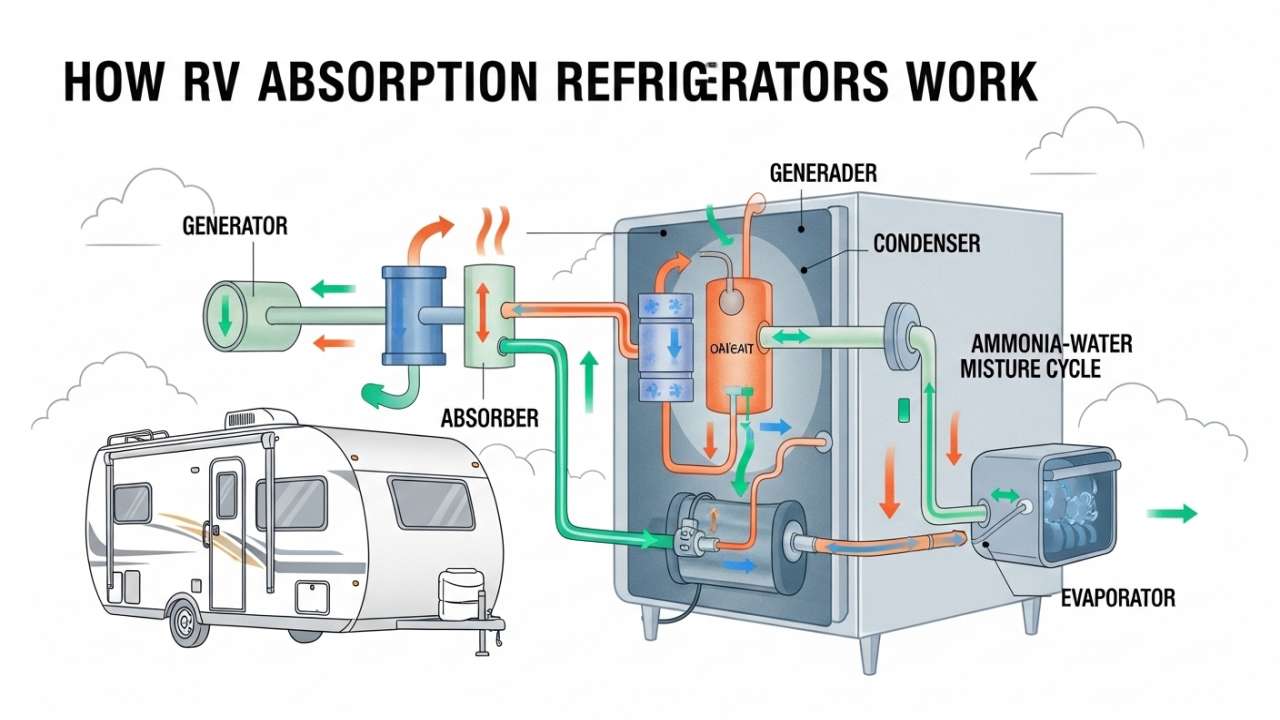
Before we troubleshoot anything, you need to understand something wild: your RV fridge doesn’t use a compressor like your kitchen fridge at home.
Instead, it uses an absorption cooling system—a technology that’s literally over 100 years old. Seriously.
Here’s the oversimplified version: Heat goes in to make cold come out. Your fridge heats up a solution of water, ammonia, and hydrogen gas. This heating creates an evaporation process that produces cold.
You can power this heating in two ways:
- Propane burner (ignites and heats the cooling coils)
- 120-volt electric heating element (does the same thing, just plugged in)
This matters because: If your fridge works great on propane but totally tanks on electric, you’re NOT dealing with a broken cooling system. You’re dealing with a broken heating element—or the power getting to it. That’s different. That’s fixable.
Step 1: The First Question You Need to Answer
Before you do anything else, determine if your fridge works on both power sources or just one.
Here’s why: If your fridge cools on propane but not electric, the problem is isolated. If it won’t cool on either source, that’s a bigger deal.
How to check which mode your fridge is running on:
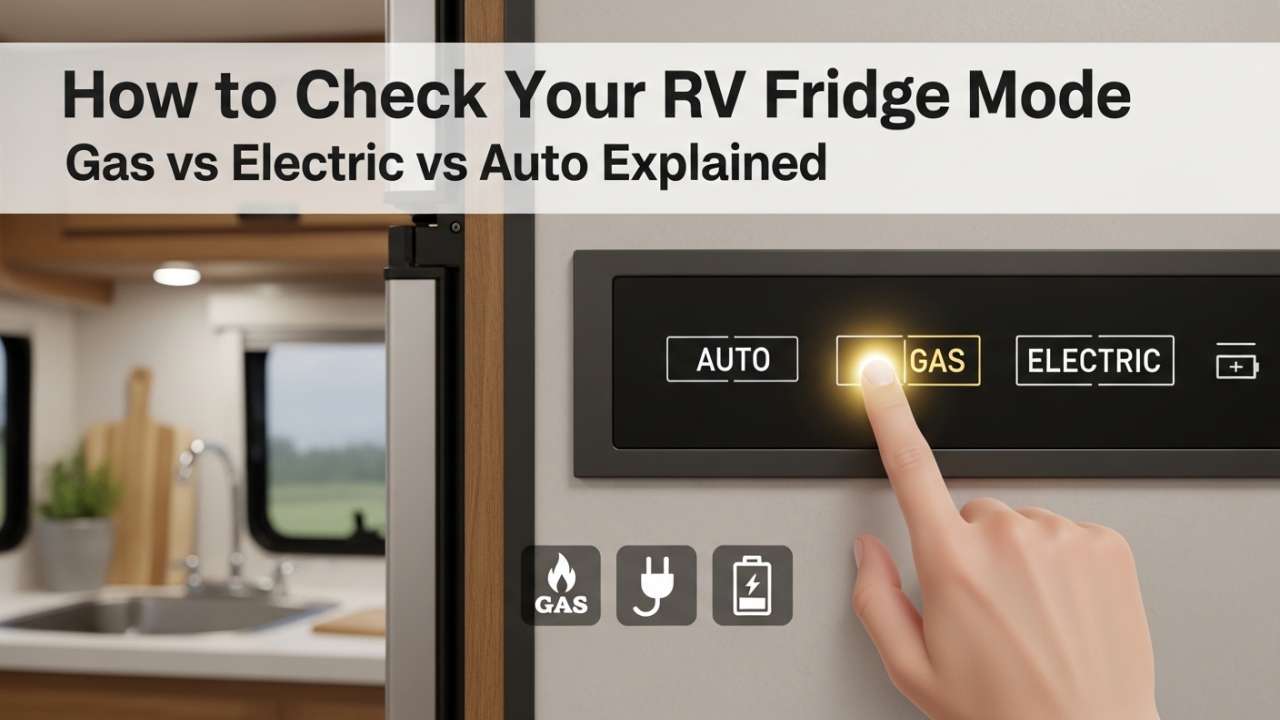
- Look for the access panel on the outside back of your RV (lower down, near ground level)
- Open it up
- You should see the back of your fridge, some tubes, and maybe a small flame
- If you see a tiny blue flame flickering? You’re running on propane
- If you see a heating element (looks like a hot coil or cylinder) glowing? You’re on electric
The magic question: Is only one mode working, or is both broken?
Your answer completely changes what you troubleshoot next.
The Most Common Culprit (And Why It’s So Sneaky)
Here’s what happens 60% of the time:
You plug into shore power. You flip the fridge to electric mode. Nothing happens. The fridge just… doesn’t cool.
But here’s the thing—you probably don’t have a fridge problem. You have a power delivery problem.
Your fridge is hungry for electricity, and it’s not getting fed.
Checklist: Is Power Actually Getting There?
Step 1: Check the outlet itself
Your RV fridge has a dedicated 120-volt outlet, usually located in the lower exterior access panel behind the fridge.
- Go find that outlet
- Plug in a lamp or phone charger
- Does it work?
If yes—power’s there. Move to Step 2.
If no—your outlet is dead. Check your RV’s main electrical panel (usually in a cabinet or underneath). Look for a flipped breaker labeled “Fridge” or “Kitchen.” Flip it back on.
Step 2: Is the power cord actually plugged in?
I’m not being condescending. I promise.
But you’d be amazed how many people troubleshoot their fridge for 2 hours because the cord came unplugged when they were moving stuff around in the back.
Peek behind your fridge. Is that cord actually in the outlet? Really look.
Step 3: Check the RV’s main breaker panel
Even if that dedicated outlet has power, your RV’s main breaker might have tripped.
- Find your RV’s electrical panel (usually under the bed, in a bathroom cabinet, or near the entrance)
- Look for a breaker labeled “Refrigerator,” “Fridge,” or sometimes just “120V Kitchen”
- Is it in the OFF position?
- If yes—flip it back to ON
This is genuinely the #1 fix. I’m serious.
Why Your RV Needs to Be Level (And Why Everyone Gets This Wrong)
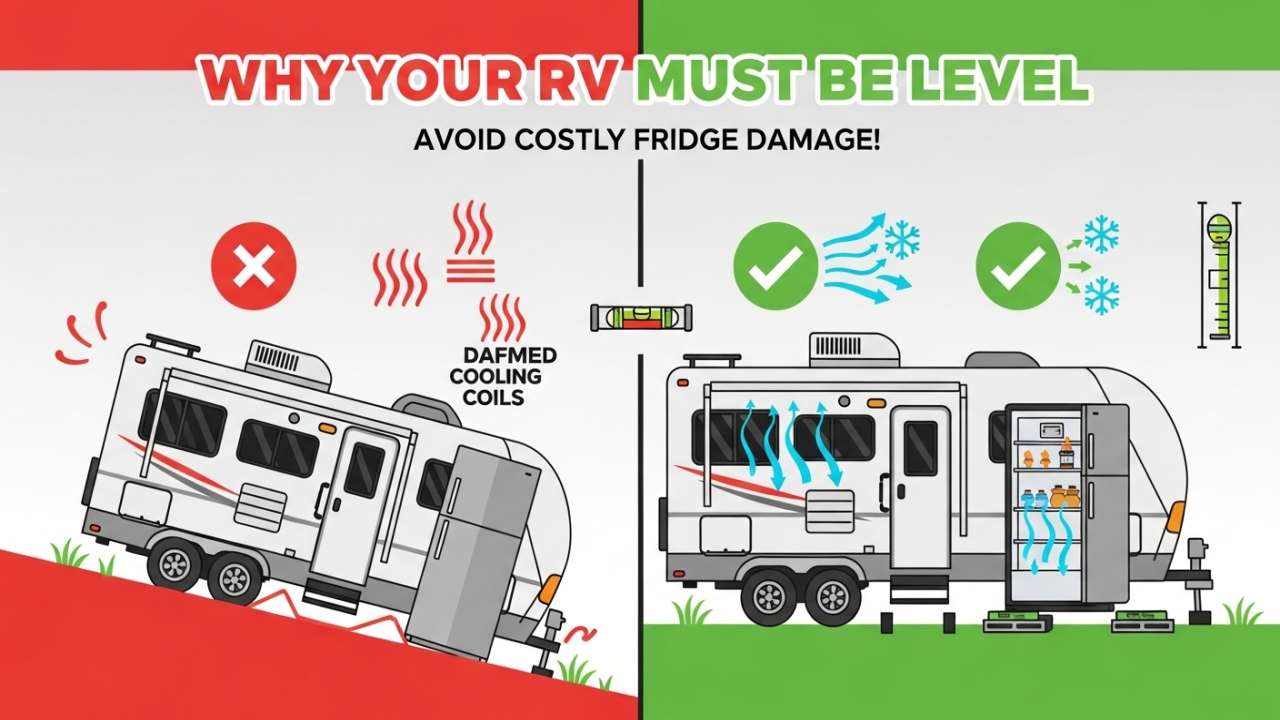
This one baffles people. “Why does the RV need to be level? It’s just a fridge!”
Here’s why:
Those cooling tubes on the back of your fridge? They’re angled on purpose. When your RV is tilted, the ammonia mixture inside the tubes gets thrown off balance. It’s like trying to cook while the kitchen is tilted—things just don’t work right.
The ammonia has to flow through those tubes in a specific way. The gravitational pull needs to be perfect.
How level does your RV need to be?
- Left to right: No more than 3 degrees of tilt
- Front to back: No more than 6 degrees of tilt
- Time limit: Don’t stay unlevel for more than 1-2 hours
Use a simple bubble level (they’re $5 at Home Depot) and check both directions.
The sign that your fridge has been unlevel too long: Sediment buildup in the cooling tubes, which blocks ammonia flow. This is actually serious—it can damage the coils permanently.
If you’ve been parked unlevel for days and your fridge stopped cooling, here’s the old-school trick: Carefully tap the cooling tube assembly with the handle of a screwdriver. Gently. You’re trying to loosen sediment, not crack anything.
If that doesn’t work, some hardcore RVers will disconnect the fridge, flip it upside down for a few days on level ground, and let gravity clear the blockage. (Yes, really.)
Also Read:- Best RV Brands 2026: Class A vs B vs C Motorhomes (Complete Comparison & Buyer’s Guide)
The 120-Volt Heating Element: When It Actually Fails
Let’s say you’ve checked the power. The outlet works. The breaker is on. The RV is level. And still… nothing.
Time to suspect the heating element itself.
How to tell if the heating element is bad:
Go to the exterior access panel behind your fridge. Look for the heating element—it looks like a metal cylinder or coil.
With the fridge switched to electric and turned on:
- Put your hand near (don’t touch—it gets hot) the heating element
- Do you feel heat radiating off it?
If YES: The heating element is working. The problem is elsewhere—probably the cooling unit itself.
If NO: Your heating element is likely dead. This one you’ll need a technician for. The element itself isn’t crazy expensive ($200-400), but labor to replace it can add another $200-400.
Why the heating element dies:
- Age and corrosion (if your RV is old)
- Power surges (if you plug into weird shore power)
- Manufacturing defect (rare, but happens)
- Sediment buildup from years of being parked unlevel (this is the big one)
When It’s Actually The Cooling Unit (The Expensive Problem)
This is the one you hope you don’t have.
If your fridge:
- Has power (you verified it)
- Is level (you checked)
- Has a working heating element (you felt the heat)
- But STILL won’t cool…
…your cooling unit might be compromised.
The signs of a dead cooling unit:
- Ammonia smell (chemical, sharp, unmistakable)
- Yellow-green staining around the burner area or inside the fridge
- Gurgling sounds from the cooling tubes
- Fridge works on one power source but not the other AND you’ve ruled everything else out
If you see yellow staining or smell ammonia, stop. The cooling tubes are likely leaking. The ammonia is escaping, which means the system can’t cool anymore.
This one needs replacement. And it’s not cheap—usually $800-1200 for the cooling unit plus labor.
But here’s the good news: You can get new absorption cooling units from companies like Dometic, Norcold, and others, and they’ll fit most RVs.
Environmental Factors That Mess With Your Fridge (Beyond Just Temperature)
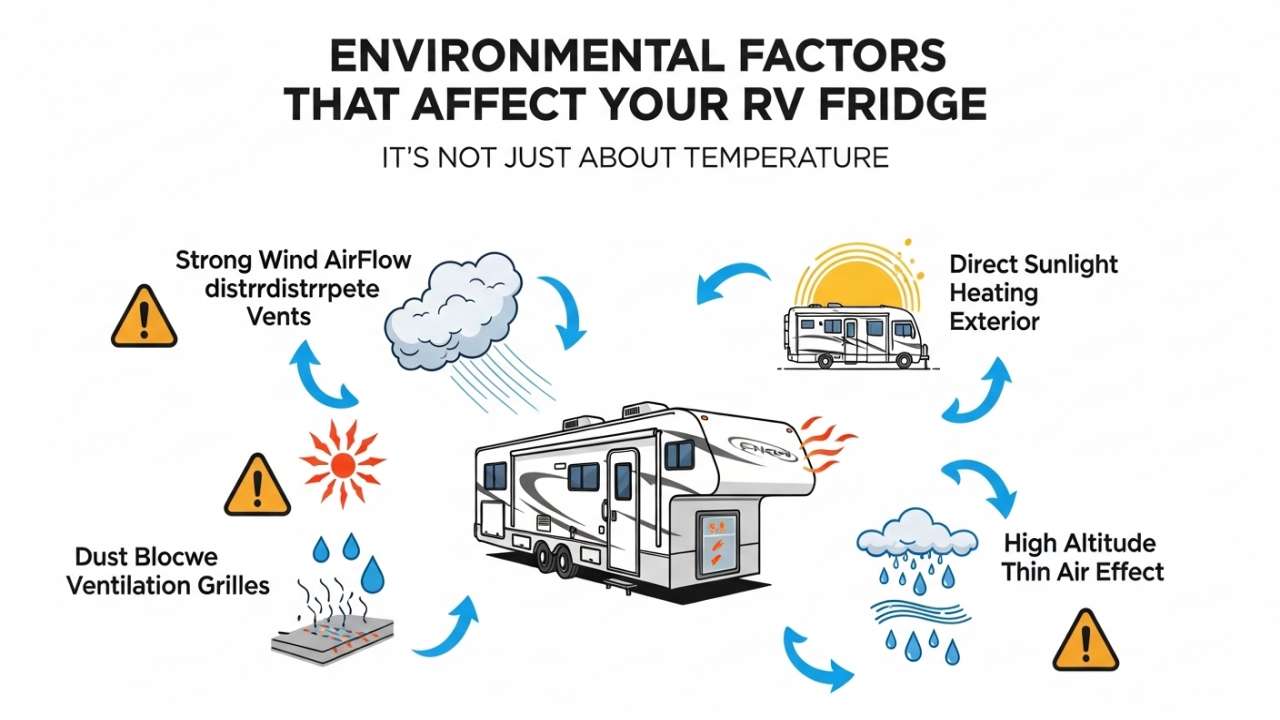
RV fridges are picky. They’re old technology, remember?
Hot weather and poor ventilation
In desert heat, your fridge has to work harder. If the ventilation to the cooling unit is blocked, the ammonia can’t cool properly.
What to check:
- Is the exterior vent on your RV’s roof or side blocked by leaves, dirt, or bird nests?
- Is insulation loose around the back of the fridge?
- Are you parked in direct sun? (Some people strategically park in shade—it helps.)
Some RVers install an evaporator fan behind the fridge opening to increase air circulation. It sounds like overkill, but in hot climates, it genuinely works.
Dirty burner orifice (propane side, but affects electric too)
Even though this is technically a propane issue, the principle applies both ways: if your burner gets clogged with debris, the flame is weak, which means less heat, which means less cooling.
In ultra-severe cases, this affects both modes.
Signs: Weak or quiet flame (if you can see it), fridge takes forever to cool.
Fix: Clean the orifice. Some hardcore DIYers use 40% alcohol (vodka works, weirdly) to clean it out. For the electric side, just make sure the heating element isn’t blocked by dust or debris.
Also Read:- RV Solar Panels: The Ultimate 2026 Guide to Ditching Hookups and Boondocking in Style
The One Thing Everyone Forgets: Give It Time
This is so important I’m going to say it twice.
Absorption fridges are SLOW.
When you first turn on your RV fridge, it can take up to 8 hours to reach full cooling temperature.
Eight hours.
If you just plugged in yesterday and already loaded it with food, it might not be cold enough yet.
The expert tip: Turn your fridge on the day before you load it with food. Let it run overnight. Then pack it in the morning.
Many people don’t do this and think their fridge is broken when it’s just… cold and patient.
Comparison: RV Fridge Issues at a Glance
| Issue | Symptoms | What to Check | Difficulty | Cost |
|---|---|---|---|---|
| No power to outlet | Fridge completely dead | Dedicated outlet, RV breaker | Super easy | Free |
| Breaker tripped | Everything looks right but nothing works | Main electrical panel | Easy | Free |
| RV not level | Slow cooling or no cooling | Bubble level check | Easy | Free |
| Heating element dead | Power works, but no heat radiating from element | Feel heat near element | Medium | $400-800 |
| Cooling coil leak | Ammonia smell, yellow staining | Smell + visual inspection | Medium | $800-1200 |
| Blocked vents | Slow cooling in hot weather | Check roof/side vents | Easy | Free (usually) |
| Clogged burner orifice | Weak flame (if visible) | Inspect burner | Hard | $100-300 |
The Diagnostic Flowchart (What to Check in Order)
Does your RV fridge have power?
├─ No → Check outlet, breaker, power cord
└─ Yes → Move to next question

Is your RV level?
├─ No → Level the RV, wait 30 min
└─ Yes → Move to next question

Does it cool on propane but not electric?
├─ Yes → Check heating element, look for blown fuse
└─ No → Move to next question

Does it NOT cool on either propane or electric?
├─ Check for ammonia smell / yellow staining
├─ Yes to both → Cooling coil leak (needs replacement)
└─ No → Check vents, cooling unit might need pro diagnosis
Pro Tips That Actually Help
1. Temperature monitoring is your friend
Buy a cheap refrigerator thermometer. Your fridge should stay around 34-38°F, and your freezer around 0-10°F.
If temperatures are way off even when it’s running, that tells you something’s wrong with cooling capacity.
2. Don’t assume the worst
Before calling a technician (which can cost $100-200 just for a house call), try the simple fixes. Seriously.
80% of the time, it’s a tripped breaker or the RV not being level.
3. Propane vs. electric: Use strategically
- Boondocking (no shore power)? Run on propane
- Plugged into shore power? Run on electric (it’s cheaper)
- Both available? Electric is usually more efficient
4. Preventive maintenance
- Keep the exterior vent clean
- Check the RV is level before moving
- Let the fridge cool 8 hours before loading food
- Don’t let it run unlevel for extended periods
5. Document everything
If you do call a technician, tell them:
- Which power source works (if any)
- What the fridge is doing (no cooling, slow cooling, etc.)
- How long you’ve been parked unlevel (if applicable)
- When you last maintained it
This saves troubleshooting time and money.
Also Read:- Cheap Solar System in Nigeria 2026: Complete Guide to Beat Blackouts Without Breaking the Bank
When to Call a Professional (And When You’re Just Wasting Money)
Call a tech if:
- You smell ammonia or see yellow staining
- The heating element isn’t working (no heat)
- You’ve eliminated power/level/vent issues and it still won’t cool
- You hear a gurgling sound and suspect a blockage
Don’t call a tech if:
- You haven’t checked the breaker yet
- Your RV isn’t level
- It’s been less than 8 hours since you turned it on
- You haven’t tested the outlet with another appliance
Seriously, “the breaker was tripped” is probably 30% of service calls. Save yourself $150.
FAQ:
Q: Why does my fridge work on propane but not electric?
A: The heating element (the electric heat source) is likely broken, or power isn’t reaching it. The cooling unit is fine—you’d know if it wasn’t (ammonia smell, yellow stains). Check the power outlet, breaker, and power cord first. If all three are good, the heating element itself might be dead.
Q: Can I use my fridge while driving?
A: Not recommended. The vibration and tilting can throw off the cooling process and, over time, damage the coils. Most RVers turn off the fridge while traveling and turn it back on once parked and leveled. Some new RVs have compressor-style fridges that are more driving-friendly, but older absorption fridges? Better safe than sorry.
Q: How long should an RV fridge last?
A: With good maintenance, absorption fridges last 10-15 years. Some go 20. The cooling unit is the limiting factor. If you keep it level, well-ventilated, and don’t park unlevel for extended periods, you’re golden.
Q: My fridge is making a gurgling sound. Is it broken?
A: Not necessarily broken, but something’s wrong. Could be normal ammonia circulation, or could be sediment that’s been loosened. If it’s accompanied by ammonia smell or yellow staining, call a tech. If it’s just noise, monitor it closely and be ready to act.
Q: Can I replace the heating element myself?
A: If you’re handy with basic electrical stuff and have decent tools, maybe. But honestly? It’s a $200-300 part on a $1000+ appliance. If you mess it up, you’re replacing the whole fridge. Most people pay a tech to do it.
Q: Should I leave my fridge on all the time?
A: Not necessary. Absorption fridges are sealed systems—they’re fine being off for days or weeks. Just make sure you clean the vent before restarting it (no mouse nests, bird nests, etc.).
Q: Why is my freezer cold but the fridge isn’t?
A: This usually means reduced cooling capacity. Cold flows from the freezer to the fridge. If the fridge isn’t cold enough, the freezer is hogging all the available cooling. Could be a power issue, ventilation, or the cooling unit is starting to fail. Check all the basics first—power, level, vents—then consider professional diagnosis.
Q: What’s the difference between a 2-way and 3-way fridge?
A: 2-way runs on 120V AC or propane. 3-way runs on 120V AC, propane, OR 12V DC (coach battery). If you’re boondocking with a dead battery, a 2-way won’t work on DC. But 3-way gives you that backup option.