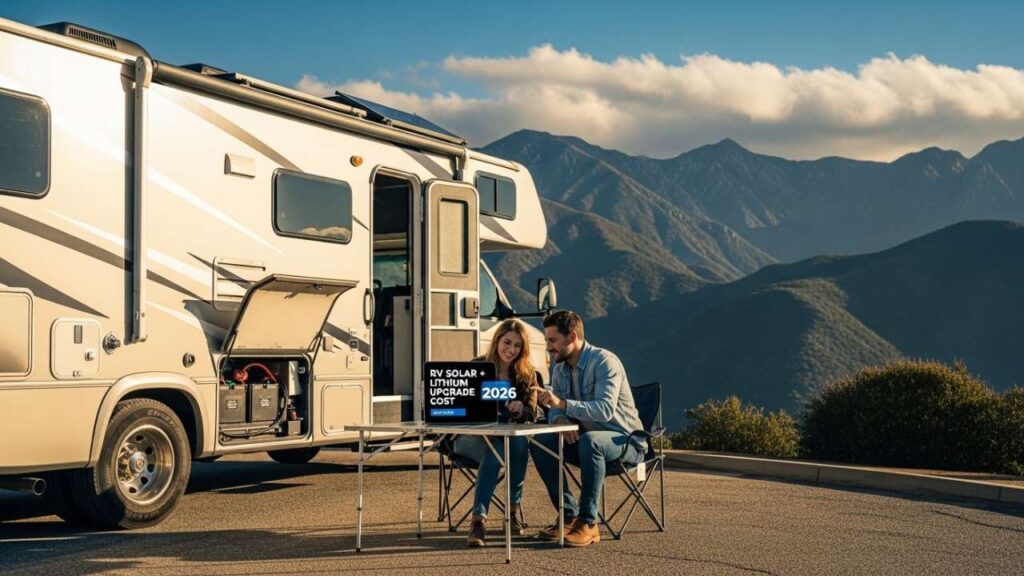
Imagine pulling your RV into a quiet spot along the Pacific Coast Highway at sunset. Waves crash below, stars fill the sky above, and you flip on the lights, fridge, and even the AC without firing up a noisy generator. No more rationing power or waking up to dead batteries.
That freedom is exactly why thousands of California RVers are upgrading to solar + lithium right now. But here’s the question everyone asks first: How much does it actually cost in California in 2026?
I dug into the latest quotes from shops across the state (Lodi to the Bay Area to SoCal), real owner experiences, and current pricing trends. The short answer? A basic lithium swap starts around $2,000–$4,500 installed. A full solar + lithium system that lets you boondock for days (or weeks) runs $5,000–$14,000.
The long answer? It depends on your RV size, how much off-grid time you want, and whether you DIY or hire a pro. But the payoff is huge—especially in sunny California, where you get 250–300+ days of solar potential per year. Let’s break it down so you can decide if it’s worth it for your adventures
Why California RVers Are Switching to Solar + Lithium Right Now

Lead-acid batteries (the old standard) only give you 50% usable power before they die fast. Lithium (LiFePO4) delivers 95–100% usable capacity, lasts 3,000–5,000 cycles (10–15+ years), charges faster, and weighs a fraction as much.
Pair that with solar panels and you’re tapping into California’s sunshine for free power. No more $8–15 daily generator fuel costs or campsite hookups at $60–$100/night. Many owners report breaking even in 2–4 years through fuel savings and resale value boosts of $5,000–$12,000.
Plus, with Starlink, remote work, and full-time boondocking exploding in places like Joshua Tree, Big Sur, and the Sierras, lithium + solar is no longer a luxury—it’s the new baseline for comfortable California RV life.
Also Read: – Cheapest RVs Under $30,000 That Won’t Destroy You Financially
Real 2026 Cost Breakdown: What You’ll Actually Pay in California
California labor rates and permitting push install costs 20–40% higher than the national average, but the state’s solar-friendly climate means your system pays for itself faster here than almost anywhere else.
Here’s a clear comparison table based on current 2026 quotes from California RV specialists:
| System Type | Battery Capacity | Best For |
|---|---|---|
| Basic Lithium Swap | 200–400Ah | Weekend campers, occasional boondocking |
| Moderate Solar + Lithium | 400–600Ah | 2–5 days off-grid, full-time couple |
| Heavy Off-Grid Setup | 800–1,600Ah | Weeks off-grid, AC, Starlink, work |
Solar Panels & Costs
| System Type | Solar Panels | Installed Cost (CA Labor) / Parts Cost |
|---|---|---|
| Basic Lithium Swap | None (use existing) | $1,200–$2,800 parts / $2,000–$4,500 installed |
| Moderate Solar + Lithium | 400–800W | $3,500–$6,500 parts / $5,000–$9,000 installed |
| Heavy Off-Grid Setup | 1,000–2,000W | $8,000–$13,000 parts / $10,000–$18,000 installed |
Also Read: 7 Types of RV Awnings [2026 Guide] – Which One Saves You Thousands?
Lithium vs. Lead-Acid: Side-by-Side Reality Check
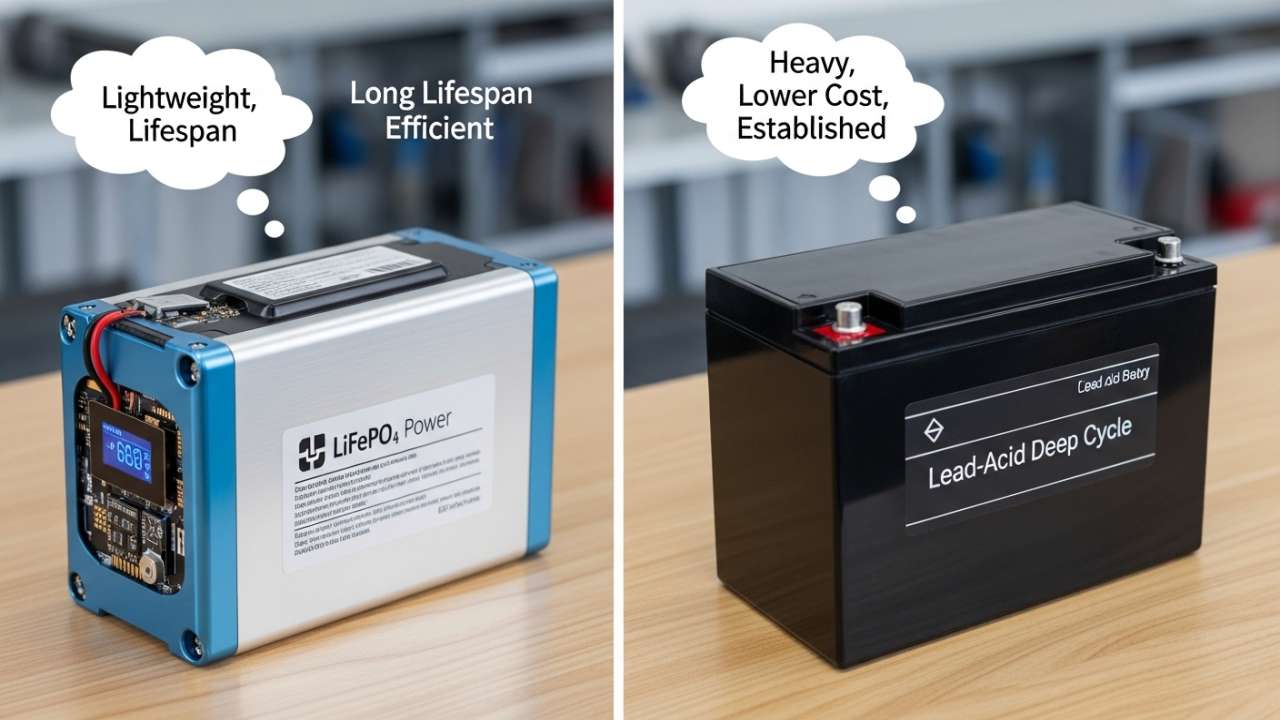
Still on the fence? Check this no-fluff comparison:
| Feature | Lead-Acid (AGM/Gel) | Lithium (LiFePO4) | Winner for CA RVers |
|---|---|---|---|
| Usable Capacity | ~50% | 95–100% | Lithium |
| Lifespan (cycles) | 300–500 | 3,000–5,000+ | Lithium (10x longer) |
| Weight (400Ah bank) | 250–400 lbs | 70–150 lbs | Lithium (huge for towing) |
| Charge Time | 8–12 hours | 1–3 hours | Lithium |
| Cold Weather Performance | Poor below 32°F | Excellent with heater | Lithium (with CA mountain trips) |
| Upfront Cost | Lower | 2–3x higher | Lead-acid short-term |
| 5-Year Total Cost | Higher (replacements + fuel) | Lower (savings add up) | Lithium |
Step-by-Step: How to Upgrade Your RV (DIY or Pro)
1. Assess your power needs – Track usage for a weekend (fridge, lights, Starlink, etc.). Most couples need 200–400Ah minimum. 2. Choose components – Go for name-brand LiFePO4 (Battle Born, Epoch, or Renogy) with built-in Bluetooth BMS. Add Victron or Renogy MPPT controller and pure sine inverter. 3. Size solar correctly – California’s sun is strong: 400W often produces 1.6–3.2 kWh daily. Aim for 1.2–1.5x your daily needs. 4. Install safely – Lithium needs proper fusing, wiring, and ventilation. Many shops recommend a heat pad for mountain or winter trips. 5. Test and monitor – Add a smart shunt (Victron BMV or similar) so you can watch everything from your phone.
DIY saves $1,500–$6,000 but requires electrical know-how. Most California owners go pro for warranty peace of mind and code compliance.
Also Read:- RV Refrigerator Not Cooling on Electric: The Complete Troubleshooting Guide That Actually Works
Hidden California Perks (and a Few Gotchas)
- Sunshine advantage: NREL data shows California ranks among the top states for solar production—your panels work harder here.
- Possible tax incentives: Some RVs qualify as secondary residences for federal or state solar credits (check with a tax pro).
- Higher labor – Expect $150–$250/hour in CA shops, but quality installers in Lodi, Fairfield, or the Bay Area know RV solar inside out.
- Resale boost – Buyers pay premium for turnkey lithium + solar setups.
For the latest incentive database, see the Database of State Incentives for Renewables & Efficiency (DSIRE). And run your exact solar production numbers with the free NREL PVWatts calculator.
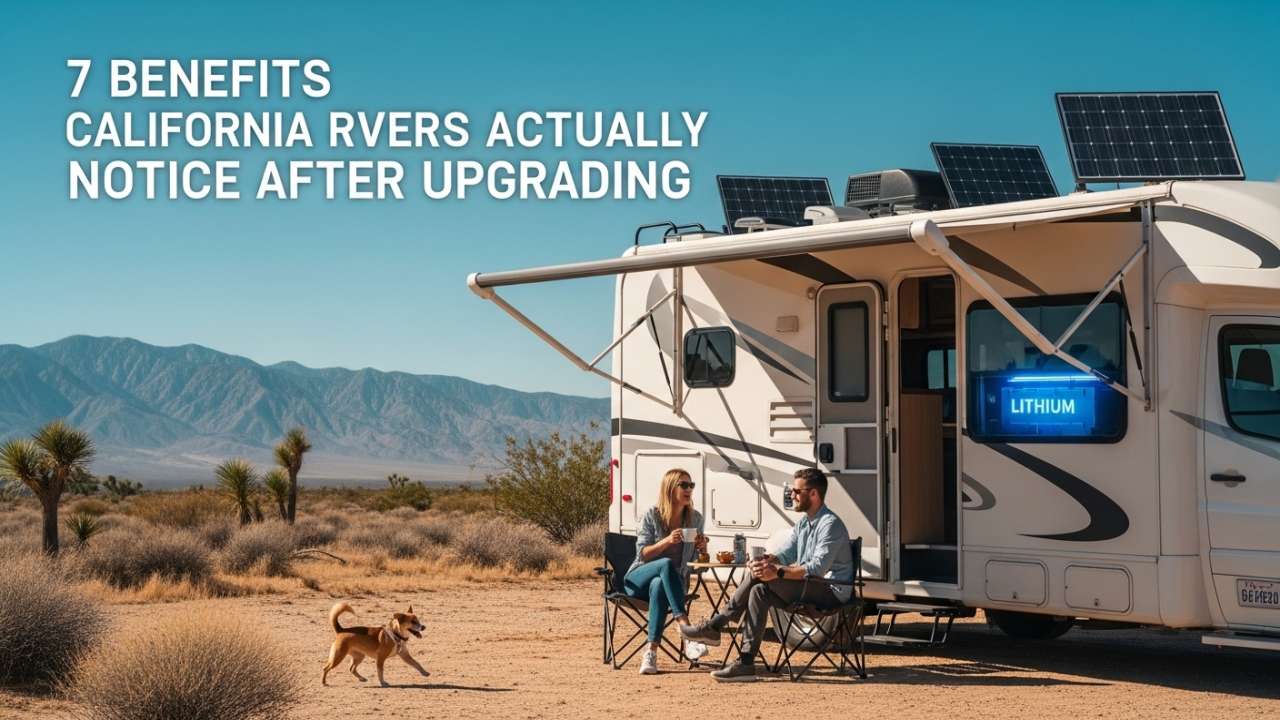
7 Benefits California RVers Actually Notice After Upgrading
- Wake up with full power every morning—no generator rumble.
- Run AC, microwave, or CPAP all night on lithium + solar.
- Save $2,000–$5,000/year on fuel and campsites.
- Tow easier with hundreds of pounds less battery weight.
- Quiet, clean boondocking in noise-sensitive areas like state parks.
- Phone app monitoring means no more guessing.
- Higher resale value when you sell or trade.
How much does a full RV solar + lithium upgrade cost in California in 2026? Basic lithium swap: $2,000–$4,500 installed. Full solar + lithium: $5,000–$14,000 (most common sweet spot is $7,000–$9,000 for moderate off-grid).
Is it worth upgrading an older RV? Yes—especially if you boondock often. Many 5–10-year-old RVs get a complete power makeover for under $8,000 and feel brand new.
Do I need special permits in California? Usually not for mobile RVs, but check local county rules if you’re doing major roof work or permanent wiring.
How long until I make my money back? 2–4 years for most California owners through fuel/campsite savings alone.
What about cold weather in the Sierras or mountains? Lithium needs a self-heating pad below 32°F—budget $200–$400. Many 2026 batteries include this.
Can I DIY the entire upgrade? Yes for basic-to-moderate systems if you’re comfortable with 12V wiring. Complex AC or 2,000W+ inverters? Hire a pro.