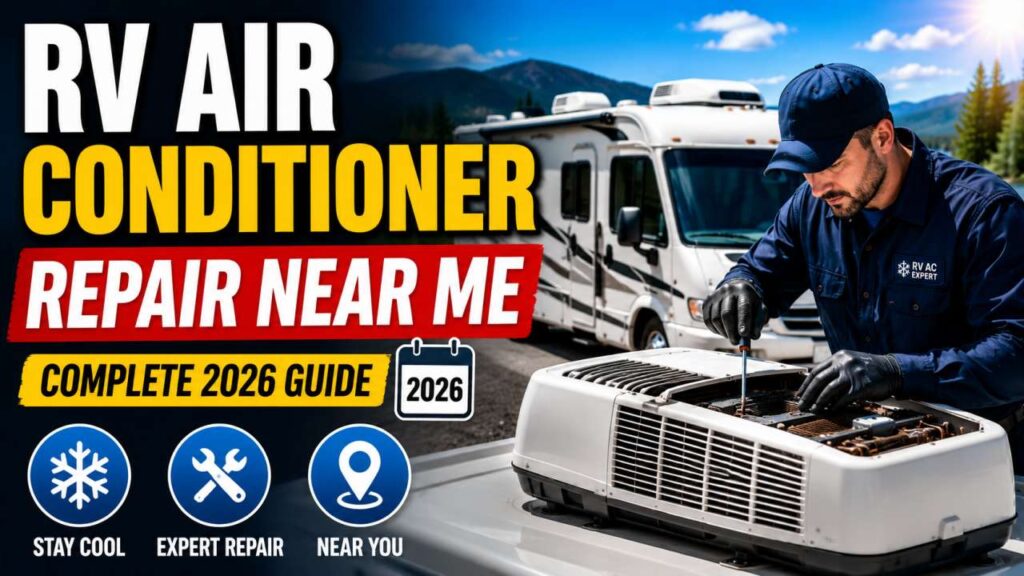
Nothing ruins a road trip faster than climbing into your RV after a long drive and realizing the air conditioner is blowing warm air instead of cold. Whether you’re parked at a campground in July or hauling through a desert highway, a broken RV AC unit isn’t just uncomfortable — it can turn a relaxing getaway into a stressful ordeal.
If you’ve typed “RV air conditioner repair near me” into Google, you’re probably dealing with one of these situations: strange noises coming from the rooftop unit, weak airflow, water dripping inside the cabin, or the AC not turning on at all. The good news is that most RV air conditioner problems have clear causes, and knowing what to look for can save you both time and money before you even call a technician.
This guide walks you through everything you need to know — from spotting early warning signs to choosing a trustworthy local repair service, understanding realistic repair costs, and maintaining your unit so it lasts for years. Whether you own a Dometic, Coleman Mach, or Advent rooftop AC, the fundamentals of diagnosis and repair remain largely the same.
Key Highlights
- RV air conditioners typically last 8 to 12 years with proper maintenance
- Common issues include capacitor failure, refrigerant leaks, clogged filters, and fan motor problems
- Average RV AC repair cost ranges from $150 to $600, depending on the issue
- Mobile RV repair technicians can often diagnose and fix problems on-site, saving a trip to a shop
- Regular filter cleaning and rooftop inspection can prevent most avoidable breakdowns
- Always check technician certifications (like RVIA or RVTAA) before hiring
Common RV Air Conditioner Problems and Likely Causes
| Symptom | Likely Cause | Repair Urgency |
|---|---|---|
| AC not turning on | Blown fuse, tripped breaker, faulty thermostat | High |
| Weak or warm airflow | Dirty filter, low refrigerant, blocked condenser coils | Medium |
| Loud rattling or grinding noise | Worn fan motor, loose blower wheel | Medium |
| Water leaking inside RV | Clogged drain pan, damaged gasket seal | High |
| AC runs but doesn’t cool | Faulty compressor, refrigerant leak | High |
| Frequent shutoffs | Failing capacitor, overheating unit | Medium |
| Musty smell from vents | Mold or mildew buildup in ducts | Low to Medium |
How RV Air Conditioners Work (And Why They Fail Differently Than Home ACs)
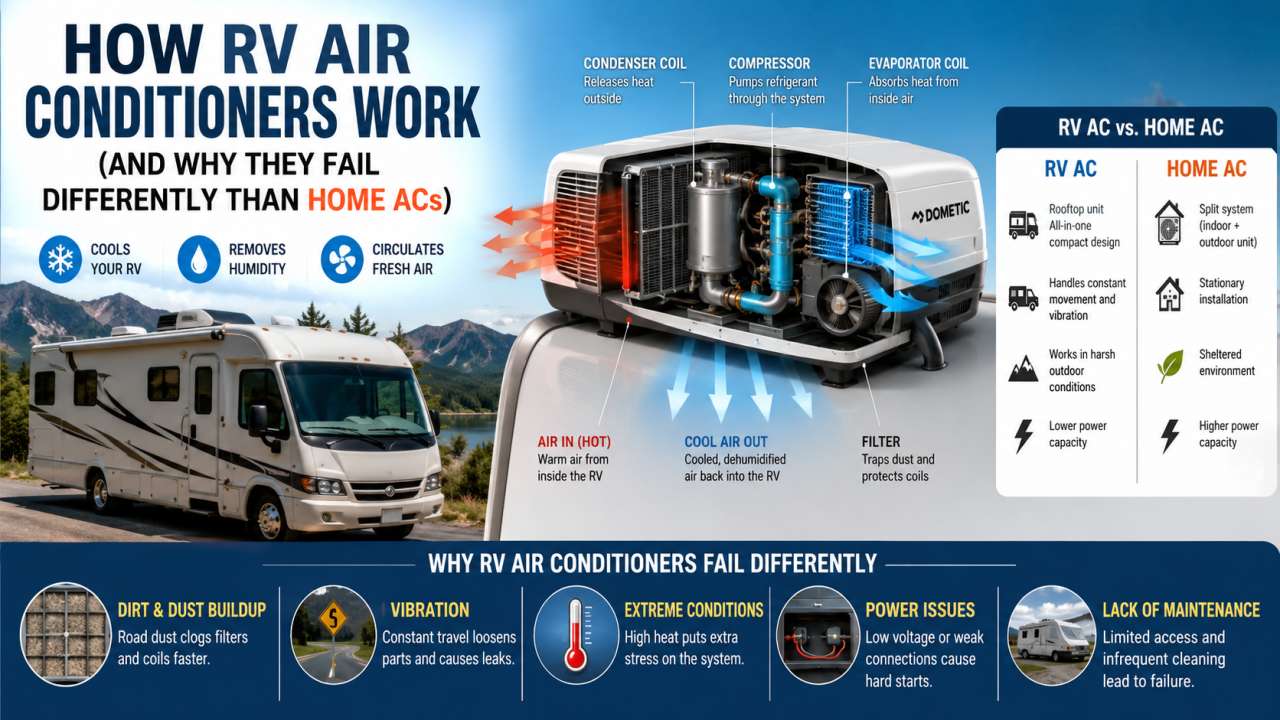
Most RVs use rooftop air conditioning units rather than the split systems found in homes. These units combine the compressor, condenser, evaporator coils, and fan all into one compact housing mounted directly on the roof.
Because everything is packed into a single unit exposed to vibration, road debris, and weather, RV air conditioners face wear patterns that home units rarely experience. Vibration from driving loosens electrical connections over time. UV exposure degrades the plastic shroud covering the unit. And limited airflow clearance means dust and debris build up faster.
Understanding this helps explain why RV AC repair often involves different diagnostic steps than a typical home HVAC service call — and why not every home AC repair company is equipped to handle rooftop RV units properly.
Common Signs Your RV Air Conditioner Needs Repair
1. The Unit Won’t Start
If your RV AC doesn’t respond at all when you turn it on, start with the basics: check your circuit breaker, RV power source, and thermostat settings. If those are fine, the issue is likely an internal electrical fault or a failed start capacitor.
2. It Runs But Doesn’t Cool
This is one of the most common complaints technicians hear. It usually points to either a refrigerant leak, a failing compressor, or condenser coils blocked with dirt and leaves. This type of problem rarely resolves on its own and typically needs professional attention.
3. Unusual Noises
A grinding or rattling sound often means the fan blade or blower wheel has come loose or is hitting the housing. Left unaddressed, this can damage the motor entirely, turning a simple fix into a full unit replacement.
4. Water Dripping Inside the RV
This is almost always caused by a clogged condensate drain or a cracked gasket around the roof mount. It’s a moisture problem, not necessarily a cooling problem, but it should be fixed quickly to avoid water damage to your ceiling and interior panels.
5. Higher Energy Usage With Less Cooling
If your generator or shore power seems to be working harder while the RV stays warmer than usual, it’s a sign the compressor is straining — often due to low refrigerant or a failing motor.
DIY Troubleshooting vs Professional RV AC Repair
Not every issue requires calling a technician. Some problems are safe and simple enough to check yourself before searching for “RV air conditioner repair near me.”
DIY Troubleshooting vs Professional Repair
| Task | Can You DIY? | Notes |
|---|---|---|
| Cleaning or replacing air filter | Yes | Simple 10-minute task, do monthly |
| Checking circuit breaker/fuse | Yes | No tools required |
| Clearing debris from rooftop unit | Yes | Use gloves, avoid damaging fins |
| Tightening loose panel screws | Yes | Prevents vibration-related wear |
| Refrigerant recharge | No | Requires certified HVAC technician |
| Compressor replacement | No | Needs specialized tools and training |
| Electrical/capacitor repair | No | Risk of shock; leave to professionals |
| Full unit replacement | No | Requires roof sealing expertise |
Practical tip: Before booking a repair appointment, clean the filter and check your breaker box. Roughly 1 in 5 “AC not working” service calls turn out to be a simple filter or power issue — and fixing it yourself can save you an unnecessary service fee.
How to Find the Best RV Air Conditioner Repair Near Me
What to Look for in a Local Repair Service
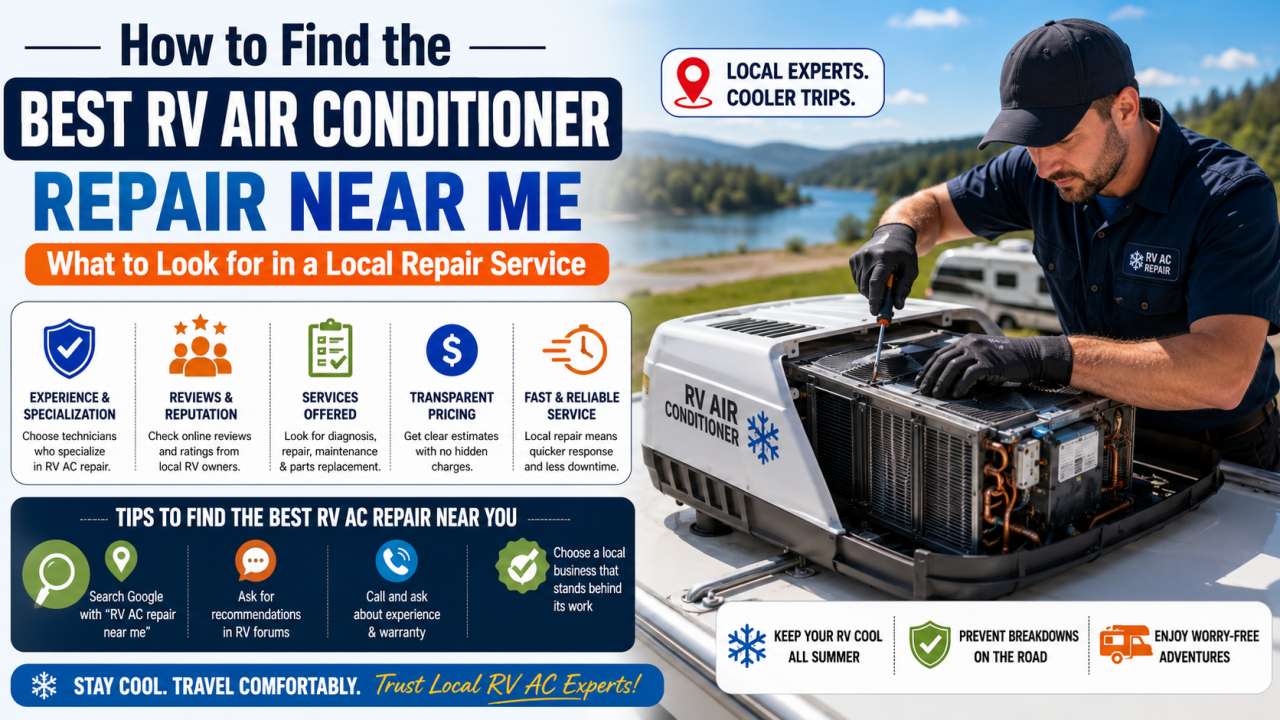
When searching for RV air conditioner repair near me, not all repair shops are created equal. Look for these signs of a trustworthy provider:
- RV-specific experience — not just general HVAC or home AC repair
- Mobile repair availability — especially useful if you’re at a campground or on the road
- Transparent pricing — a diagnostic fee should be clearly stated upfront
- Manufacturer familiarity — technicians who understand Dometic, Coleman Mach, Advent, and Atwood systems
- Positive recent reviews — focus on reviews from the last 6–12 months, not just overall star rating
Questions to Ask Before Hiring a Technician
- Do you specialize in RV rooftop AC units, or general HVAC?
- Is there a diagnostic fee, and is it credited toward the repair cost?
- Do you carry common replacement parts on your service vehicle?
- Can you come to my location, or do I need to bring the RV in?
- What warranty do you offer on parts and labor?
Asking these questions upfront prevents surprise charges and ensures you’re hiring someone genuinely qualified to work on RV systems — not just a general appliance repair technician.
Mobile RV AC Repair vs Shop-Based Repair
Mobile repair services have become increasingly popular, especially for RV owners who are traveling or parked at a campsite without easy access to a repair shop. A mobile technician can often diagnose electrical issues, replace capacitors, and even swap out fan motors on-site.
However, more complex repairs — like a full compressor replacement or major refrigerant system work — may still require shop-level equipment. If a mobile technician tells you the unit needs to go to a shop, it’s usually because the repair requires equipment that can’t be transported easily, not because they’re trying to upsell you.
Average RV Air Conditioner Repair Costs (Estimated)
| Repair Type | Estimated Cost Range |
|---|---|
| Diagnostic/service call fee | $50 – $150 |
| Capacitor replacement | $100 – $250 |
| Fan motor replacement | $150 – $350 |
| Refrigerant recharge (if applicable) | $200 – $450 |
| Compressor replacement | $400 – $900 |
| Full unit replacement (parts + labor) | $700 – $1,800 |
| Gasket/seal replacement | $100 – $300 |
Note: Prices vary by region, RV size, and unit brand. Always get a written estimate before authorizing repair work.
Also Read:- Best RV Antifreeze Australia (2026): Top Products & Buying Guide
Preventive Maintenance Tips to Avoid Costly Repairs
Prevention is almost always cheaper than repair. A few simple habits can significantly extend the life of your RV air conditioner:
- Clean or replace the filter monthly during heavy use season
- Inspect the roof gasket twice a year for cracks or gaps
- Run the AC periodically, even in off-season months, to keep components lubricated
- Clear debris like leaves and pine needles from around the unit after driving through wooded areas
- Check for loose screws or panels after long drives, since road vibration loosens hardware over time
- Schedule an annual professional inspection, ideally before peak summer travel season
Following this routine can help many RV owners avoid at least one or two repair calls per year, based on common maintenance patterns reported across RV service centers.
Troubleshooting by Popular RV AC Brands
Different manufacturers have slightly different quirks. Knowing your brand can help you describe the problem accurately when you call a technician — and sometimes even identify the issue yourself.
Dometic Rooftop Units
Dometic units are among the most common in travel trailers and motorhomes. A frequent complaint is the unit cycling on and off rapidly, which is often traced back to a failing thermostat sensor rather than the compressor itself. Dometic units also tend to show error codes on digital thermostats, which can speed up diagnosis significantly.
Coleman Mach Units
Coleman Mach ACs are known for being durable but noisy as they age. A sudden increase in noise, especially a high-pitched whine, usually signals the blower motor bearings are wearing out. Replacing the motor early, before it seizes completely, is usually cheaper than waiting for a full breakdown.
Advent Air Units
Advent units are newer to the market and use a slightly different control board design. Owners sometimes experience connectivity issues between the unit and app-based thermostats. Before assuming a hardware failure, it’s worth resetting the control board and checking for firmware updates.
Regardless of brand, always mention the model number when calling a repair service — it helps technicians bring the correct replacement parts on their first visit, saving you a second appointment.
Also Read:-Stauber Forty 950: The Ultra-Rare Luxury Motorhome That Redefines Custom RV Living
Seasonal Preparation: Getting Your RV AC Ready for Summer Travel
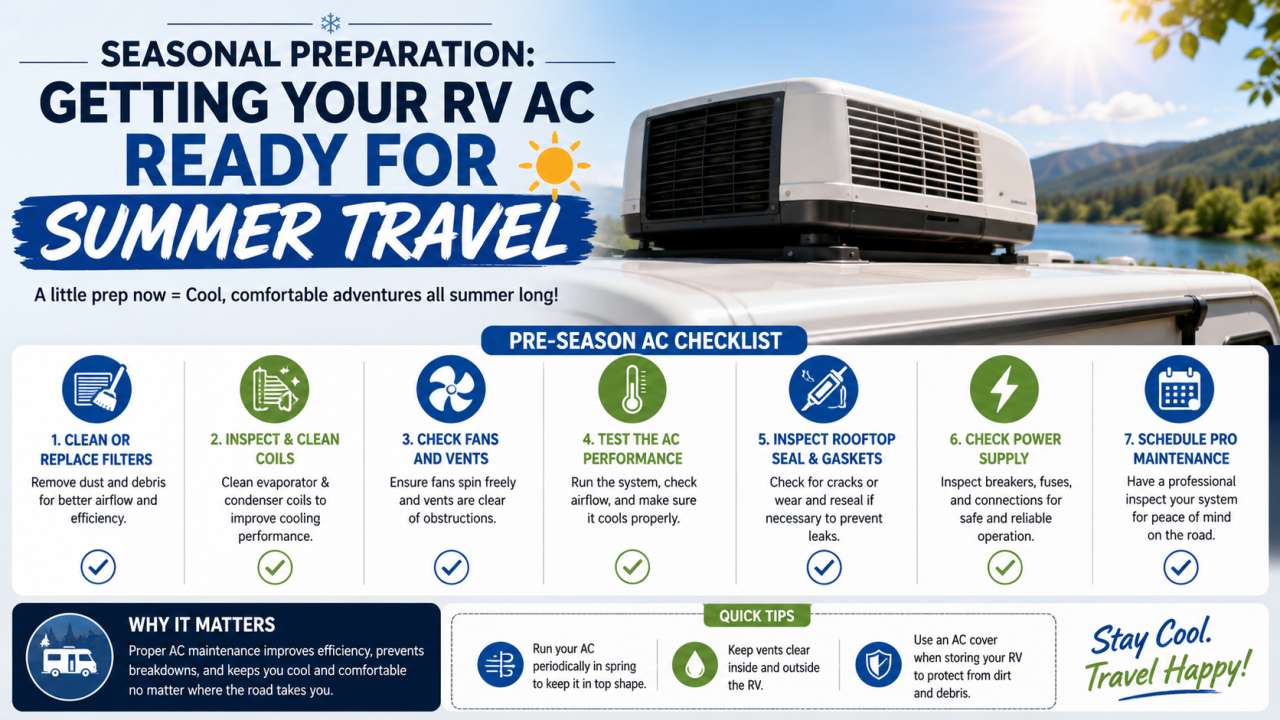
Many repair calls spike in the first few weeks of summer simply because units sat unused all winter. A short pre-season check can catch small issues before they turn into a breakdown on the road.
- Two to three weeks before your first trip, turn on the AC and let it run for at least 30 minutes to confirm consistent cooling
- Listen for unusual sounds during startup, since components can stiffen or shift during storage
- Check the roof gasket and caulking for cracks caused by winter freeze-thaw cycles
- Clean the filter thoroughly, even if it looks lightly used, since dust settles during storage
- Test the thermostat across different settings to confirm accurate temperature readings
Doing this a few weeks in advance — rather than the night before a trip — gives you time to book a repair appointment if something’s wrong, instead of scrambling last minute during peak season when technicians are booked solid.
Understanding What Affects Local Repair Pricing
The cost of RV air conditioner repair near you can vary more than people expect, and it’s not always about the technician overcharging. Several real factors influence pricing:
- Regional labor rates — coastal and high-cost-of-living areas typically charge more per hour
- Part availability — brand-specific parts that need to be ordered can add both cost and wait time
- Unit accessibility — a unit mounted awkwardly or requiring roof reinforcement work takes longer to service
- Emergency or same-day service — expect a premium for urgent scheduling, especially on weekends
- Mobile vs shop service — mobile convenience sometimes carries a modest travel fee, though it saves you the hassle of towing or driving to a shop
Getting quotes from two or three local providers before committing is a reasonable step, especially for repairs estimated above $300. Reputable technicians won’t hesitate to explain their pricing breakdown.
Energy Efficiency Tips That Reduce Strain on Your RV AC
A unit that’s overworked fails faster. Simple efficiency habits reduce wear and can lower the frequency of repairs over time.
- Use reflective window covers during peak sun hours to reduce the cooling load
- Run vent fans alongside the AC to help circulate air more evenly
- Park with shade in mind when possible, since direct roof sun exposure significantly increases compressor workload
- Avoid setting the thermostat extremely low, since a smaller temperature gap between outside and inside air reduces strain
- Insulate windows and door seals to prevent cool air from escaping, which forces the unit to run longer than necessary
These habits won’t fix an existing mechanical problem, but they meaningfully reduce the everyday stress on your system, which extends its working life.
When to Repair vs When to Replace Your RV AC Unit
If your unit is under 5 years old and the repair cost is under $300, repair is almost always the better financial choice. However, if your AC is older than 8–10 years and facing a compressor or major electrical failure, it’s often more cost-effective to replace the entire rooftop unit rather than sink money into an aging system.
A simple rule many technicians use: if the repair cost exceeds 50% of a new unit’s price, replacement usually makes more long-term sense.