Every autumn, RV owners face the same question: is my rig actually ready for freezing temperatures?
It’s an easy thing to overlook. You park the RV for the season, the mercury drops overnight, and suddenly a cracked pipe or a burst water pump turns into a repair bill you didn’t budget for. That single oversight — skipping RV antifreeze — is one of the most common (and most preventable) mistakes new owners make.
This guide breaks down exactly what RV antifreeze is, how it’s different from the coolant in your car’s engine, which products are worth buying, and how to winterise your water system the right way. Whether you’re prepping a travel trailer for its first winter in storage or you’ve done this a dozen times and just want a refresher, you’ll find practical, no-fluff answers here.
Key Highlights
- RV antifreeze is non-toxic and made from propylene glycol — completely different from the ethylene glycol used in engine coolant.
- It protects freshwater lines, the water heater, the pump, and holding tanks from freeze damage.
- Most rigs need 2 to 4 gallons, depending on size and whether you bypass the water heater.
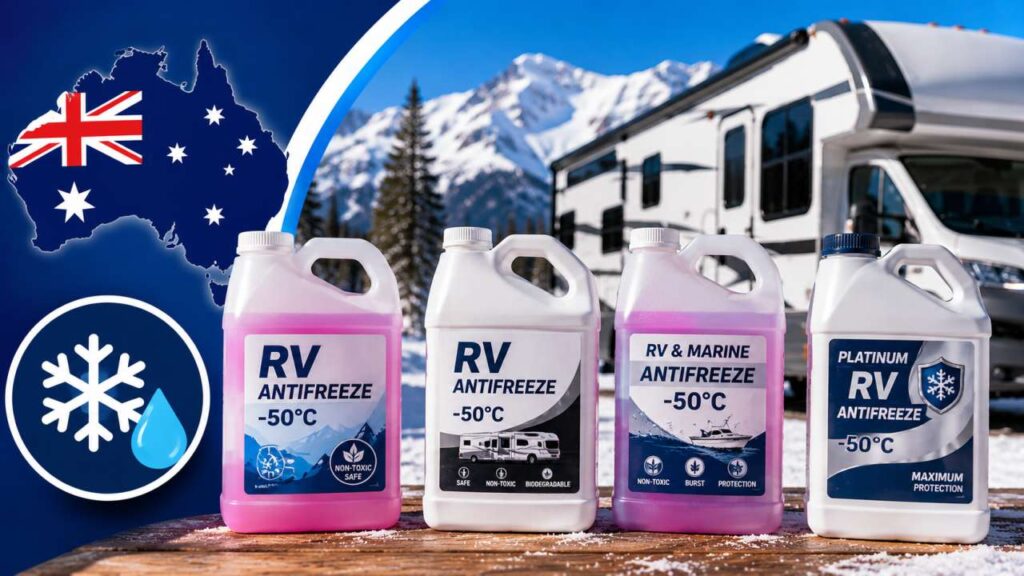
- Popular, well-reviewed brands include Splash RV & Marine Antifreeze, Prestone, Camco, RecPro, and Star Brite.
- Using engine antifreeze in your water system is dangerous — always check the label before pouring anything into your lines.
What Is RV Antifreeze?
RV antifreeze is a ready-to-use fluid designed specifically to protect the plumbing inside a recreational vehicle from freezing.
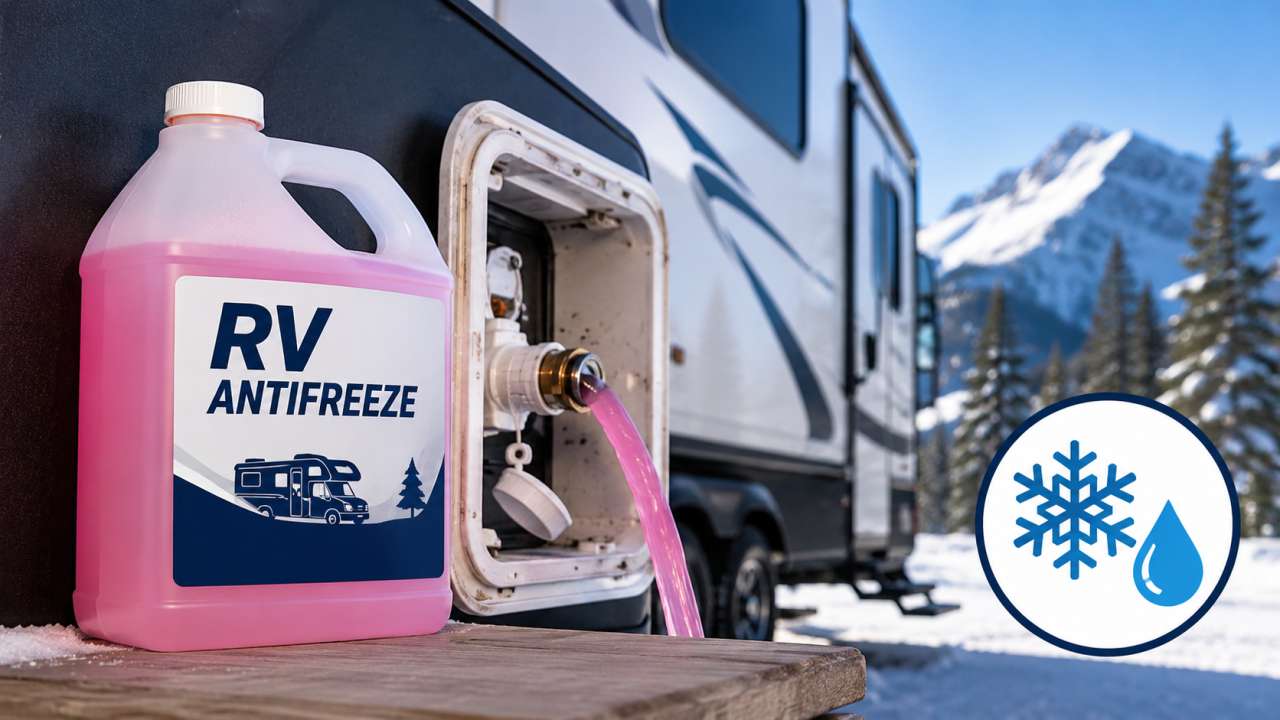
It’s not the same product you’d pour into your car’s radiator. Automotive antifreeze contains ethylene glycol, which is toxic if ingested. RV antifreeze, on the other hand, is typically made from propylene glycol, a food-safe compound that’s approved for use in systems that carry drinking water.
RV Antifreeze vs. Engine Antifreeze
Confusing the two is more common than you’d think, and it’s a mistake worth avoiding entirely.
| Feature | RV Antifreeze | Engine Antifreeze |
|---|---|---|
| Main Ingredient | Propylene glycol | Ethylene glycol |
| Toxicity | Non-toxic | Toxic to humans and pets |
| Used In | Freshwater lines, tanks, and water pump | Engine cooling system |
| Typical Color | Pink | Green, Orange, or Yellow |
| Safe for Drinking Water Systems | ✅ Yes | ❌ Never |
If engine antifreeze accidentally ends up in your RV’s water lines, don’t use that system until it’s been fully flushed and, ideally, inspected. This isn’t a case where “close enough” applies.
When Should You Use RV Antifreeze?
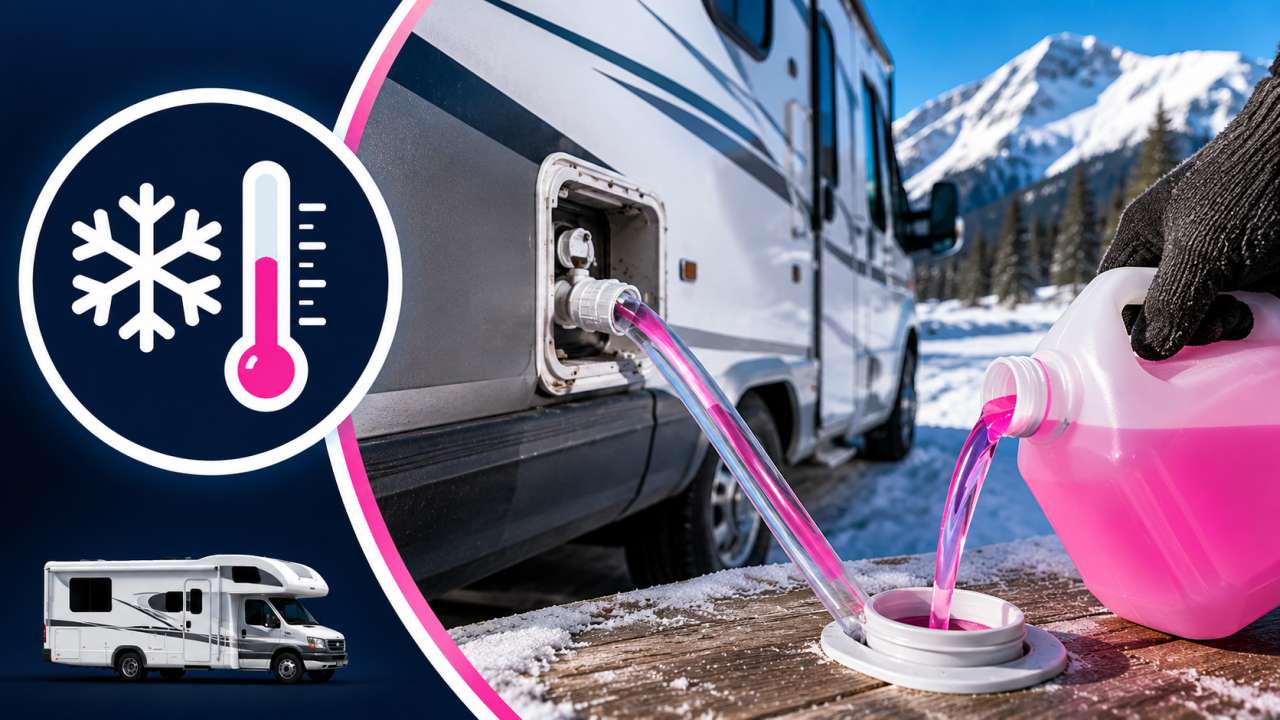
Winterizing is an annual task for most RV owners, but the timing depends on your climate and how long the rig will sit unused.
Signs It’s Time to Winterize
- Overnight temperatures are consistently dropping below freezing (32°F / 0°C).
- The RV will be parked or stored for weeks or months without use.
- You’re wrapping up the travel season and heading into colder months.
Even in regions with mild winters, a single unexpected cold snap can crack a pipe. If there’s any chance of a hard freeze, it’s cheaper to winterize than to gamble.
Parts of the RV That Need Protection
- Fresh water tank and supply lines
- Water heater
- Toilet and its water valve
- Outdoor shower connections
- Water pump and filters
Types of RV Antifreeze
Not all antifreeze products are created equal. Here’s how the main categories compare.
| Type | Key Characteristics | Best For |
|---|---|---|
| Propylene Glycol (rated -50°F to -100°F) | Non-toxic, safe for potable water systems | Most RV owners |
| Ethanol/Alcohol-based blends | Lower cost, but less protection overall | Budget-conscious storage in milder climates |
| Ethylene Glycol | Highly effective but toxic | Engine cooling systems only — never plumbing |
Practical tip: Always check the label for “non-toxic” and a temperature rating like “-50°F burst protection.” If either is missing, put it back on the shelf.
Also Read:- Papago Diebag Van Redefines Luxury Van Life With King Bed, AWD Power, and Serious Off-Grid Capability
Best RV Antifreeze Products to Consider
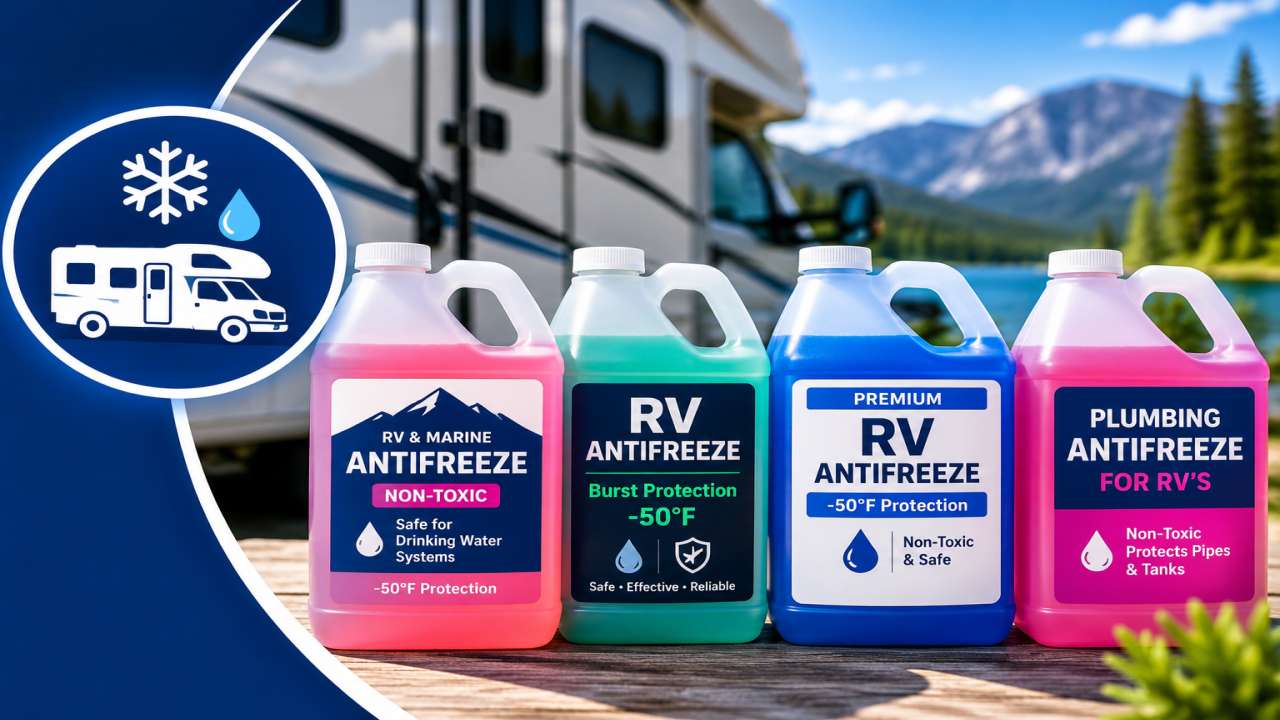
Here’s a comparison of some of the most widely used and well-reviewed RV antifreeze products currently on the market.
| Product | Base Type | Freeze/Burst Rating | Notes |
|---|---|---|---|
| Splash RV & Marine Antifreeze | Propylene glycol | Up to -100°F burst protection | Ready-to-use, biodegradable, widely available (including on Amazon.com.au for buyers outside the US) |
| Prestone RV & Marine Antifreeze | Propylene glycol | -50°F burst protection | Well-known automotive brand, easy to find in stores |
| Camco RV Antifreeze | Propylene glycol | -50°F burst protection | Popular with full-time RVers, budget-friendly |
| RecPro RV Antifreeze | Propylene glycol | -50°F burst protection | Concentrate option available for cost savings |
| Star Brite Premium Antifreeze | Propylene glycol | -100°F burst protection | Higher-end option for extreme cold climates |
Note on availability: While this guide is written for a US/UK audience, RV and marine antifreeze products like Splash are also sold through Amazon’s Australian marketplace, which is useful if you’re comparing options while traveling or importing supplies.
How to Winterize Your RV Water System
- Empty the fresh water tank, gray water tank, and black water tank completely. Any leftover water can freeze and crack pipes even after antifreeze has been added elsewhere.
- Most modern RVs have a water heater bypass valve. Turning this on prevents antifreeze from filling the water heater tank, which saves you several gallons of product.
- Using an RV antifreeze pump kit, circulate the fluid through every line until pink antifreeze flows steadily from each faucet and outlet.
- Run the kitchen sink, bathroom sink, shower, and toilet until antifreeze is visible at each one. Don’t skip fixtures you don’t plan to use over winter — they still need protection.
- Check for leaks, loose fittings, and any valve that isn’t fully closed. A five-minute check now can save a much bigger repair later.
Common Mistakes to Avoid
- Pouring engine antifreeze into the water system by mistake.
- Skipping the water heater bypass, which wastes product and money.
- Not fully draining tanks before adding antifreeze.
- Buying the cheapest option without checking the temperature rating.
- Forgetting to flush the system before using it again in spring.
How Much RV Antifreeze Do You Need?
The amount depends on the size of your rig and its plumbing layout.
| RV Type | Estimated Antifreeze Needed |
|---|---|
| Small travel trailer | Up to 2 gallons |
| Mid-size motorhome | 2–3 gallons |
| Large Class A motorhome | 3–4 gallons or more |
Bypassing the water heater typically cuts this amount by 1 to 2 gallons, so it’s worth the extra few minutes it takes to set up.
Also Read:- 2027 Knaus Sky TI Motorhome Unveiled: Volkswagen Crafter Power, Premium Comfort, and Smart Family Features
Getting Your RV Ready for Spring (De-Winterizing)
Reversing the process is just as important as winterizing in the first place.
- Return the water heater bypass valve to its normal position.
- Flush every faucet with clean water until the pink color is completely gone.
- Refill the fresh water tank and test the system for leaks.
- Check the water’s taste and smell — if anything seems off, flush again before use.
Storage and Safety Tips
- Keep RV antifreeze away from children and pets, even though most formulas are non-toxic.
- Store unused antifreeze away from direct sunlight and extreme heat.
- Dispose of leftover antifreeze according to your local waste disposal guidelines.
- Buy fresh antifreeze each season — older product can lose effectiveness over time.
FAQ
1. Is RV antifreeze safe to drink? Propylene glycol-based RV antifreeze is considered non-toxic, but it’s not meant to be consumed directly. Always flush your system thoroughly with clean water before using it for drinking or cooking.
2. Can I use regular engine antifreeze in my RV’s water system? No. Engine antifreeze contains ethylene glycol, which is toxic and unsafe for any system connected to drinking water.
3. How much antifreeze does winterizing an RV usually require? Most RVs need between 2 and 4 gallons, depending on size. Bypassing the water heater reduces the amount needed.
4. Do I need to replace RV antifreeze every year? Yes, it’s best practice to use fresh antifreeze each winterizing season, since older product can lose its protective properties.
5. Where can I buy RV antifreeze? It’s widely available at RV supply stores, auto parts retailers, hardware stores, and online marketplaces like Amazon — including Amazon’s US, UK, and Australian sites.
6. Does every RV need to be winterized? If you live somewhere warm and use your RV year-round, you may be able to skip it. But if there’s any risk of freezing temperatures, winterizing is the safer, cheaper option compared to repairing burst pipes.
Conclusion
RV antifreeze isn’t just another item on your seasonal checklist — it’s what stands between your rig and a costly plumbing repair. Choosing the right product, following a proper winterizing process, and checking your system each season are three simple habits that pay off every single winter.
Before the temperatures drop, take the time to pick a trusted brand, work through the steps carefully, and set your RV up for a smooth start to the next travel season.