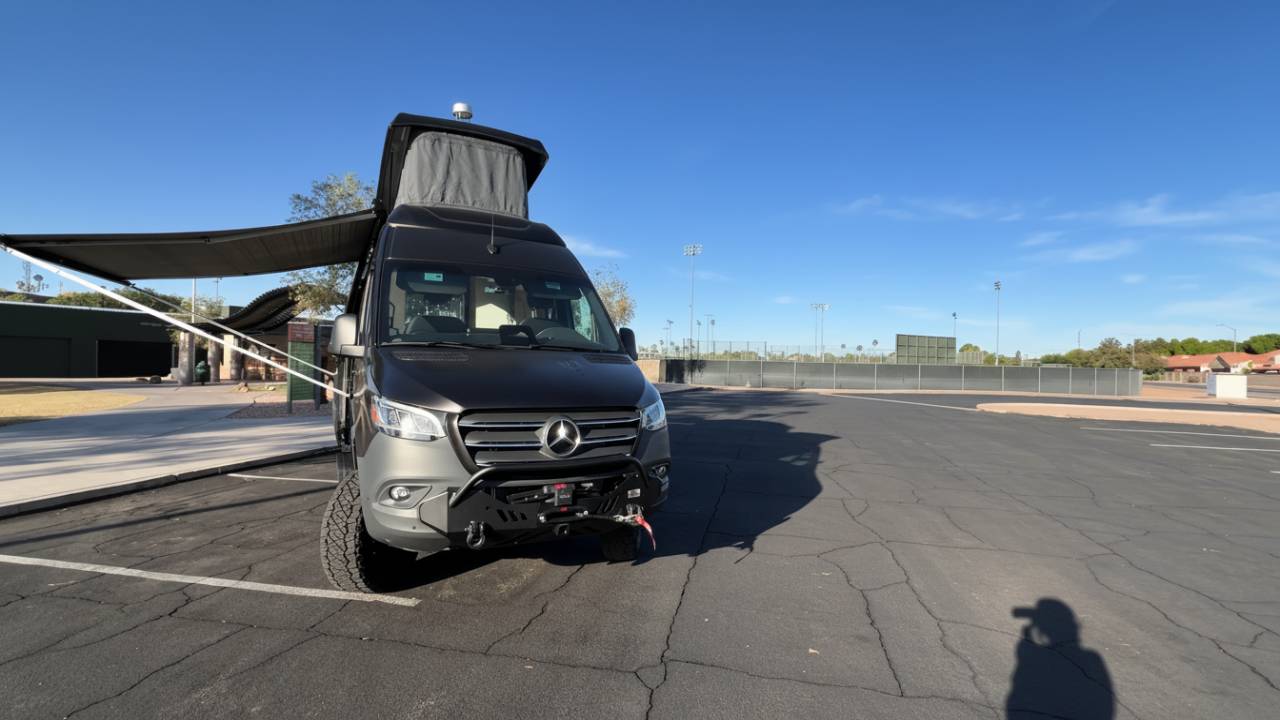
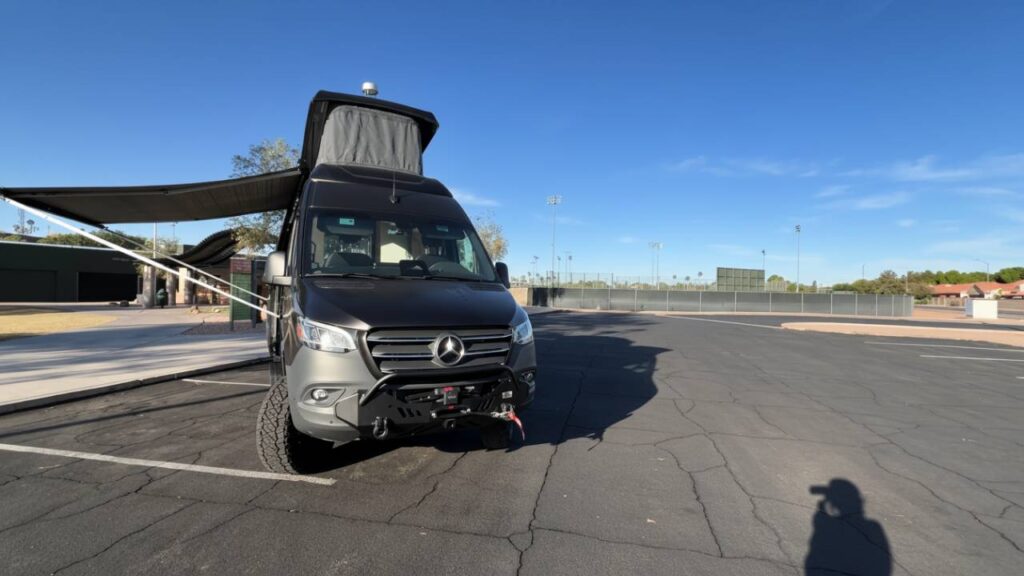
At first glance, it looks like just another compact van parked along a quiet street somewhere in America. Maybe outside a national park, maybe tucked into a suburban driveway. Nothing about it screams “extraordinary.”
But that assumption lasts only a few seconds.
Because hidden inside this modest exterior is something almost unbelievable — a fully functional, beautifully designed mobile home that can comfortably sleep up to six people without feeling cramped.
Yes, six.
Built on the widely trusted Mercedes-Benz Sprinter 144, this custom camper by Papago Vans is quietly redefining what modern van life looks like in 2026. And in a time when more Americans are choosing freedom over fixed living, this build feels less like a luxury… and more like a glimpse into the future.
How Smart Design Turned a Small Van Into a Full Family Home
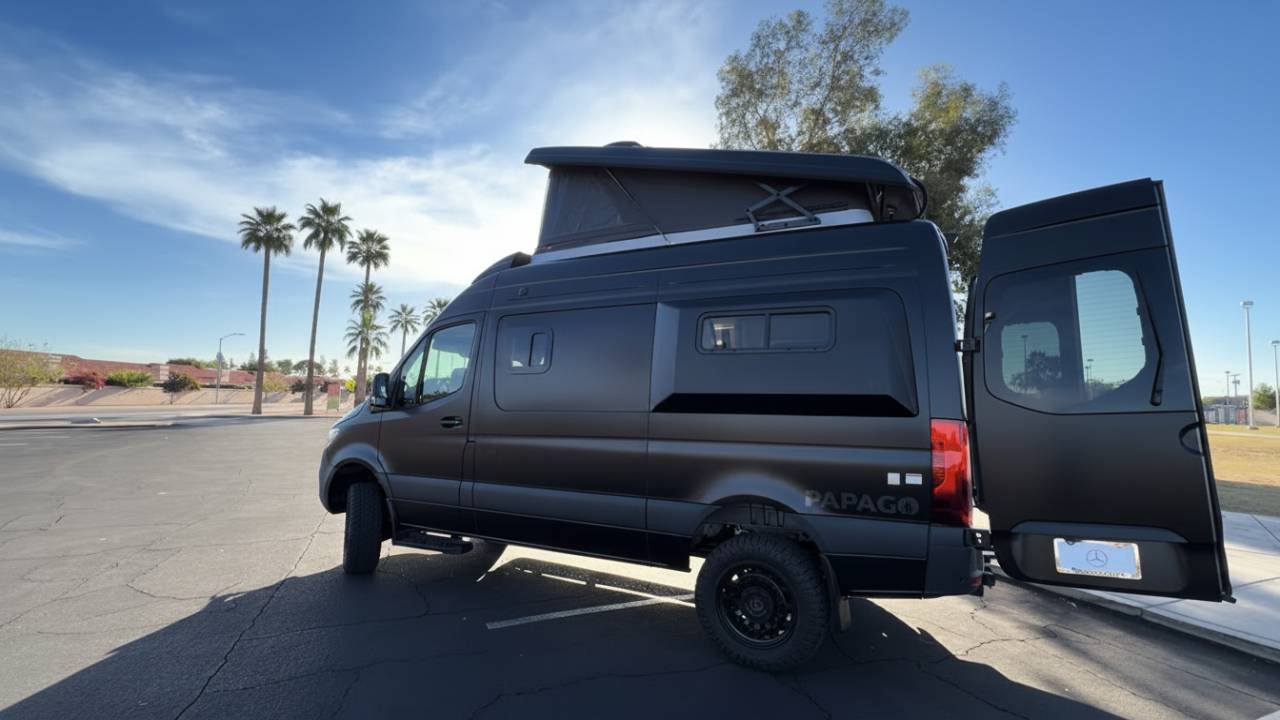
For years, short wheelbase vans have been seen as a compromise. They’re easier to drive, sure — but they come with limitations. Less room usually means fewer features, tighter layouts, and sacrifices in comfort.
But this van doesn’t follow those rules.
Instead of trying to fight the size constraint, the designers embraced it. Every inch of space has been carefully thought through, refined, and optimized. The result is something that feels surprisingly open the moment you step inside.
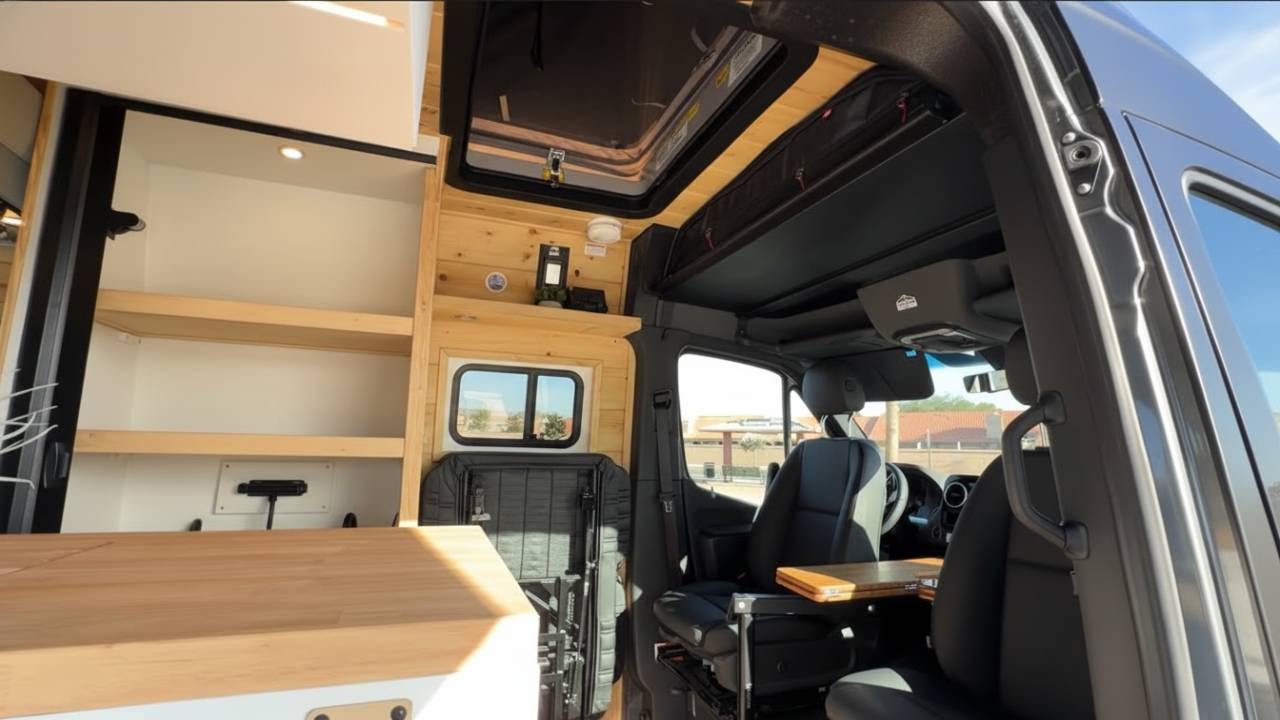
There’s no hard barrier between the driver’s cabin and the living area. That one decision alone changes everything. It creates a continuous, flowing space that feels much larger than it actually is.
The front seats swivel around, instantly transforming into part of the living room. A bamboo table connects the space, turning it into a casual dining or work area. It’s the kind of setup you’d expect in a small apartment — not a van.
Look up, and you’ll notice overhead shelves that aren’t just for storage. They discreetly house control systems, charging outlets, and essential utilities. Nothing feels cluttered. Nothing feels out of place.
Even the materials play a role in creating this illusion of space. Warm wooden finishes, clean white cabinetry, and soft lighting give the interior a calm, inviting atmosphere. It feels more like a cozy cabin than a vehicle.
And that’s the point.
This van isn’t designed to feel like transportation. It’s designed to feel like home.
The Sleeping Setup That Feels Almost Impossible
Now comes the part that surprises almost everyone.
Sleeping space.
In most compact vans, sleeping arrangements are straightforward — usually one fixed bed, maybe two if you’re lucky. But here, the approach is entirely different.
This van doesn’t rely on one solution. It uses multiple flexible systems that work together seamlessly.
At the top, there’s a pop-up roof tent — a feature that instantly adds an entire second level to the van. Built with a durable shell and equipped with windows for ventilation, it creates a comfortable sleeping space for two people. It feels airy, private, and surprisingly spacious.
Below that, things get even more impressive.
A motorized elevator bed is installed above the rear living area. With the press of a button, it lowers into position when needed and lifts out of sight during the day. This allows the same space to function as both a lounge and a bedroom without compromise.
And then there’s the dinette area.
What looks like a comfortable U-shaped seating arrangement during the day can quickly transform into another bed at night. With a simple adjustment of the table and cushions, it becomes a large sleeping platform that can accommodate additional guests.
When you combine all these elements, the result is remarkable.
A compact van… that sleeps six people… without feeling overcrowded.
It’s not just clever engineering — it’s a complete rethinking of how space should work.
Also Read:- RV Solar + Lithium Battery Upgrade Cost in California 2026: Real Prices & Savings
A Kitchen, Bathroom, and Living Room — All Inside One Van
Sleeping capacity is one thing. But true comfort comes from the essentials of daily life.
And this is where the van truly feels like a полноценный home.
Step inside, and you’ll find a fully equipped kitchen positioned right near the entrance. It includes a deep stainless steel sink, a fridge with a small freezer compartment, and multiple storage options for utensils, groceries, and supplies.
Everything is placed exactly where you’d expect it — making it intuitive and easy to use, even on the road.
Across from the kitchen sits something you rarely see in vans of this size: a proper bathroom.
Not just a portable toilet tucked into a corner, but a dedicated space with a shower, a handheld wand, and a smart retractable door system that keeps water contained. It’s compact, yes — but it’s functional, private, and thoughtfully designed.
And then there’s the living area.
The rear section of the van serves as a lounge during the day. The U-shaped seating creates a natural gathering space where people can relax, eat, talk, or even work remotely. A telescoping table sits at the center, adjustable to suit different needs.
It’s easy to imagine a family sharing a meal here. Or friends playing cards after a long day outdoors. Or someone quietly working on a laptop while parked near a scenic view.
This isn’t just about travel.
It’s about living — fully, comfortably, and without compromise.
Built for the Road — And Far Beyond It
While the interior focuses on comfort, the exterior is all about capability.
This van isn’t just meant for smooth highways. It’s built for real adventure.
Outfitted with rugged all-terrain tires, upgraded suspension, and a reinforced front bumper with a powerful winch system, it’s ready to handle challenging terrains. Dirt trails, rocky paths, and remote locations become accessible in a way that traditional RVs simply can’t match.
That’s a big deal.
Because for many travelers, the goal isn’t just to move — it’s to explore.
And exploration often requires leaving the beaten path behind.
This van makes that possible without sacrificing comfort.
Also Read:- Why Your RV Air Conditioner Is Costing You a Fortune—And How to Fix It Before Summer
Compact Camper vs Traditional RV: Which One Fits Modern Life Better?
As van life continues to grow in popularity across the United States, more people are asking the same question:
Do you really need a large RV?
Or can something smaller — and smarter — do the job just as well?
Here’s how this compact camper compares:
| Feature | Compact Camper Van (This Build) | Traditional RV |
|---|---|---|
| Driving Experience | Smooth, easy, car-like | Bulky, requires experience |
| Parking | Fits in regular spaces | Needs dedicated RV areas |
| Flexibility | Multi-purpose spaces | Fixed layouts |
| Adventure Access | Off-road capable | Limited to paved roads |
| Maintenance | Lower | Higher |
| Lifestyle Fit | Minimal, mobile, modern | Spacious but less flexible |
For a growing number of Americans, the answer is becoming clear.
Smaller doesn’t mean less.
In fact, it often means more — more freedom, more flexibility, and more connection to the world around you.
Why This Van Reflects a Bigger Lifestyle Shift in America
This van isn’t just a clever design project. It represents something much bigger.
Across the U.S., people are rethinking what they want from life.
Rising housing costs, remote work opportunities, and a growing desire for experiences over possessions are pushing more individuals and families toward alternative living solutions.
Van life, once seen as niche or unconventional, is now becoming mainstream.
And builds like this are accelerating that shift.
They prove that you don’t have to give up comfort to gain freedom. You don’t have to sacrifice functionality to embrace mobility.
You just need better design.
Also Read:- Phantom Camper Van: The Stylish Luxury Van Blending Comfort, Practicality & Off-Grid Adventure
The Real Magic Isn’t the Space — It’s the Possibility
At the end of the day, what makes this camper van truly special isn’t just how many people it can sleep or how many features it includes.
It’s what it represents.
It represents the idea that life doesn’t have to be tied to one place.
That home isn’t defined by square footage.
That adventure doesn’t require compromise.
And maybe most importantly, it shows that with the right approach, even the smallest spaces can hold the biggest possibilities.