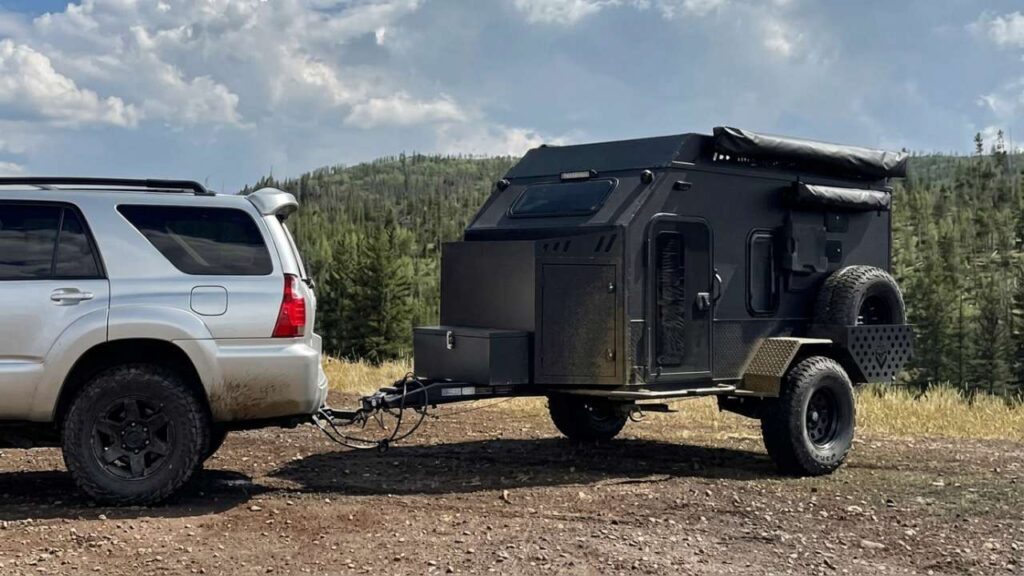
The compact RV market has exploded over the past five years, driven by families seeking authentic outdoor experiences without sacrificing comfort or mobility. Between the pandemic-era travel surge and the rise of remote work culture, demand for smaller, tow-able units has outpaced supply. Into this competitive landscape steps Kingdom Camping with the Simba 1—a conceptual hard-shell pop-up trailer that addresses a specific gap in the market: families need a rugged, livable unit that doesn’t require a heavy-duty truck, yet doesn’t compromise on protection or durability.
Unlike traditional soft-side pop-up campers that limit weather protection and seasonality, or massive Class B RVs that require significant towing power, the Simba 1 represents a third way. This article examines the technical design, feature set, practicality for family travel, and how Kingdom Camping’s approach compares to competing offerings in the compact hard-shell segment.
Understanding Kingdom Camping’s Market Position
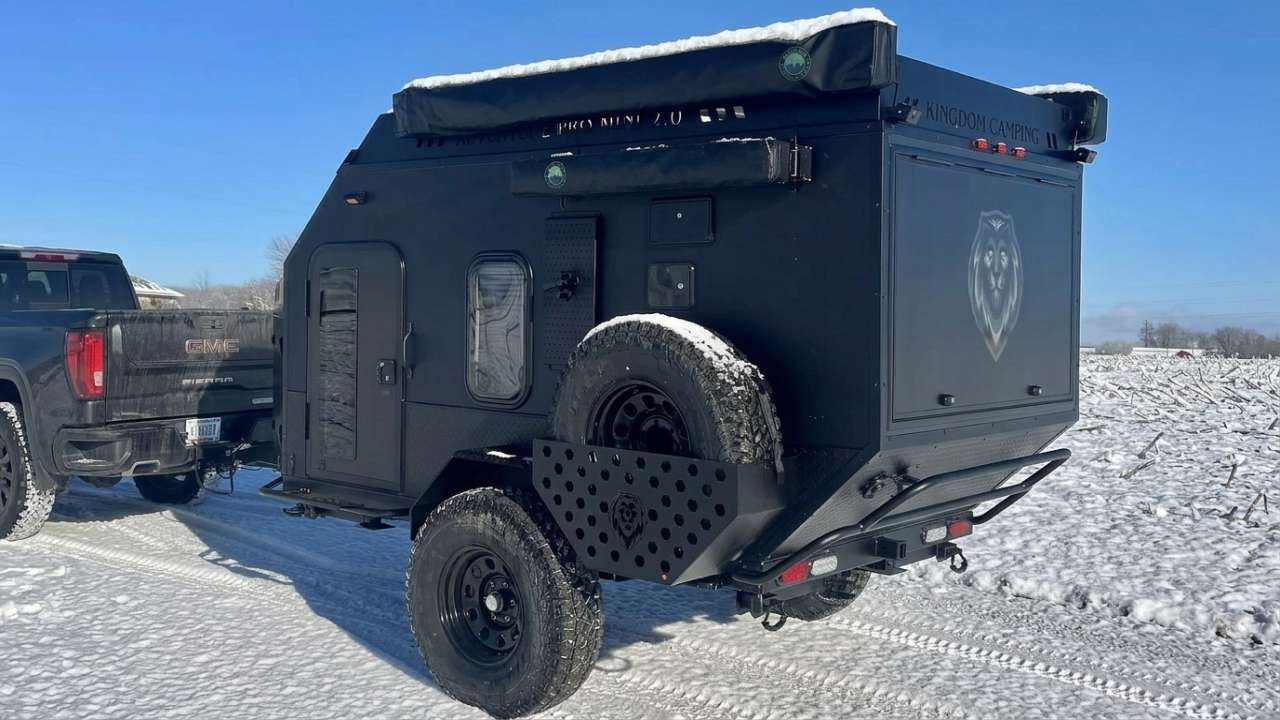
Kingdom Camping has built a dedicated following since entering the North American market in 2019. With over 15,000 Facebook followers and consistent customer engagement in product development, the brand has carved out a reputation for quality-focused, adventure-oriented builds. Unlike larger manufacturers that prioritize volume and standardization, Kingdom’s approach emphasizes listening to actual user feedback and incorporating real-world insights into new designs.
The Simba 1 represents the culmination of this philosophy. Rather than launching entirely new concepts, Kingdom studied what customers loved about their popular Adventure Pro Mini 2.0 model and identified where that design fell short. The resulting specifications address three core limitations:
- Vertical Space Constraints – The APM 2.0’s fabric roof limited headroom for standing comfort
- Weather Vulnerability – Soft-side construction offered limited protection in extreme conditions
- Extended-Use Capability – Limited winterization options restricted seasonal flexibility
Compact Hard-Shell Design: The Simba 1 Blueprint
Dimensions and Weight Distribution
The Simba 1 introduces a footprint specifically optimized for mid-size vehicle owners while maintaining livable interior space:
| Specification | Value | Application |
|---|---|---|
| Length | 10 feet | Suitable for standard driveway parking; balances interior volume with highway maneuverability |
| Interior Height | 7 feet | Allows standing and movement without hunching; accommodates tall adults comfortably |
| Loaded Weight | 3,500 lbs | Towable by vehicles with 5,000+ lb capacity; opens market to Subaru Outbacks, RAV4s, Wrangler 4-doors |
| Dry Weight Estimate | 2,900–3,100 lbs | Approximately 290–310 lbs per linear foot—lighter than comparable hard-shell alternatives |
| Width | Exceeds standard 7-ft | Overhangs wheel wells for additional interior volume without trailer-width violations |
This sizing strategy is intentional. While the 3,500-lb loaded weight pushes some mid-size vehicles toward their limits, it opens the market to owners who previously considered RV travel impossible with their current vehicles. A Toyota RAV4 or Jeep Wrangler owner now has a realistic option for family camping, whereas they would have been priced out of traditional hard-shell segments requiring full-size trucks.
Hard-Shell Pop-Top Construction
The hard-sided pop-top roof represents the Simba 1’s most distinctive engineering feature. Unlike soft canvas tops that accumulate dirt, absorb moisture, and degrade over 3–5 years, the Simba 1 employs solid panels that address two critical challenges:
Bear Country Durability Owners traveling in regions with active black bear populations face serious liability with soft-sided campers. Bears can easily tear through canvas to access food sources, creating both safety and property damage issues. Hard panels eliminate this vulnerability entirely, allowing families to camp confidently in areas where soft-side campers are often prohibited by park regulations or insurance restrictions.
Weather Progression Capability A hard roof transitions from waterproof to maintenance-free over time. Fabric tops require annual conditioning, re-sealing, and eventual replacement. Hard panels, especially when paired with proper guttering and drainage systems, provide genuine multi-season reliability. This is especially valuable for owners planning late-spring and early-fall adventures when weather turns unpredictable.
Structural Integrity The pop-top mechanism itself benefits from rigid construction. Soft-top zippers and fabric connections degrade over years of opening and closing. Hard hinges and solid panel connections are engineered for thousands of cycles with minimal maintenance.
Chassis and Suspension: Off-Road Fundamentals
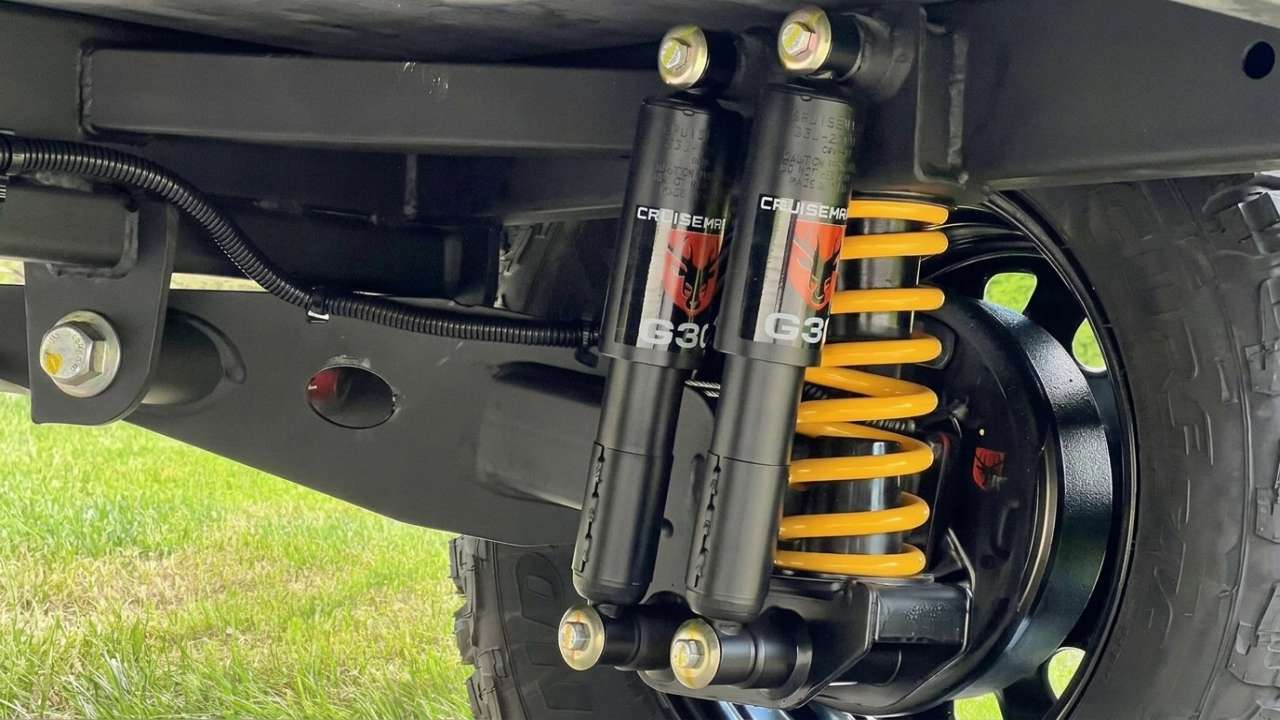
The Simba 1’s foundation determines both its adventure capability and ride quality. Kingdom’s specification choices reflect genuine off-road engineering rather than purely cosmetic ruggedness.
Cruisemaster CRS2 Suspension System
The Cruisemaster CRS2 trailing A-arm suspension with spring and dual-shock configuration represents the industry standard for single-axle trailers in the 2,500–4,000-lb category. This isn’t a budget choice—it’s the choice made by manufacturers building trailers designed to last decades and handle rough terrain:
- Trailing A-Arm Design – Keeps the trailer more stable during braking and over uneven terrain compared to leaf-spring alternatives
- Dual Shock Absorption – Manages both compression (bumps) and rebound (washboard), reducing driver fatigue and extending frame life
- Spring-Based Leveling – Self-adjusts to different load conditions without manual intervention
This suspension allows the Simba 1 to traverse rough forest service roads, cattle guard crossings, and rocky terrain that would damage or strand cheaper alternatives.
DO35 Coupling System
The DO35 coupling is a heavy-duty fifth-wheel-style connection (also called a gooseneck coupling) that differs from standard ball couplings. Benefits include:
- Lower Tow Vehicle Wear – Distributes tongue weight more evenly over the towing vehicle’s frame
- Enhanced Maneuverability – Shorter distance from coupling to trailer wheels provides tighter turning radius
- Improved Stability – Reduces sway, especially important for high-wind highway driving
The coupling specification suggests Kingdom engineered this trailer for both highway comfort and technical off-road use—not one or the other.
Power and Utility Systems
Modern adventure RV travelers expect off-grid capability for extended stays. The Simba 1’s power infrastructure reflects this demand:
| System | Specification | Use Cases |
|---|---|---|
| Lithium Battery Bank | 460 Ah | 10–14 days dry camping at moderate consumption; powers all 12V appliances and heating |
| Inverter | 2,000 W | Runs microwave, instant water heater, and multiple devices simultaneously |
| Freshwater Capacity | 35 gallons (132 liters) | 3–5 days for family of four with conservation; expandable with external tanks |
| Furnace | Truma Combi | Dual heating and hot water provision; efficient propane consumption; works below-freezing |
| Outdoor Shower | Yes | Reduces indoor moisture; extends water supply; increases usable living space |
The 460 Ah Lithium Battery Advantage
Lithium batteries cost 2–3× more than sealed lead-acid alternatives but offer transformative benefits for adventure travelers:
- Cycle depth: Can discharge 80% daily without degradation (lead-acid maxes at 50%)
- Lifespan: 3,000+ cycles versus 400–500 cycles for traditional batteries
- Weight: Approximately 60% lighter than equivalent lead-acid capacity
- Charging: Recharge to 100% in 2–4 hours with appropriate solar or shore power
For the Simba 1 target market—families planning 10–21 day adventures—lithium represents the practical choice. The investment compounds over the trailer’s 15–20 year lifespan when compared to replacing lead-acid batteries every 3–4 years.
Interior Layout and Living Spaces
While Kingdom has released limited interior images, the feature list reveals thoughtful space optimization:
Sleeping Accommodations
The Simba 1 supports dedicated sleeping zones for parents and children. Hard-shell construction allows for permanent interior structures—bed frames, cabinetry, and supports—that can’t be achieved with soft-side designs. Family-focused arrangements typically include:
- Queen or Twin Master Sleeping Area – Positioned at the front for privacy and stability during towing
- Bunk or Convertible Sleeping Space – Accommodates one to two children; often includes storage underneath
- Dinette Conversion – Provides additional sleeping surface for guests or overflow capacity
Kitchen and Cooking
A functional kitchen enables families to reduce restaurant expenses and accommodates dietary preferences (allergies, fitness routines, food restrictions). The specified kitchen includes:
- Two-Burner Cooktop – Sufficient for breakfast, lunch, and dinner preparation
- Compact Refrigerator/Freezer – Essential for food safety; powered by the lithium system or shore power
- Sink with Fresh Water – Enables proper meal prep, dishwashing, and hygiene
- Counter Space – Aluminum cabinetry provides durable, easy-clean surfaces
Why This Matters for Families: Restaurant meals for a family of four cost $50–80+ per meal. Over a two-week adventure, this becomes $700–1,100. A functional kitchen cuts this to $150–250 in groceries while enabling healthier eating and reducing food-borne illness risk from unknowable kitchen practices.
Wet Bath with Foot-Flush Toilet
The inclusion of a wet bath—where the entire bathroom functions as a shower stall—represents a critical quality-of-life upgrade for families with young children. Standard RV cassette toilets occupy space and require unpleasant maintenance. A foot-flush mechanism (activated by pedal rather than button) provides intuitive operation for children and reduces electronic failure points.
Storage Solutions
Aluminum cabinetry constructed with modern joinery techniques provides:
- Durability – Aluminum frames won’t rot if exposed to moisture over years
- Weight Efficiency – Aluminum weighs 66% less than wood for equivalent strength
- Customization – Modular cabinet designs allow interior reconfiguration as family needs evolve
Technical Specifications and Performance Metrics
| Category | Specification | Benchmark Notes |
|---|---|---|
| Towing Capacity Required | 5,000+ lbs | Most mid-size SUVs (2015+) meet this requirement |
| Tire Load Rating | Matches loaded weight | Kingdom specs heavy-duty, not light-duty trailer tires |
| Propane System | Typically 15–30 lbs | 3–6 weeks heating for mid-climates; expandable with external tanks |
| Insulation | Foam-core aluminum panels | Comparable to Class B RVs; R-value typically 10–15 for walls, 18–24 for roof |
| Roof Load Rating | Engineered for snow/ice | Not all pop-top designs handle northern climates equally |
| Water Heater Capacity | Integrated with furnace (Truma Combi) | 10–15 gallons hot water instantaneously |
Design Innovation: The Front Tower Configuration
The most visually distinctive aspect of the Simba 1 concept is its front end—towers or cabinet structures flanking a spare tire. This architecture solves multiple problems simultaneously:
Functional Integration
Rather than distributing equipment throughout the trailer, the tower design concentrates the inverter, battery management, furnace, and fresh water tank in accessible, maintainable locations. Benefits include:
- Easier Servicing – Technicians can access systems without disassembling interior cabinetry
- Space Liberation – The interior cabin isn’t consumed by mechanical equipment
- Weight Distribution – Positioning heavy systems over the axle improves towing stability
Also Read:- 2027 Eddie Bauer EB26 Brings Premium Comfort to the Compact Class A Motorhome Segment
Aerodynamic Considerations
The front towers do increase frontal area and break the streamlined profile that minimizes highway fuel consumption. However, this design choice reflects realistic priorities:
- Off-Road Primary Use – Speed is rarely advantageous on forest service roads, rocky terrain, or tight switchbacks
- Acceptable Fuel Impact – Adding 10–15% fuel consumption for off-road capability is a worthwhile trade for the target market
- Mechanical Robustness – Systems requiring regular maintenance are more accessible with this layout than buried under aerodynamic cowlings
The short A-frame (the structural arm extending from the trailer to the towing vehicle) keeps the trailer close to the tow vehicle’s bumper, reducing overall length and improving backing maneuverability—a crucial advantage when parking in campgrounds with tight spots.
Market Comparison: How Simba 1 Stacks Against Alternatives
Understanding the Simba 1’s position requires examining competing approaches to family adventure camping:
| Camper Type | Typical Cost | Tow Requirement | Living Space | Off-Road Capability | Family-Friendliness |
|---|---|---|---|---|---|
| Soft-Side Pop-Up (Jayco, Coleman) | $15,000–$28,000 | 3,500–5,000 lbs | 60–85 sq ft | Limited (roads only) | Good (budget-friendly, spacious interior) |
| Hard-Shell Pop-Top (Opus, Escape) | $35,000–$50,000 | 4,000–5,500 lbs | 70–90 sq ft | Limited (light gravel only) | Very Good (premium comfort, durability) |
| Kingdom Simba 1 | $52,500+ | 5,000+ lbs | 80–100 sq ft | Excellent (technical terrain) | Very Good (rugged + family features) |
| Class B RV (Sprinter Van) | $60,000–$100,000+ | None (motorhome) | 120–150 sq ft | Limited (van height) | Excellent (space and comfort) |
| Travel Trailer (Airstream, Escape) | $45,000–$90,000+ | 5,000–8,000 lbs | 200–300 sq ft | Limited | Good (spacious but less portable) |
The Simba 1 targets a specific intersection: families who want genuine off-road capability without motorhome ownership costs or complexity, and who value compact towing over maximum interior volume.
Seasonal and Environmental Capability
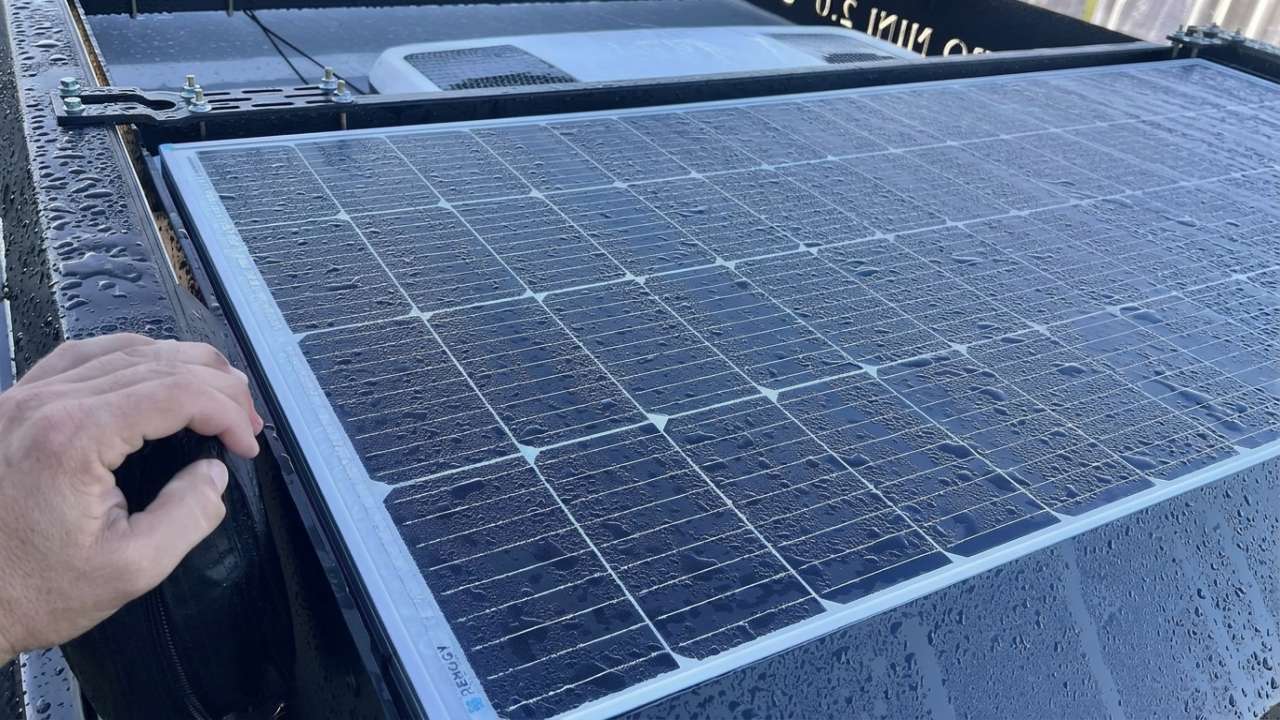
While Kingdom has not officially confirmed four-season specifications, the design elements suggest serious cold-weather consideration:
Winter Suitability
- Hard-Shell Roof – Eliminates condensation points associated with soft canvas; reduces interior mold/mildew
- Truma Combi Furnace – Operates at sub-freezing temperatures; dual-function heating and hot water
- Sealed Construction – Rigid frame eliminates the air leaks common in pop-up soft tops
- Lithium Batteries – Superior performance in cold weather compared to lead-acid alternatives
Desert/Summer Performance
- Aluminum Exterior – High reflectivity reduces interior temperature gain
- Roof Vent Capability – Hard panels support durable roof vents that stay sealed (soft vents often leak)
- Lithium Power – Runs air conditioning or efficient evaporative cooling for extended periods
The Investment Perspective: Long-Term Value Analysis
At $52,500+, the Simba 1 represents a significant family investment. Understanding the value proposition requires calculating lifetime cost:
Depreciation and Lifespan
Hard-shell RVs depreciate 40–50% over the first five years, then stabilize. A Simba 1 starting at $52,500:
- Year 1 Value: ~$47,000 (10% depreciation from dealer markup)
- Year 5 Value: ~$26,000–$31,000
- Year 15 Value: ~$18,000–$24,000 (held stable by quality reputation)
This depreciation curve is favorable compared to soft-side units that face rapidly declining values due to canvas deterioration and age-related mechanical issues.
Operating Costs
| Cost Category | Annual Estimate | Notes |
|---|---|---|
| Insurance | $400–$600 | Progressive, State Farm coverage; comparable to soft-side units |
| Maintenance | $300–$500 | Minimal wear on sealed systems; no canvas care required |
| Storage | $600–$1,200 | Covered storage in cold climates; uncovered significantly cheaper |
| Fuel Impact (10% increase) | $150–$400 | Depends on towing frequency and distance |
| Propane | $200–$400 | Seasonal heating; varies by climate and usage |
| Total Annual | $1,650–$3,100 | Approximately 3–6% of purchase price annually |
ROI Through Experience
For families who camp 4–8 times annually, total vacation cost per night (including amortized ownership):
- Hotel + meals: $150–$300 per night for family of four
- RV camping: $25–$50 per night (including ownership costs amortized)
- Savings: $100–$250 per night
- Break-even point: 8–10 years for frequent travelers
Design Philosophy: Function Over Fashion
Kingdom’s design choices throughout the Simba 1 reveal a manufacturer prioritizing real-world functionality over cosmetic trends:
Aluminum and Foam Construction
Rather than exploring fancy exterior graphics or aerodynamic curves, the Simba 1 employs materials proven across 15+ years of Kingdom designs:
- Aluminum panels – Won’t rust or warp; easier repair than composite materials
- Foam core – Provides insulation R-value without excessive weight
- Simple geometry – Straight lines simplify manufacturing and repair
This approach is intentionally unfashionable. When trends shift toward rounded edges or accent colors, the Simba 1 retains utility-focused design that remains relevant for decades.
Spare Tire Integration
The decision to mount a spare tire prominently at the front—rather than hiding it underneath—reflects practical wilderness philosophy. A mounted spare is:
- Immediately accessible without raising the entire trailer
- Easy to inspect for dry rot and pressure
- Visually obvious reminding drivers the spare exists
- Protected from undercarriage mud and salt spray
Specifications and Key Features Reference Table
| System | Component | Benefit |
|---|---|---|
| Power | 460 Ah lithium battery + 2,000 W inverter | 10–14 day dry camping capability |
| Heating | Truma Combi furnace + hot water | Winter camping + instant hot water |
| Water | 35-gallon fresh tank + outdoor shower | Multi-day independence + hygiene options |
| Chassis | Cruisemaster CRS2 + DO35 coupling | Stability + maneuverability + durability |
| Construction | Hard-shell aluminum + foam core | Longevity + seasonal flexibility |
| Cooking | 2-burner cooktop + fridge + sink | Full meal preparation capability |
| Bathroom | Wet bath + foot-flush toilet + shower | Family comfort + sanitation |
| Sleeping | Multiple dedicated zones | Adequate rest for children + adults |
| Storage | Aluminum cabinetry | Durable, lightweight organization |
Availability and Timeline
Kingdom announced the Simba 1 as a conceptual design with a prototype expected in summer 2026. This timeline suggests:
- Concept Phase (Current – 2026): Final engineering, supply chain establishment, regulatory compliance
- Prototype Phase (Summer 2026): Public reveal with performance and handling demonstrations
- Pre-Order Phase (Late 2026 – Early 2027): Customer deposits and customization options
- Production Phase (2027 onwards): First customer deliveries
Prospective buyers can expect:
- Official specifications released with summer 2026 prototype
- Customization options for interior layouts and appliance selections
- Possible color and material choices
- Extended wait times similar to other boutique manufacturers (12–18 months after ordering)
Who Should Consider the Simba 1?
The Simba 1 appeals to specific family profiles:
Ideal Candidates
- Families with vehicles rated for 5,000+ lb towing capacity
- Adventurers seeking off-road terrain access (4WD roads, forest service roads)
- Parents prioritizing weather protection and durability over maximum space
- RV enthusiasts wanting quality over quantity
- Buyers planning 15+ year ownership horizons
Less Suitable For
- Buyers requiring maximum interior volume (travel trailers better suited)
- Those without adequate towing vehicle (motorhomes better suited)
- Budget shoppers prioritizing lowest initial cost
- Families needing full-time living space
Key Takeaways
- Hard-Shell Pop-Top Technology represents genuine advancement over soft-side alternatives, addressing weather protection, lifespan, and cold-weather capability limitations
- Lithium Power System enables legitimate off-grid adventures for 10–14 days without compromising appliance function or convenience
- Compact Size with Standing Room creates a unique market position—larger than pop-ups, more tow-able than travel trailers, more off-road capable than Class B RVs
- Engineering Details Matter – The Cruisemaster suspension, DO35 coupling, and Truma systems reflect genuine adventure equipment, not casual camper specifications
- Price Point Reflects Value – While $52,500+ seems expensive initially, long-term ownership costs and depreciation curves favor the Simba 1 for frequent adventurers
- Design Philosophy Prioritizes Longevity – Aluminum construction, modular cabinetry, and accessible systems mean 15–20 year usable lifespan without major overhauls
- Family-Focused Features – Multiple sleeping zones, functional kitchen, wet bath, and lithium independence make extended family trips practical, not stressful
- Summer 2026 Prototype represents a real engineering milestone; early adopter interest typically leads to extended order backlogs for niche manufacturers